Hairstyles & Beauty · Locs & Twists
Boho Locs: Styling, Care & Maintenance Guide
How to style and maintain boho locs, from fresh install to long-term upkeep.
8 min read
Hairstyles & Beauty · Locs & Twists
How to style and maintain boho locs, from fresh install to long-term upkeep.
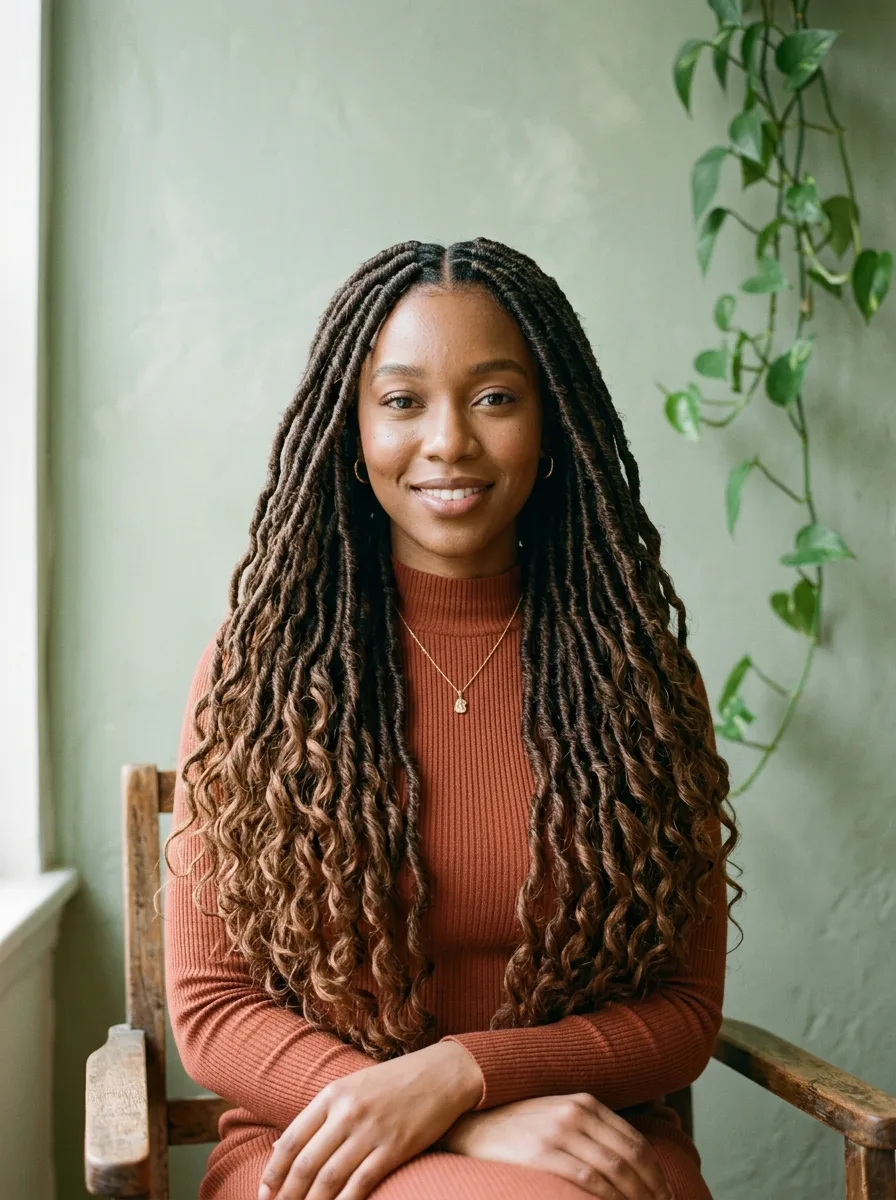
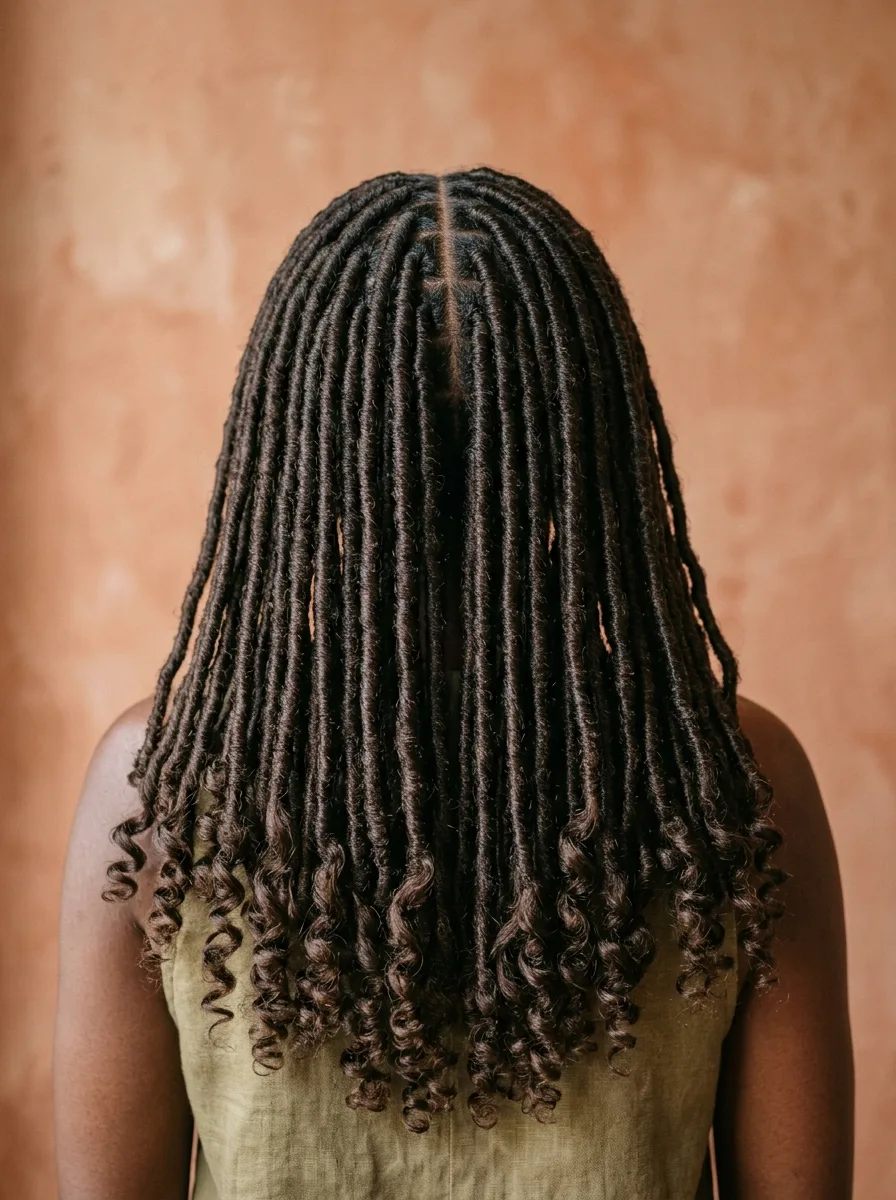
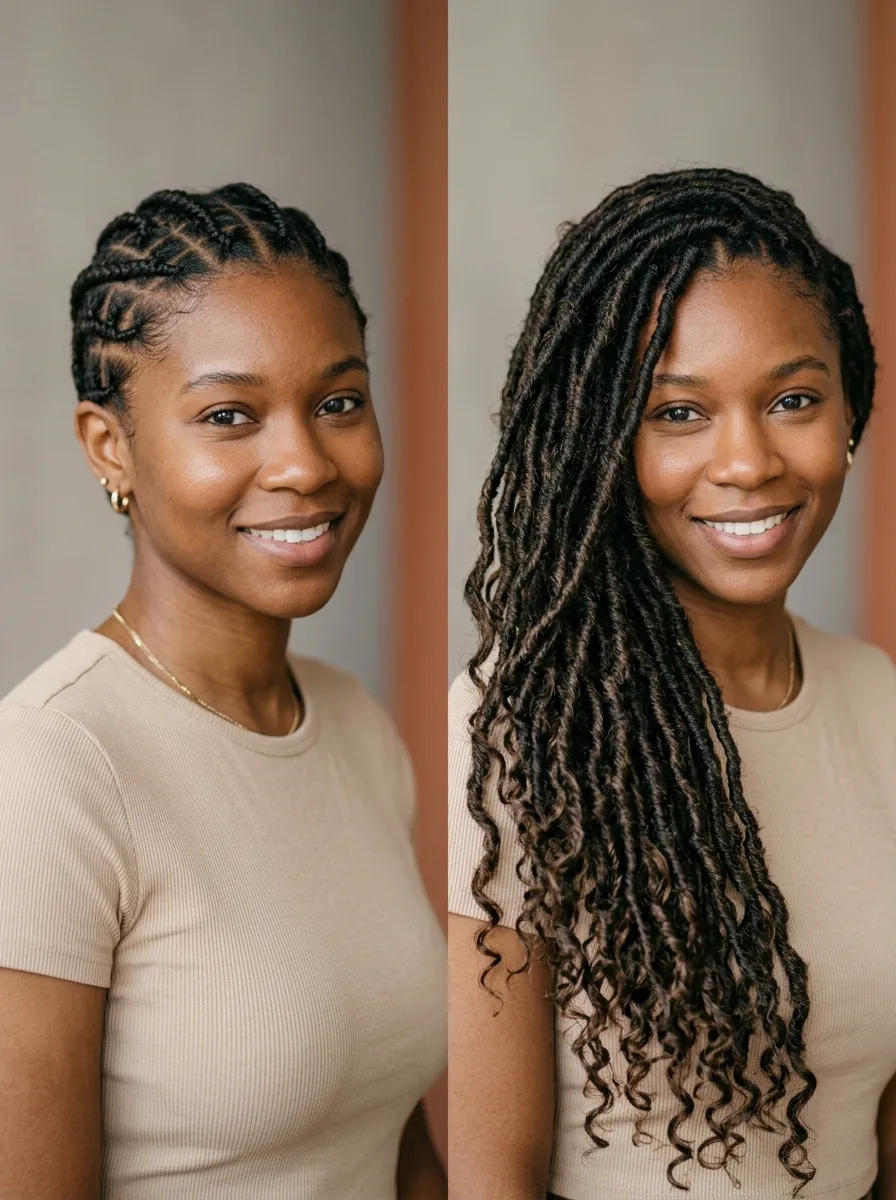
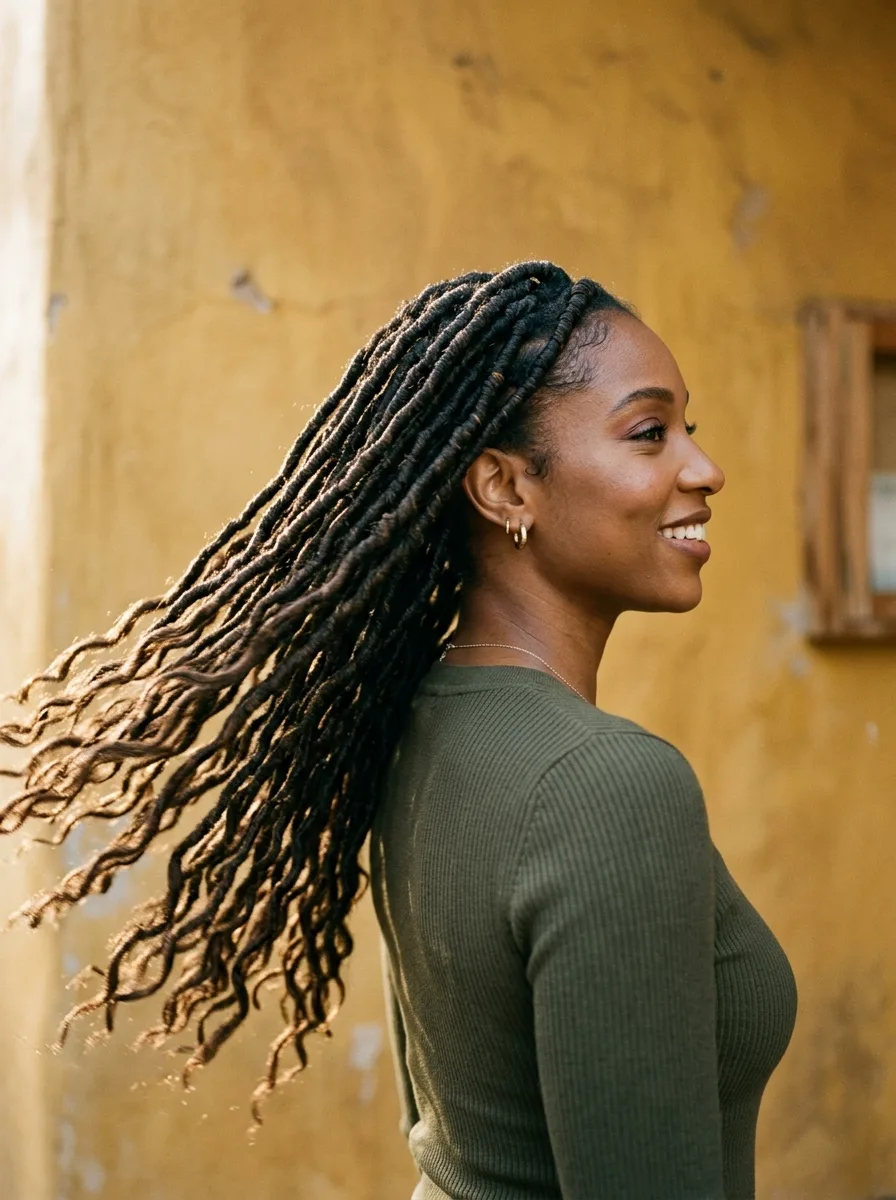
Boho locs are a faux-loc style: your natural hair is wrapped with loc-textured extension hair, rather than being permanently locked through years of natural loc maturation, then finished with loose, curly pieces and face-framing tendrils that give the whole style a softer, more undone look than traditional sleek locs. They’re temporary and fully protective, which makes them a good way to test whether you like the aesthetic and maintenance of locs before committing to the real thing, or just to wear the look for a season without a multi-year commitment. Here’s how they’re installed, styled, and kept looking good.
It’s worth being clear about the distinction, since the terms get used loosely. Traditional locs and sisterlocks are a permanent hair journey — your own hair is sectioned and, over months and years, naturally mats and coils into locs through consistent palm-rolling, interlocking, or a similar maintenance method. They can’t be taken down without cutting the hair.
Boho locs, along with faux locs, soft locs, and butterfly locs, which are all close relatives, are an install, not a hair journey. A stylist wraps your natural hair with extension hair, usually a marley or kanekalon-based loc texture, using a crochet hook or a wrapping technique, building a loc-like strand from hair that isn’t actually locked. When you’re done wearing the style, it comes out, and your natural hair underneath is unaffected structurally the way it would be by years of real locking.
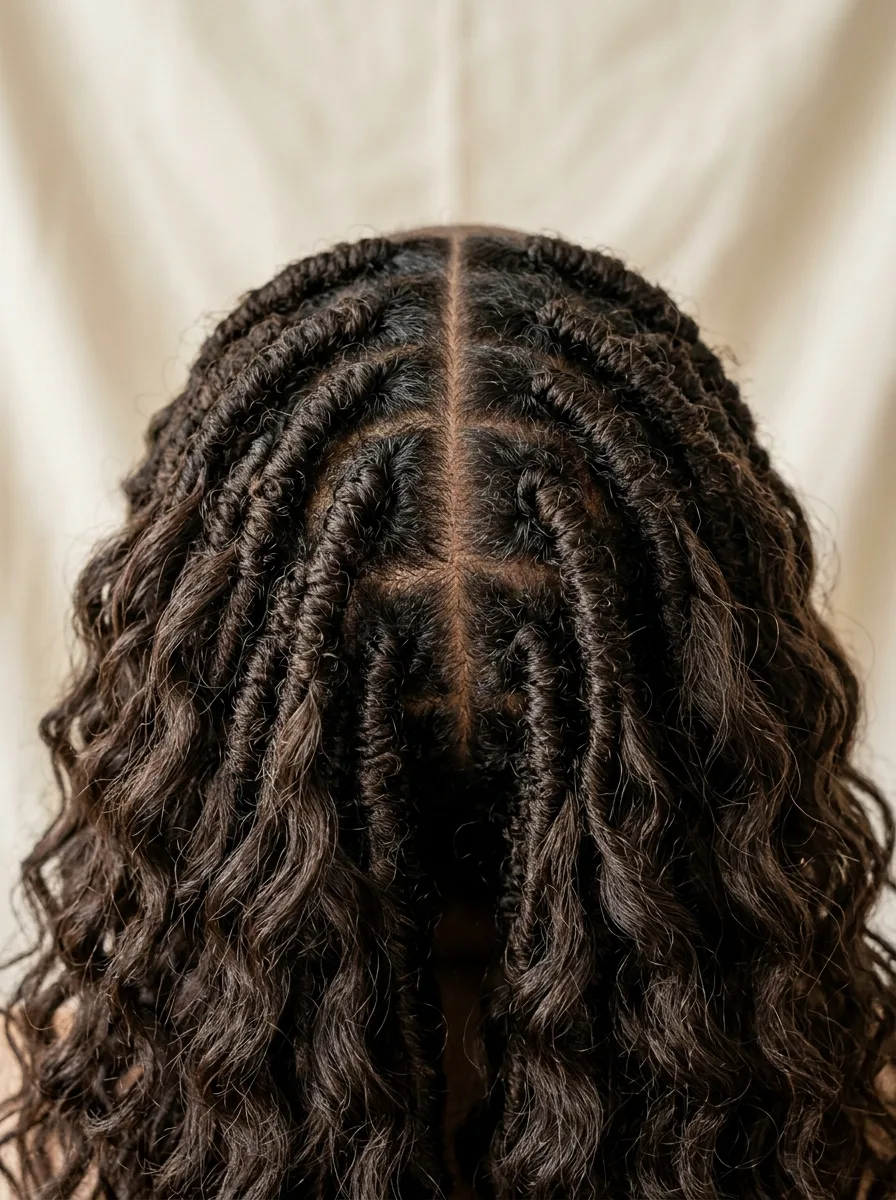
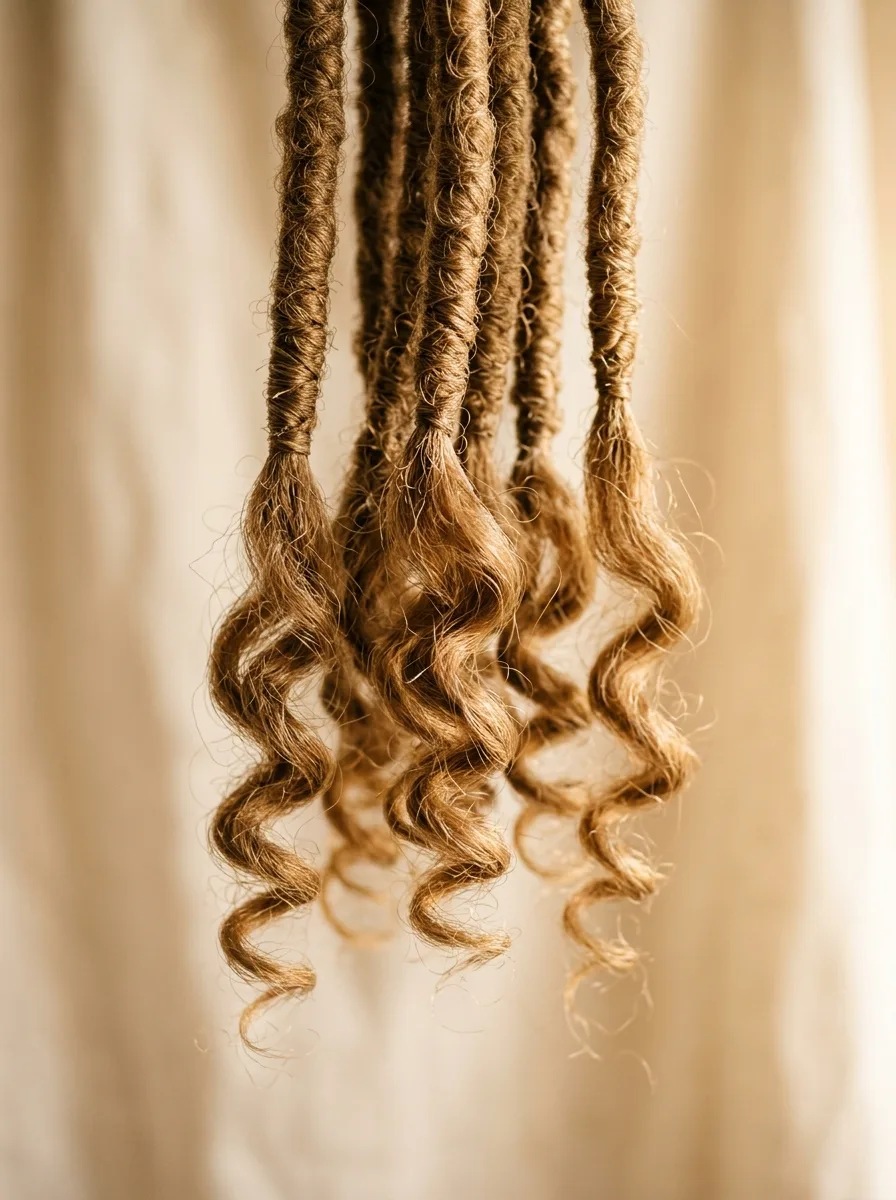
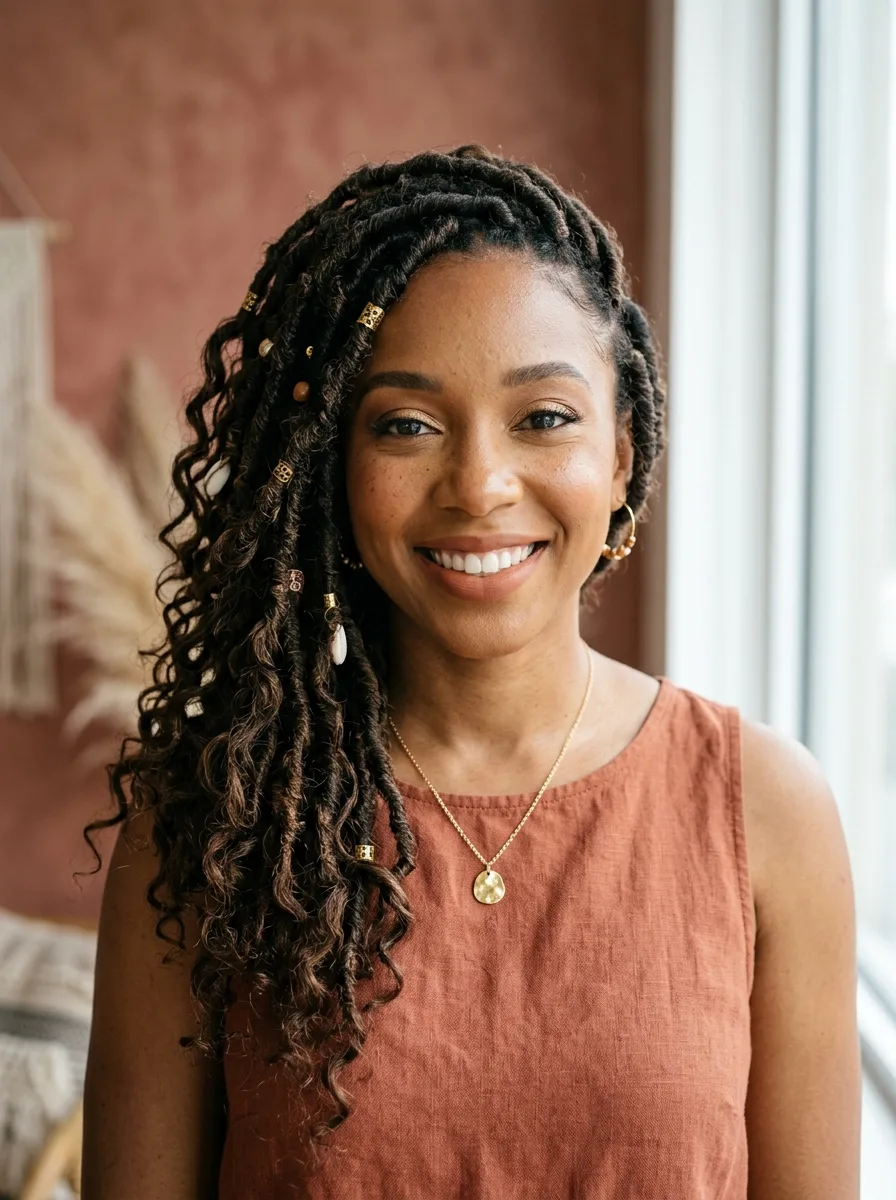
The “boho” part specifically refers to the finishing: distressed, textured wrapping rather than a smooth, uniform finish, loose curly pieces left hanging partway down or fully at the ends, and often a slightly undone, piece-y part pattern rather than a rigid grid. If you’re deciding between locs and braids for your next protective style, our boho braids guide covers the braided version of this same aesthetic, including hair-type and appointment basics that carry over either way.
Soft locs use a thinner, more pliable extension hair that drapes closer to the head and moves more like natural hair — a good option if you want the loc look without heavy bulk.
Butterfly locs are deliberately messier: sections of the wrap are pulled loose partway up each loc to create a distressed, wing-like texture, which is where the name comes from. They read as the most overtly “boho” of the group.
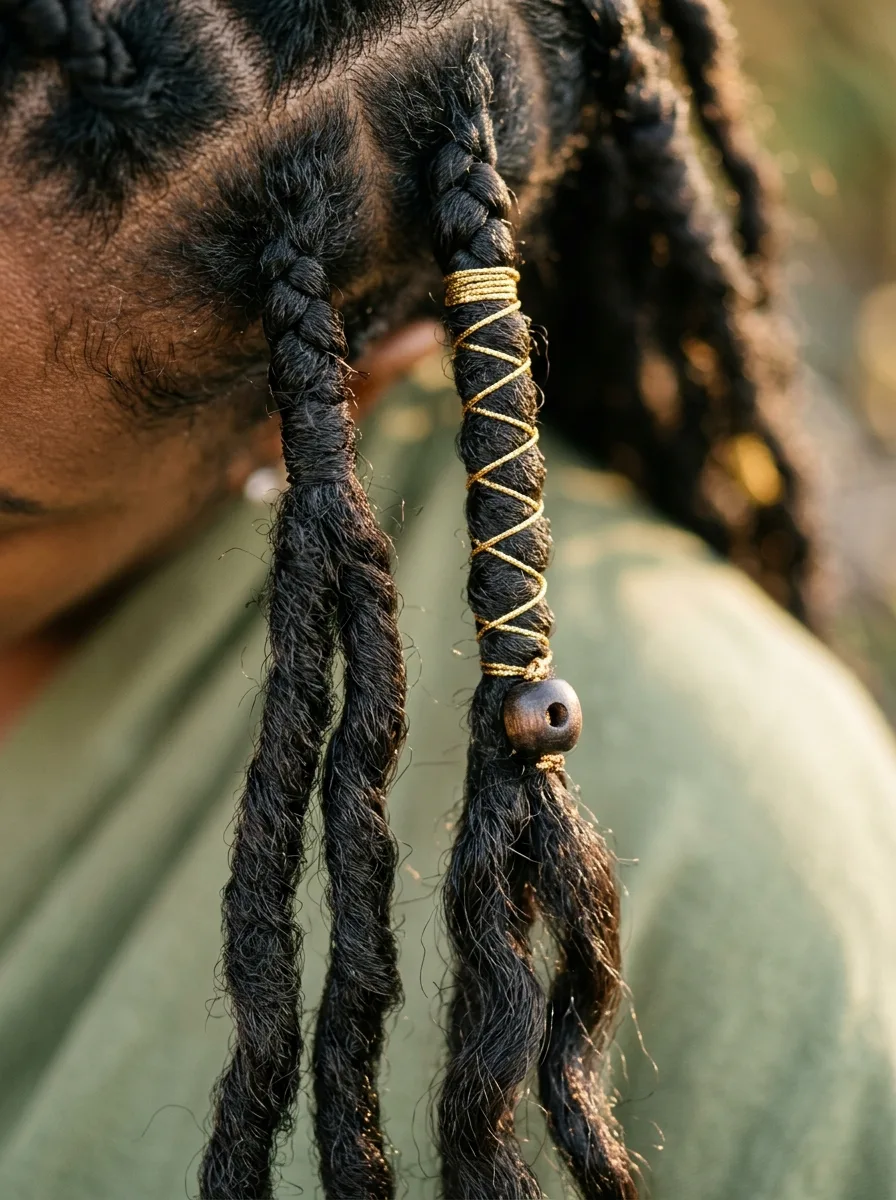
Goddess locs lean into the curl-heavy end of the spectrum, with loose curly hair wrapped in and left hanging generously along the length, often finished with a few beads or a wrap of gold thread near the base.
These skip the curly-hair accents almost entirely and instead rely on an intentionally uneven, rope-like wrapping technique for visual texture, which suits anyone who wants the boho aesthetic without extra length or weight from curl pieces.
Most stylists can size any of these — thinner for a lighter, more natural look, thicker and fewer for a faster, and usually less expensive, install.
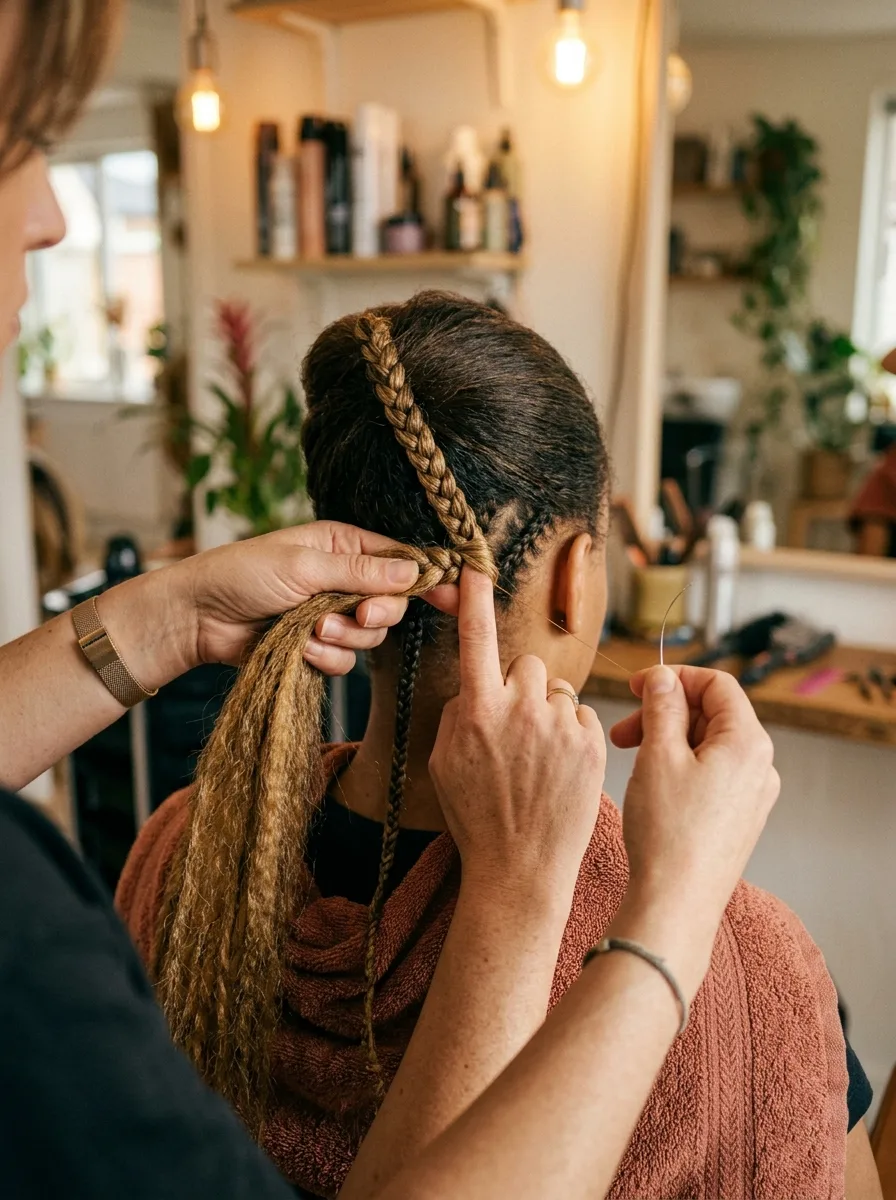
Most boho locs are built with the wrapping method: natural hair is braided or twisted into a small base, then a strip of extension hair is wrapped tightly around that base from root to tip, usually secured at intervals with a small rubber band or thread until the wrap holds its own shape. Some stylists use a crochet method instead, hooking loc extension hair directly through braided or twisted natural hair — generally faster, though the finish can look slightly less seamless up close.
A full head typically takes 4-8 hours depending on the number and thickness of locs, with thinner, more numerous locs taking noticeably longer than a thick, low-count set. Curly accent pieces, if you’re getting them, are usually added at the very end, either knotted onto the bottom portion of select locs or wrapped in alongside the extension hair from the start.
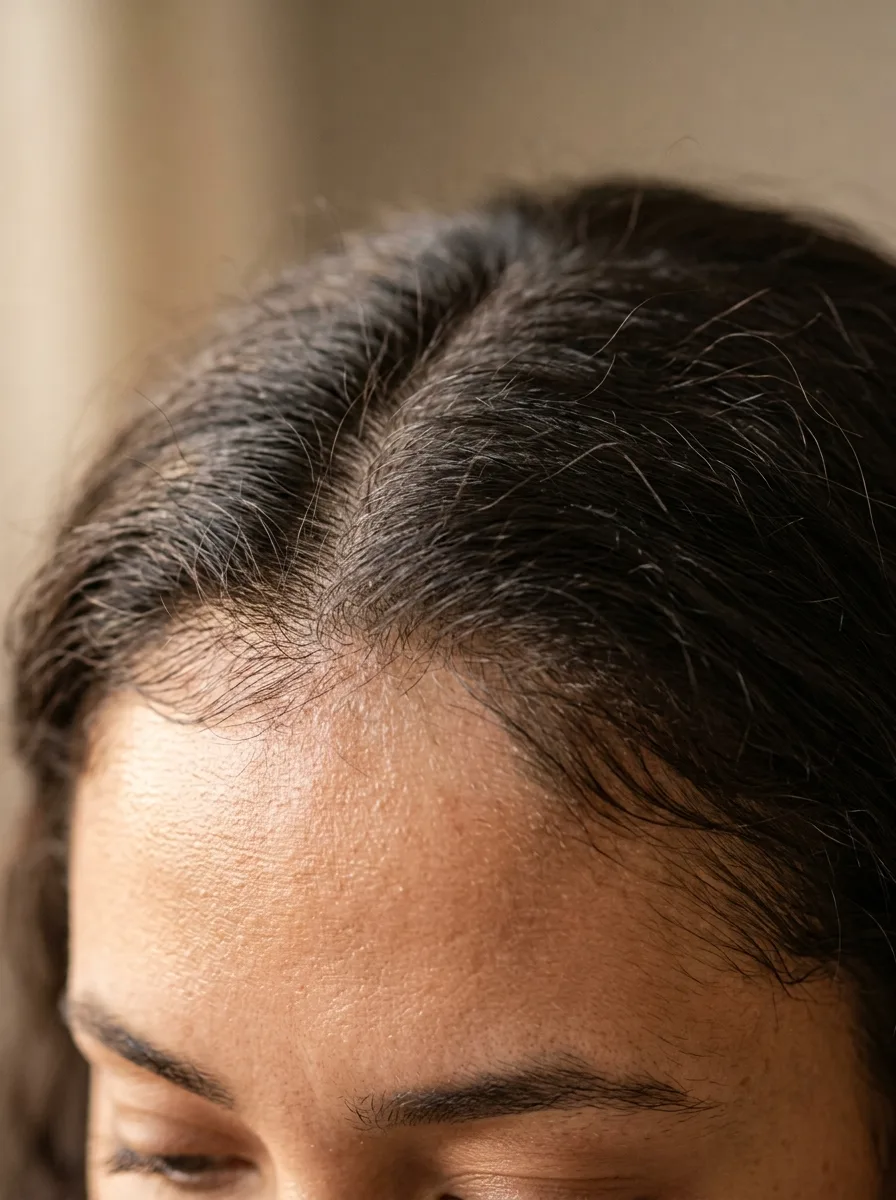
As with braids, tension is the thing to monitor during install, not just afterward — a snug wrap at the root is normal, but sharp pain or a wrap that feels like it’s pulling your scalp rather than just gripping your hair is worth flagging to your stylist immediately, especially along the hairline where traction stress shows up first.
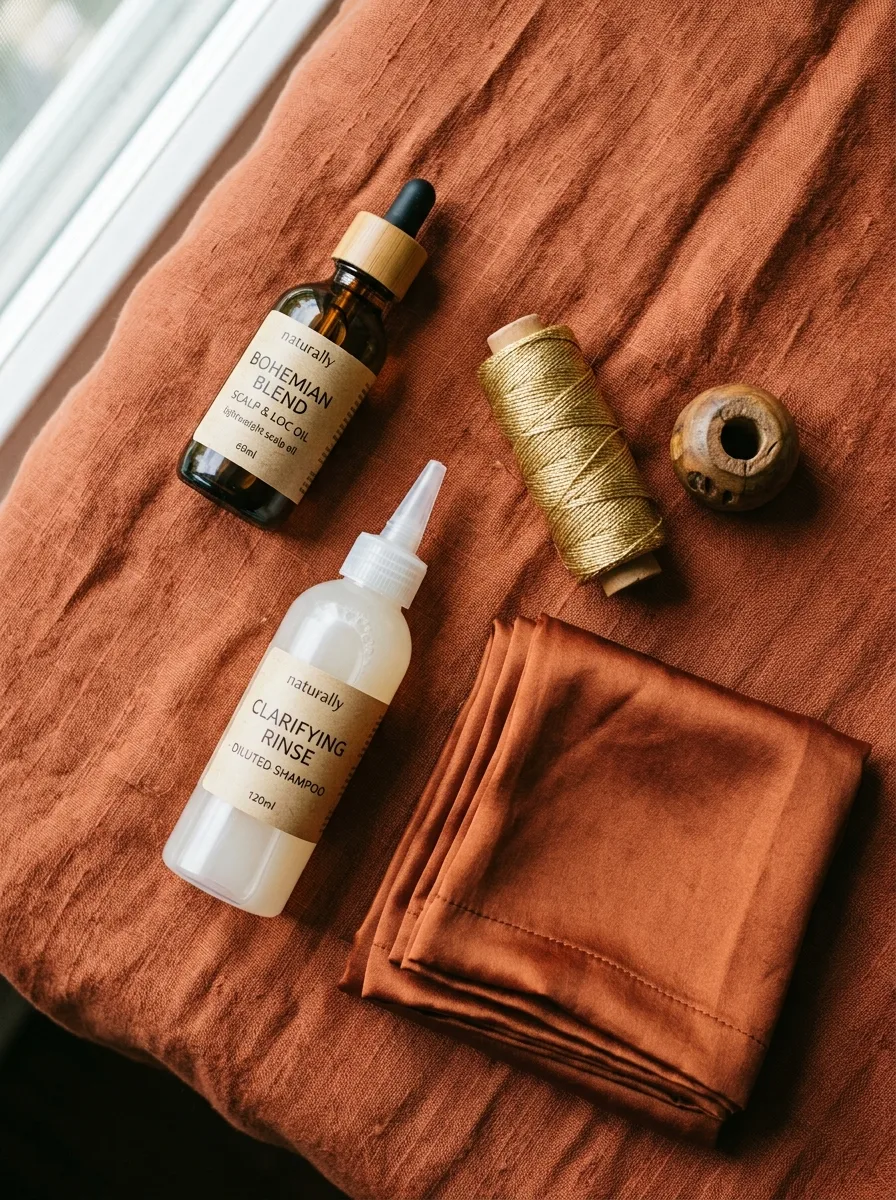
Scalp care matters even more with locs than with braids, since the thicker wrap can trap product and sweat against the scalp more easily. Apply a lightweight oil (avoid heavy butters, which build up fast under a wrap) directly to the root every 2-3 days, and do a scalp-only rinse with diluted shampoo roughly every 1-2 weeks — more often than you’d wash braids, since locs tend to hold odor sooner if the scalp goes untouched too long.
At night, a satin bonnet is close to essential; locs are heavier than braids and more prone to shifting or frizzing against a cotton pillowcase, and a loosely tied satin scarf around the perimeter helps keep edges smooth between installs.
Refresh curly accent pieces the same way you would on boho braids — a light water-and-leave-in mist, scrunched rather than rubbed — but be more careful with the wrapped sections themselves, since aggressive detangling or scratching at an itchy scalp can loosen the wrap and cause premature frizz at the root, which is the first sign a loc needs re-wrapping rather than a full takedown.
Avoid submerging locs completely for long stretches, like a long swim without a cap, in the first week or two, since a wrap that hasn’t fully settled can loosen faster when saturated.
A well-installed set typically holds 6-8 weeks, longer than most braided styles, since the thicker wrap resists loosening better than a thin braid does. New growth at the root is the main limiting factor — once it’s noticeable enough to see a gap between your scalp and the wrapped section, it’s time for a root re-twist, redoing just the base of each loc, rather than a full removal, which can extend the life of the same set by another few weeks.
Taking the whole style down, when you’re ready, means unwrapping rather than unbraiding — working the extension hair loose from the tip upward, section by section, ideally after a conditioner soak to soften everything first. It takes real time, often 2-4 hours for a full head, so don’t schedule it for a rushed evening.
If you plan to go straight back into another set, give your scalp a few days to recover first, even if it means a few days of low-maintenance twists or just wearing your natural hair loose. Locs put sustained weight on the root over weeks, and that recovery window matters more than it might seem like it does.
Locs hold updos better than most braided styles, since the thicker, more textured strands grip against each other instead of sliding loose — a low bun or half-up twist secured with just a single hair tie tends to hold all day without extra pins.
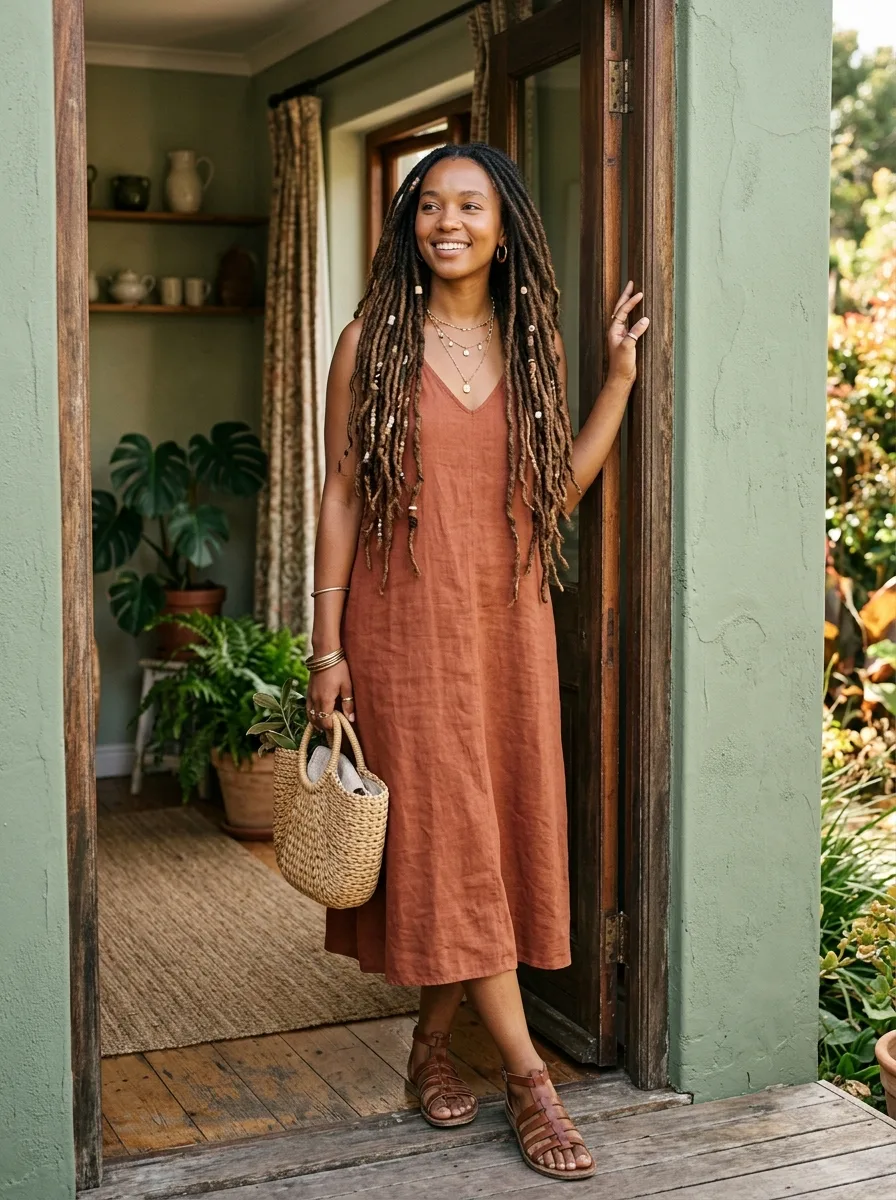
For the full look, boho locs pair naturally with the same warm, earthy wardrobe choices the rest of the aesthetic leans on. If you’re building out a whole boho look around the style, our boho outfit ideas guide covers the loose silhouettes and natural-fiber pieces that tend to photograph well alongside textured hair like this, without competing with the beads, wraps, or gold accents already doing visual work up top.
Boho locs typically cost more than braids — $200-$450 for a full head is a reasonable range, depending on how many locs, how thick, and whether you're adding curly accent pieces. Thinner, more numerous locs cost more because of the added labor; a thicker, lower-count set installs faster and usually costs less.
No — that's the core distinction. Boho locs are a temporary install where extension hair is wrapped around your natural hair, so when the style comes out, your natural hair underneath is unaffected structurally the way it would be by years of real locking. Traditional locs and sisterlocks are a permanent hair journey that can't be undone without cutting; boho locs can be fully removed.
Light activity and normal sweating are fine as long as you keep up with scalp-focused washing. Avoid fully submerging locs for long stretches, like a long swim without a cap, in the first week or two specifically, since a wrap that hasn't fully settled can loosen faster when saturated.
Locs generally hold longer, 6-8 weeks versus 4-6 for braids, and grip updos better since the thicker strands catch against each other. Braids are lighter, faster to install, and give you more styling flexibility week to week if you like changing things up.
Boho Braids 101: Styles, Care Tips & Inspiration →Yes — goddess locs or soft locs finished with gold thread or a few beads near the base photograph well and hold an updo all day without extra pins, which matters for a long event. If you're planning a full boho bridal look, it helps to settle on your dress silhouette first, since that often drives how much length and volume you'll want up top.
Boho Wedding Dresses →Odor under a loc wrap usually means the scalp went too long between rinses, not that anything's wrong with the install. Do a scalp-only wash with diluted shampoo roughly every 1-2 weeks, more often than you'd wash braids, since the thicker wrap traps product and sweat more easily — if smell shows up sooner than that, shorten the interval rather than waiting for takedown.
 Braids
Hairstyles & Beauty
Everything to know about boho braids — styles, curly-hair accents, and how to keep them looking fresh.
 Braids
Hairstyles & Beauty
A full guide to boho knotless braids: styling variations, install tips, and maintenance.
 Nails
NailsHairstyles & Beauty
Earthy, boho-inspired nail art ideas — from terracotta minimalism to sun-and-moon accents.