Home Decor · Bedroom
50+ Dreamy Boho Bedroom Ideas to Transform Your Space
A complete guide to designing a warm, layered boho bedroom — from bedding and lighting to plants and wall decor.
10 min read
Home Decor · Bedroom
A complete guide to designing a warm, layered boho bedroom — from bedding and lighting to plants and wall decor.
A boho bedroom works the moment it stops looking like it came from a single store trip — a linen duvet with a few honest wrinkles in it, a rug that’s a little worn at the edges, a lamp throwing warm light instead of the cold white glow of an overhead fixture. That’s most of the trick: texture, warmth, and pieces that look gathered over time rather than bought in one afternoon. Below is the specific stuff — bedding, rugs, lighting, wall art, plants — that separates a boho bedroom that actually feels lived-in from one that’s just a macrame hanging bolted above the headboard with nothing else going on around it.
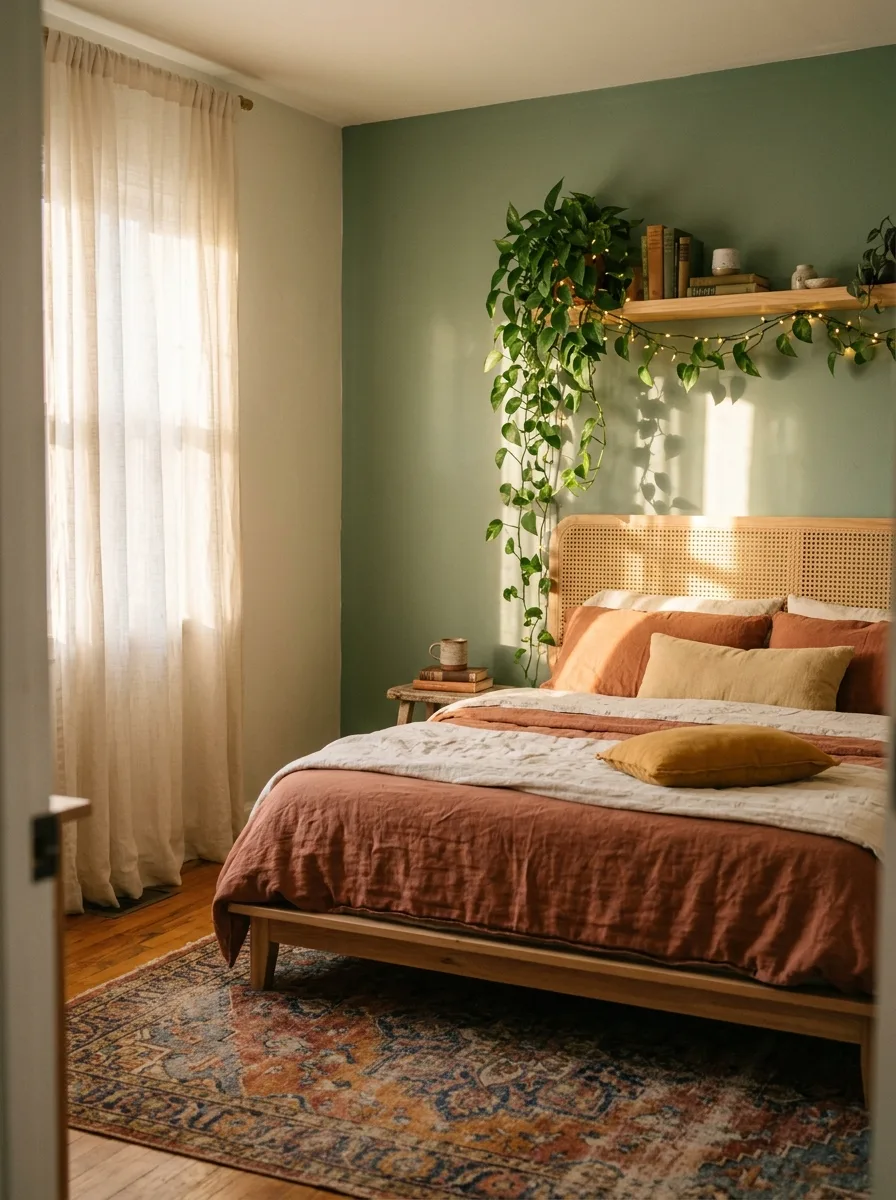
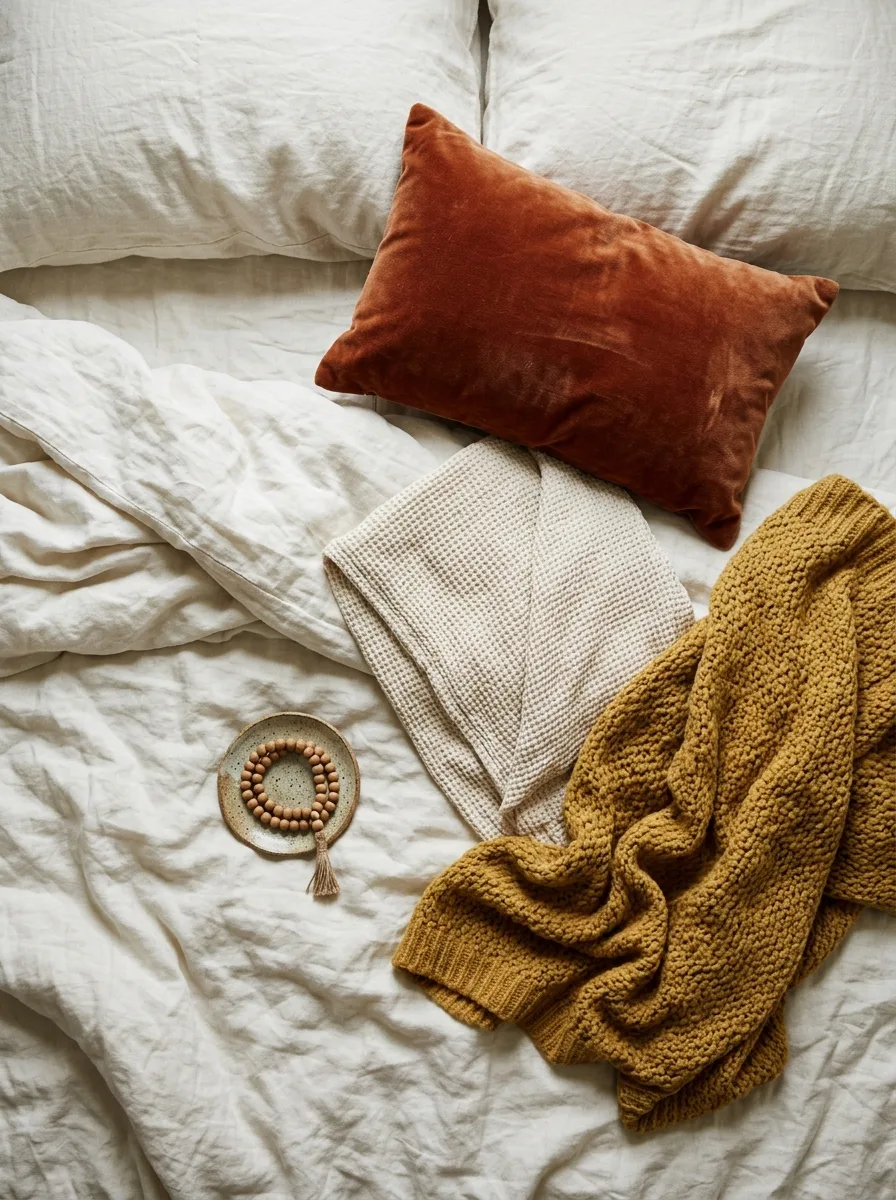
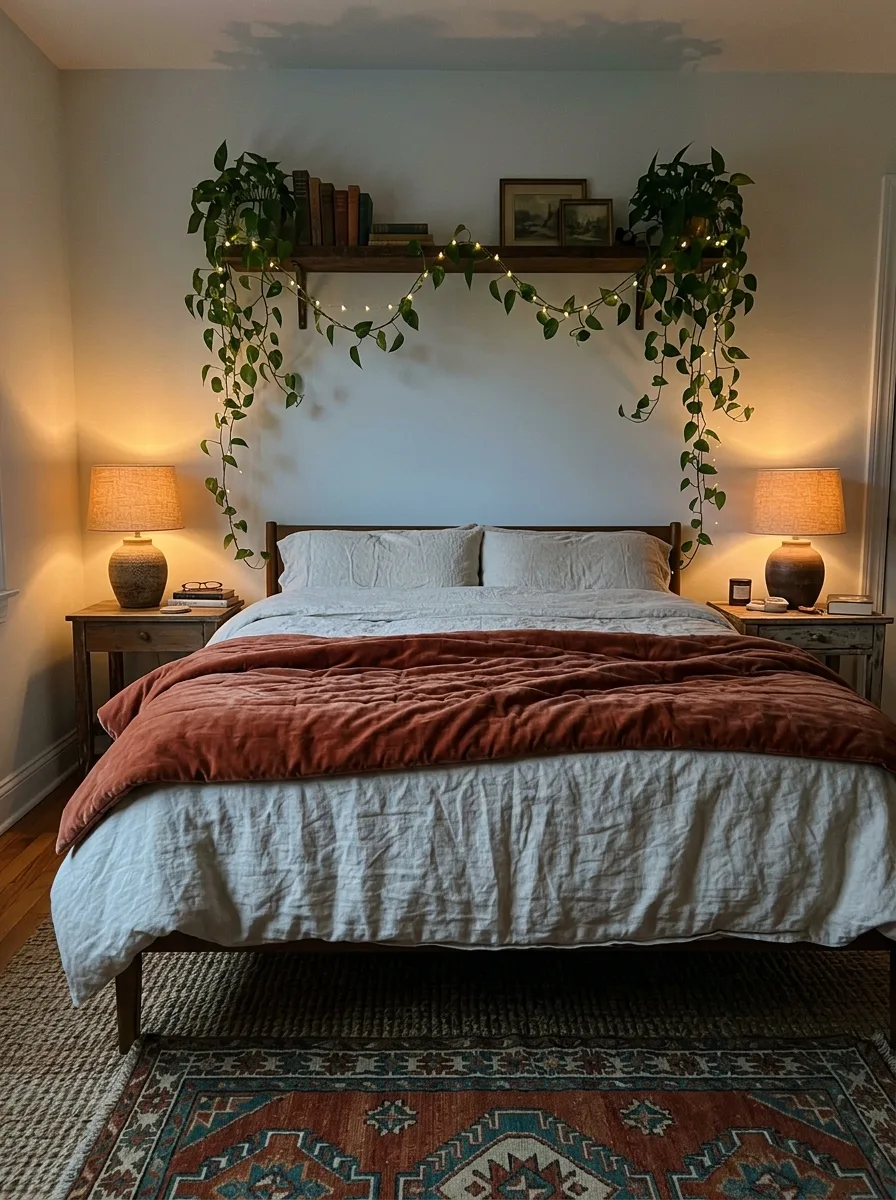
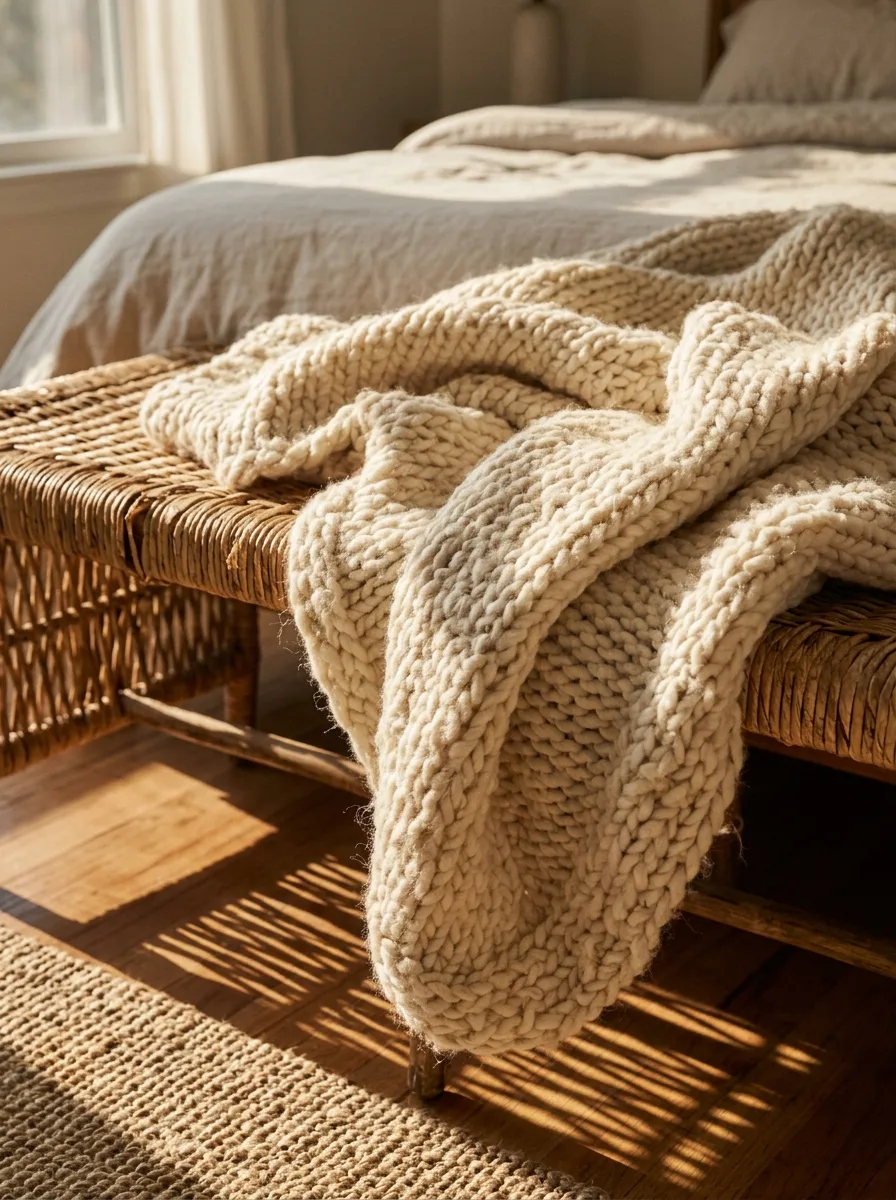
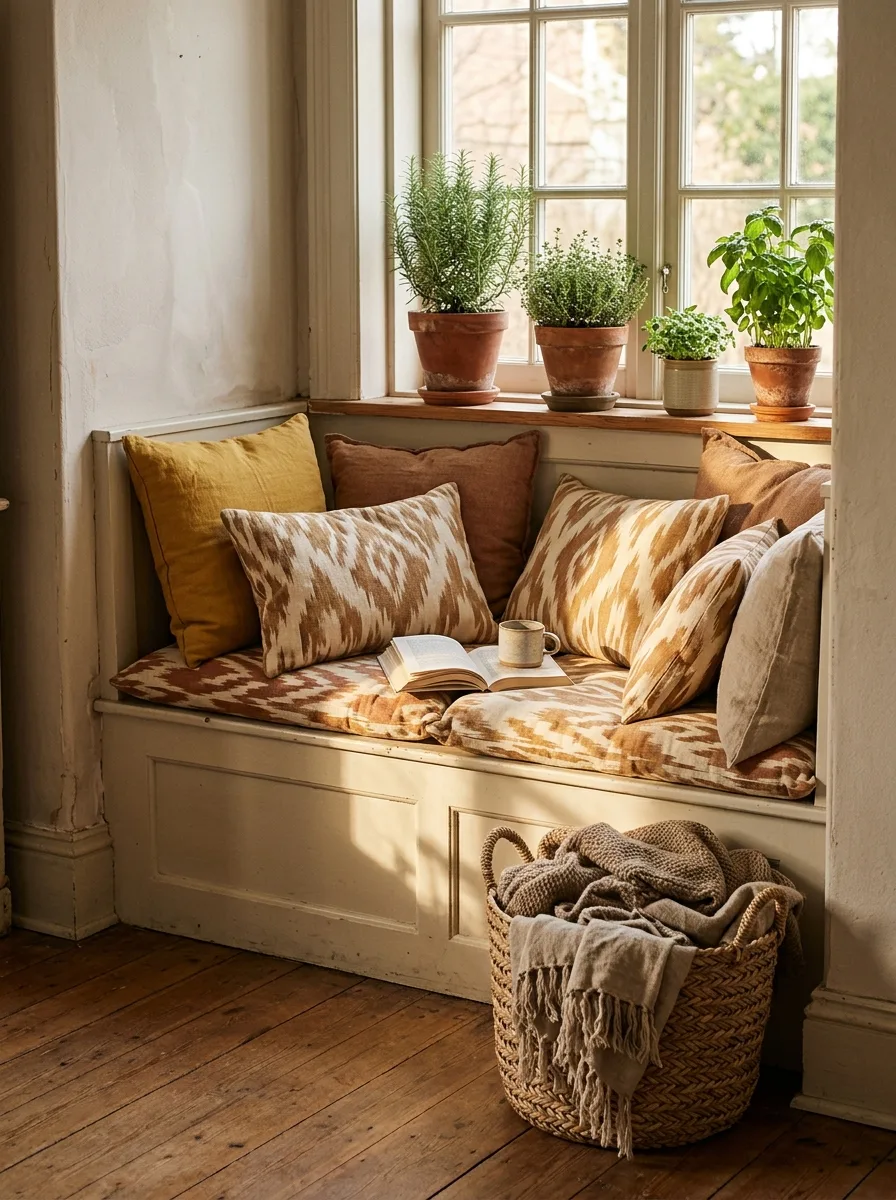
Skip the matching three-piece bedding set. It’s the single fastest way to make a bedroom look like a catalog page instead of a room someone actually sleeps in. Start with a linen or linen-blend duvet cover in a warm white, oatmeal, or clay tone — linen has a slubby, slightly rumpled texture even right off the line, which does a lot of the “lived-in” work on its own. Fold a chunkier knit or waffle-weave throw across the foot of the bed, then build the pillow arrangement in layers instead of pairs: two standard sleeping pillows, one oversized square European pillow in a mudcloth or ikat print behind them, and a smaller lumbar pillow in mustard or rust in front. Four to five pillows is the sweet spot — fewer looks sparse, more than six starts looking like a hotel display you have to clear off every night.
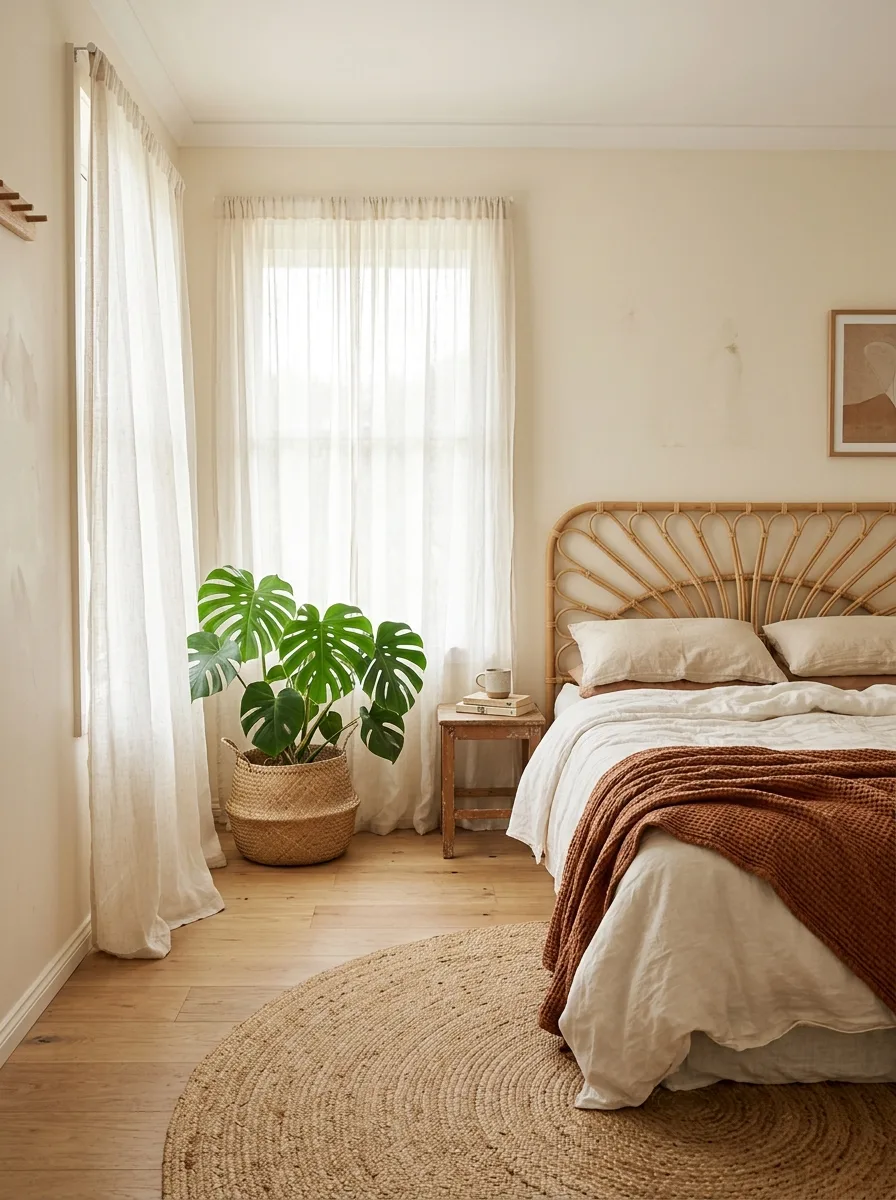
If your frame is a low platform bed in wood or rattan, you’re already halfway there — that low-to-the-ground silhouette is core to the boho bedroom look and reads more relaxed than a tall upholstered headboard. If you’re stuck with a taller, more formal frame, don’t fight it; just put your energy into the bedding layers and the wall above it instead.
A jute rug is the workhorse base layer for a boho bedroom — natural, textured, and inexpensive enough that an 8x10 or 9x12 usually runs $80–150. The sizing mistake most people make is buying too small: the rug should extend at least 18 inches past each side of the bed and nightstands, so it reads as a foundation for the whole seating area rather than a bath mat peeking out from under the frame. Once that’s down, layer a smaller flatwoven kilim or vintage-style rug at an angle near the foot of the bed or on the side you step out of first — it gives your feet something soft to land on and adds pattern without committing pattern to the whole floor.
Resist adding a third rug or a shag layer on top. Two textures (flatweave plus woven jute) is enough contrast; three starts competing with the pillows, the throw, and the wall hanging, and the room stops reading as curated and starts reading as cluttered. If you’re patient, secondhand marketplaces are a genuinely good source for vintage Turkish or Moroccan-style rugs in the $40–120 range, often with the kind of worn-in pattern that’s hard to fake new.
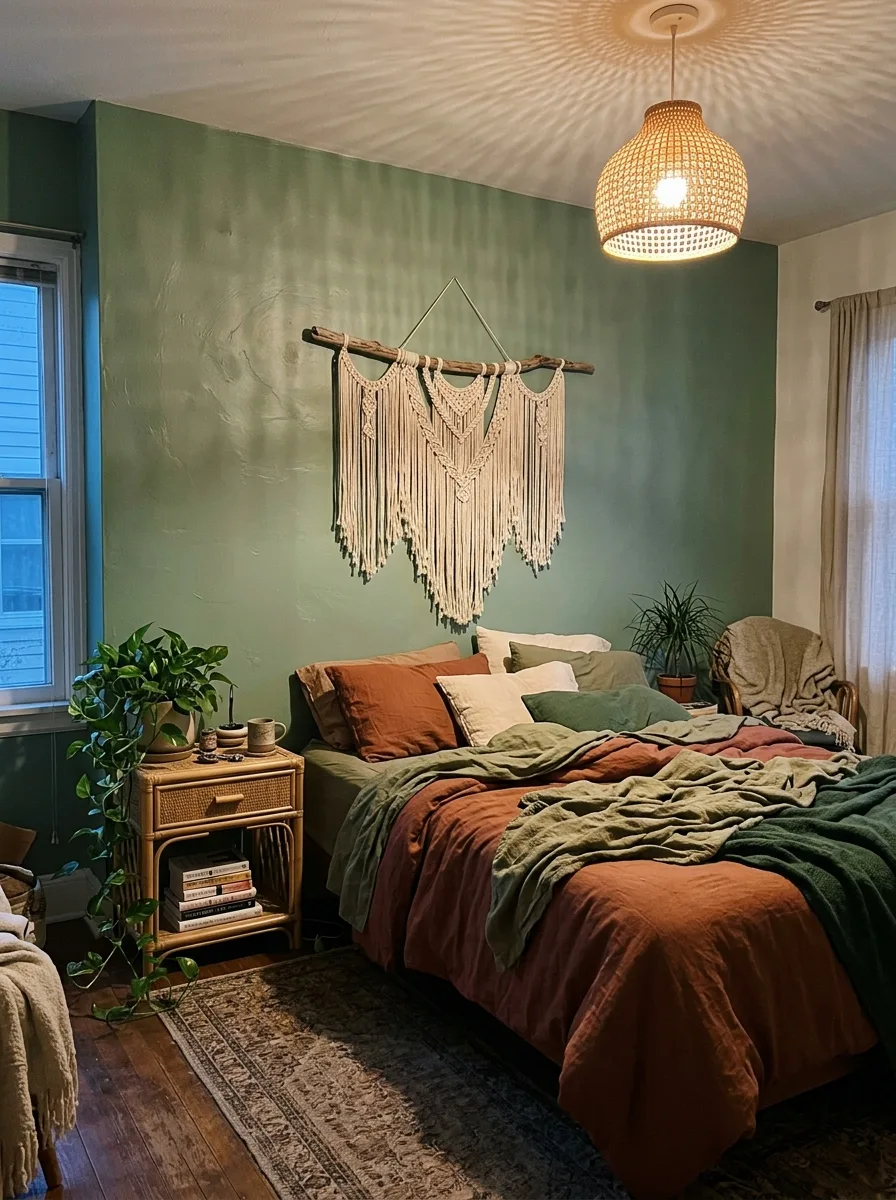
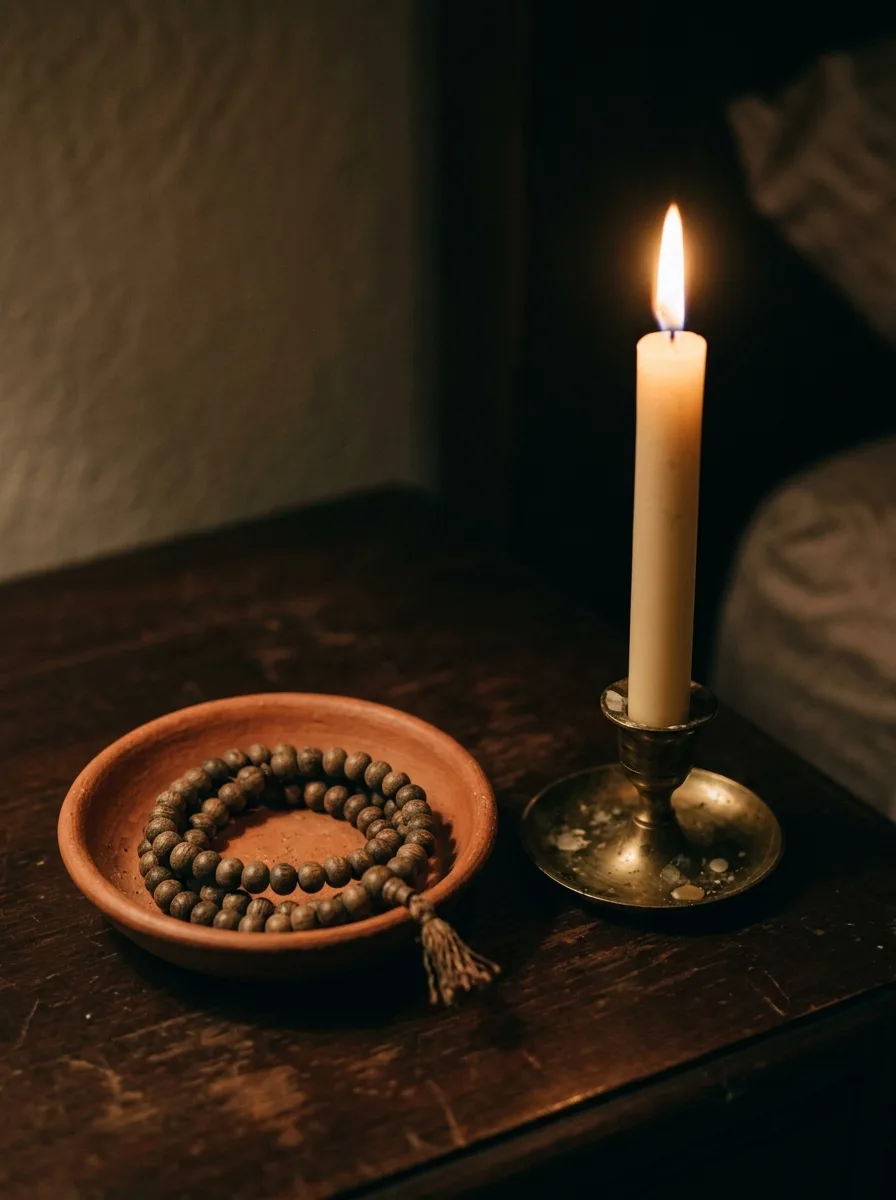
Nothing kills a boho bedroom faster than a bare ceiling fixture with a cold white bulb. The cheapest fix is swapping to a warm 2700K bulb and simply turning the overhead off most evenings in favor of layered light sources instead: a rattan or woven-shade pendant (plug-in swag versions exist if you can’t rewire a hardwired fixture), a ceramic table lamp with a linen shade on each nightstand, and one clean run of warm white string lights along a shelf or tucked into a corner of the headboard. One deliberate run of lights looks intentional; ten loops draped everywhere reads more like a dorm room than a styled space.
The rattan pendant — the kind that throws dappled, basket-weave shadows across the ceiling and walls at night — is one of the most recognizable signals of the whole aesthetic, and clip-over shades that fit an existing fixture without an electrician typically run $60–150.
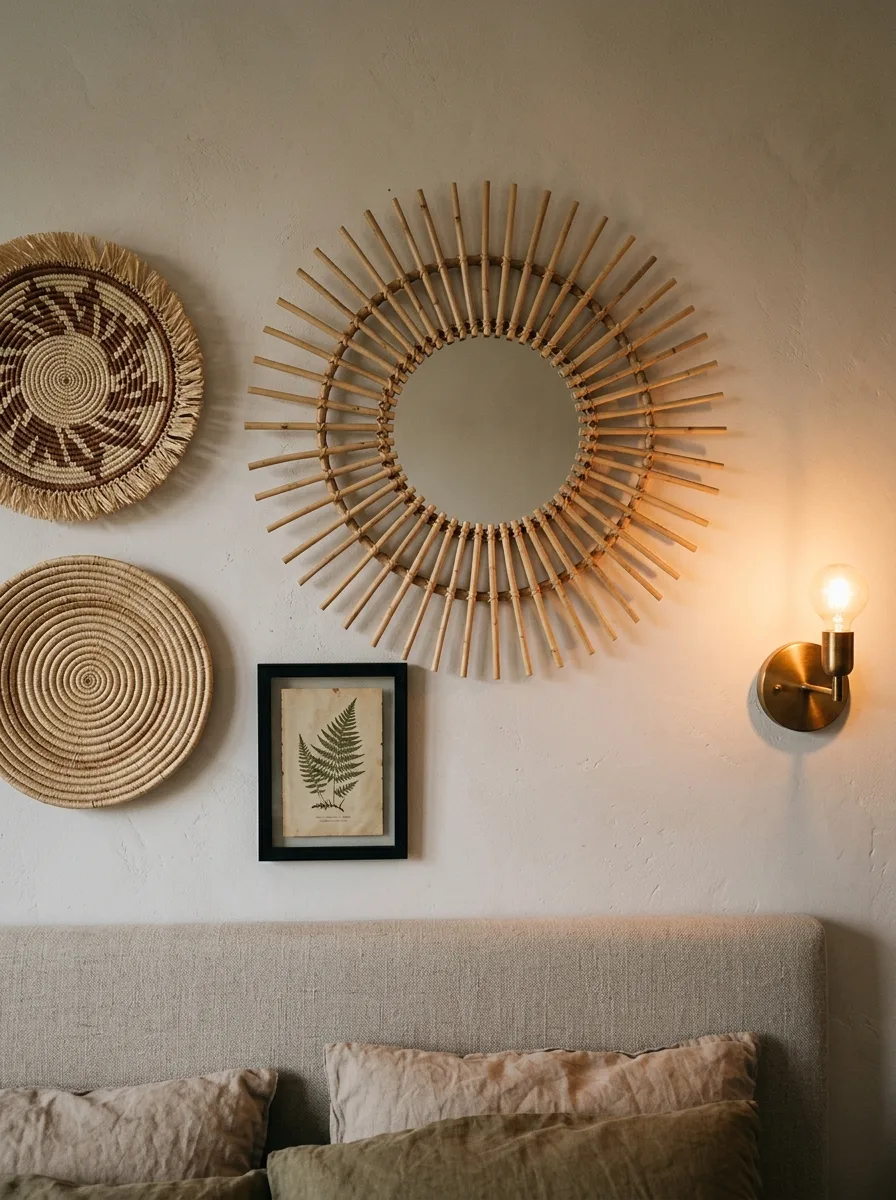
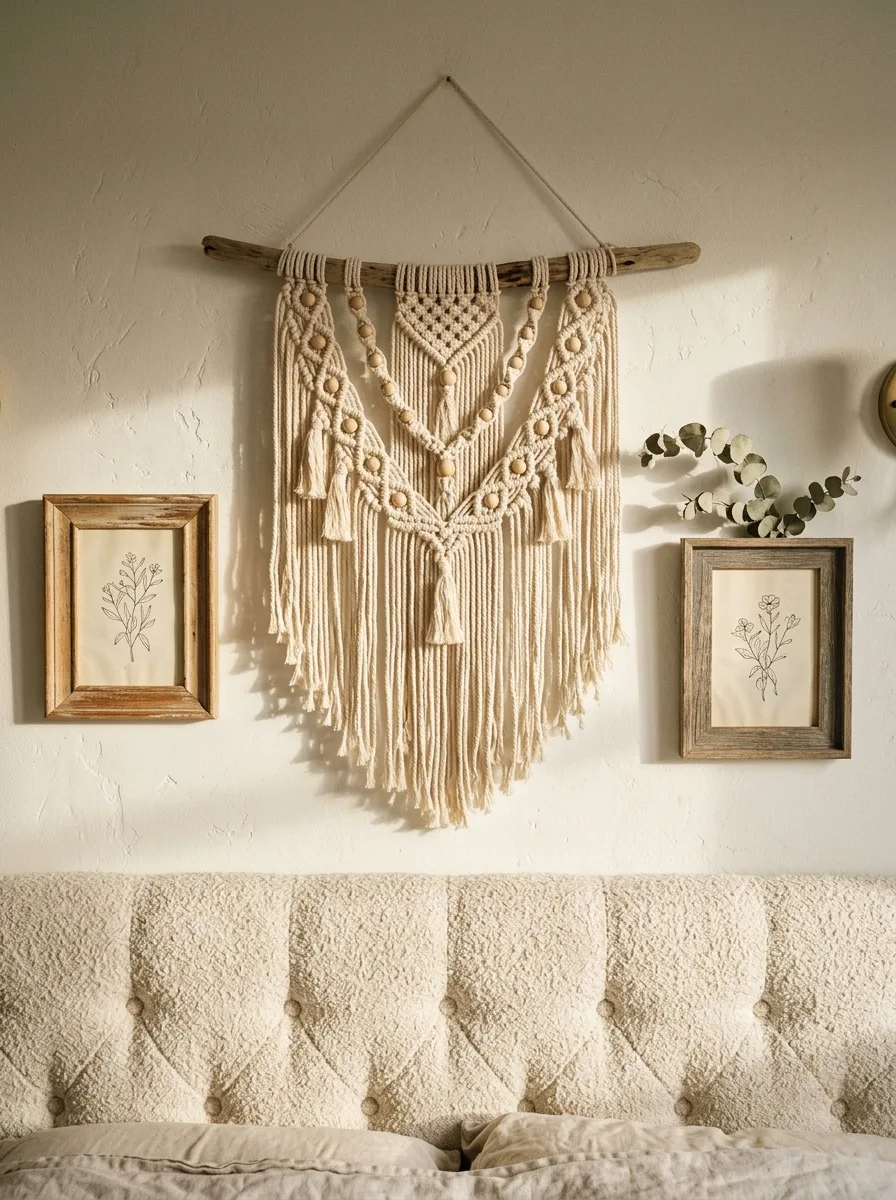
Rather than hanging a single large framed print above the bed, build a small cluster instead. A macrame wall hanging works well as the anchor, centered or slightly off-center above the headboard, flanked by two or three smaller pieces — a botanical print, a small round mirror, a woven rattan fan or disc. Keep the total cluster roughly as wide as the bed frame itself rather than stretching it across the whole wall, and leave 6–8 inches of breathing room above the headboard so the arrangement reads as hung on the wall, not stacked on the furniture. For a full breakdown of spacing, framing choices, and how to mix textures without it looking chaotic, our guide to boho wall art and wallpaper ideas covers the layout math in more detail.
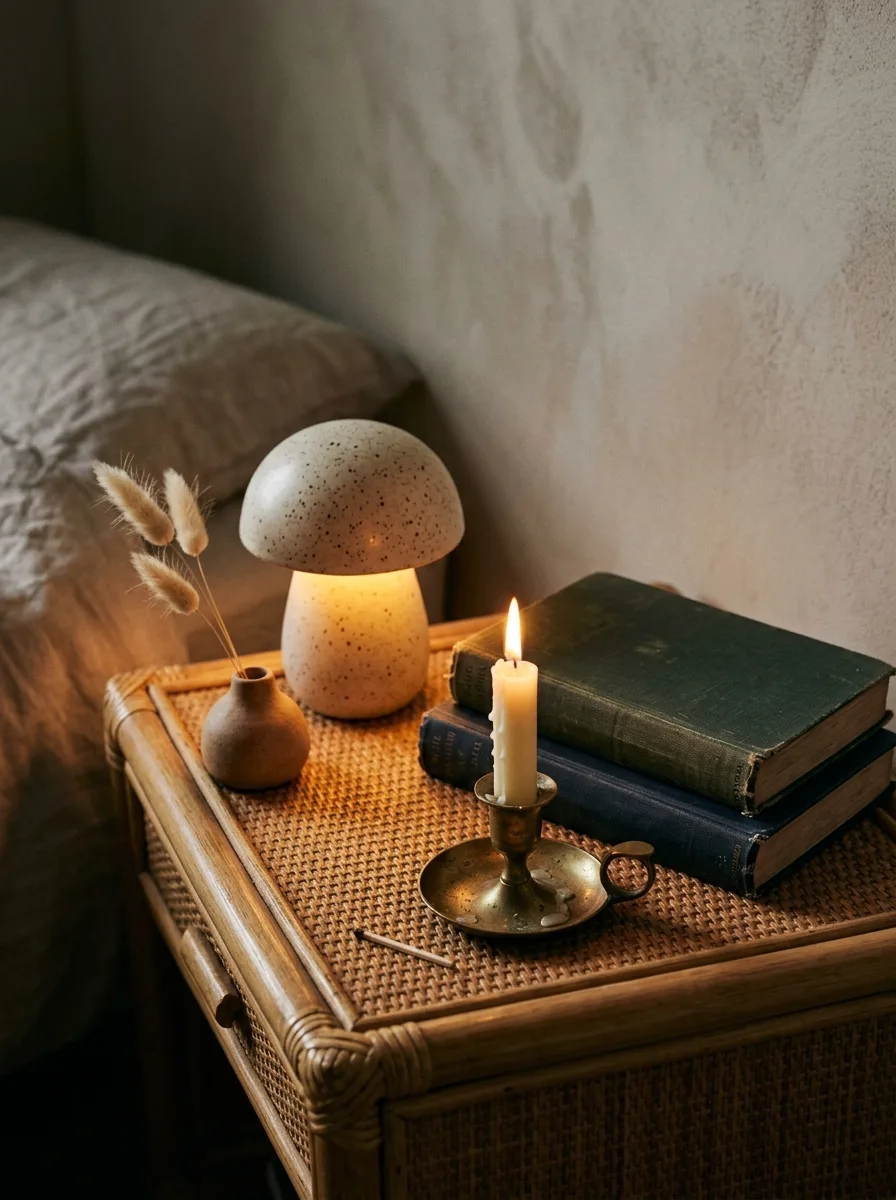
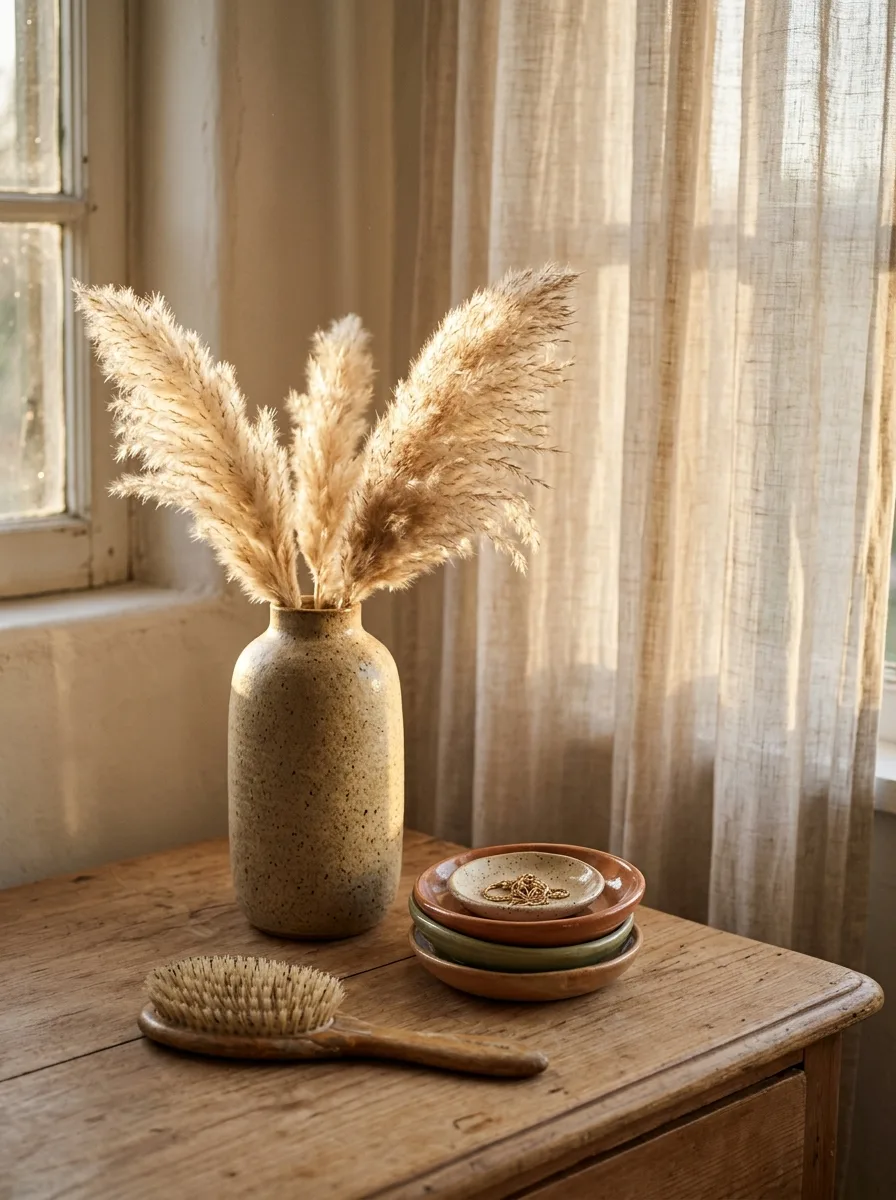
If your nightstands don’t match — and in a boho bedroom, they often shouldn’t — give each one its own small vignette instead of forcing symmetry. One side might hold the lamp, a stack of two or three books, and a small dried-flower stem in a bud vase; the other might hold the lamp plus a ceramic dish for jewelry and a single trailing plant. Matching is not the goal; balance is — each side should feel similarly weighted even if the objects on it are different.
One or two plants is plenty for a bedroom. More than that turns the room into a greenhouse and pulls focus away from the bed, which should be the visual anchor. A single 6-inch terracotta pot holding a trailing pothos or philodendron on a nightstand or dresser corner does more for the room than several small succulents scattered across every surface — it has enough presence to register as a design choice rather than an afterthought. For something that needs zero upkeep, a bundle of dried pampas grass or dried florals in a thrifted ceramic vase on the dresser holds its look indefinitely and never needs watering.
Keep your material palette narrow: rattan, jute, linen, ceramic, and maybe a little brass. Mixing in too many other materials at once — glossy metal, glass, plastic finishes — undercuts the warmth you’re building everywhere else. A fringed throw blanket draped over the corner of an accent chair or the foot of the bed is a small, cheap addition that adds real texture for under $30.
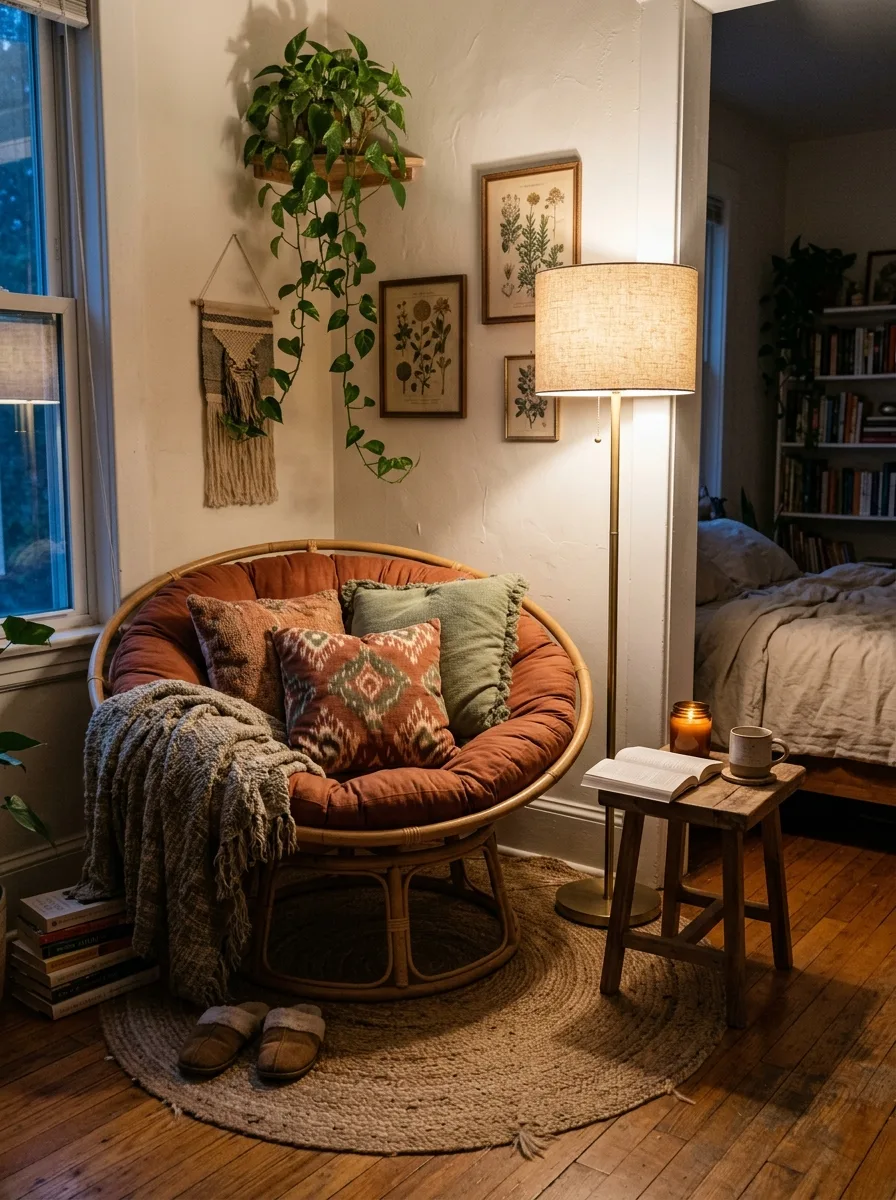
A rattan chair or a stack of floor cushions in an unused corner, paired with a small round side table and a floor lamp with a woven or paper shade, turns dead space into the most-used spot in the room. Toss a folded quilt over the arm of the chair for grabbing on cold mornings. If you have a rug remnant or a small vintage rug lying around, use it to define the nook as its own zone rather than letting it blend into the rest of the floor — the same layering logic that makes a boho living room feel gathered rather than sparse works at this smaller scale too.
If you’re working through this gradually rather than all at once, prioritize in this order: the rug first, then the bedding layers, then the lighting swap, then the wall cluster, and plants last. The rug and bedding do the most visual work per dollar spent and take an afternoon to sort out; the wall art and lighting can be built up over the following few weekends without the room ever looking unfinished in the meantime.
A full refresh — jute rug, layered bedding, a lighting swap, and a small wall cluster — typically lands between $300 and $600. The rug ($80–150) and a clip-over rattan pendant shade ($60–150) are the two biggest line items, so on a tighter budget, start with those two and add the wall art and extra layers over the following weekends.
Yes — almost everything in a boho bedroom is textile- or furniture-based rather than structural. Use a plug-in swag pendant instead of a hardwired fixture, removable adhesive hooks for the macrame hanging, and let the bedding, rug, and lamp layers do the heavy lifting since none of it touches the walls. Landlords rarely object to any of it, and it all comes down clean at move-out.
Stick to four or five: two sleeping pillows, one oversized European sham in a mudcloth or ikat print, and a smaller lumbar pillow in front. Past six, you're into hotel-display territory — pillows you have to clear off the bed every night instead of ones that actually get used.
Boho on its own usually means the loose, layered, natural-material look — rattan, jute, linen, warm earth tones, gathered rather than matched. 'Boho chic' is a more curated, polished version of the same DNA: fewer, better pieces instead of maximalist layering. If you're not sure which version you're actually drawn to, our breakdown of what boho chic means style-wise carries over directly to how you'd edit a bedroom.
What Is Boho Chic? The Aesthetic Explained →No, but it's the fastest way to get there from a blank wall. A round rattan mirror, a cluster of botanical prints, or a large framed vintage textile can do the same anchoring job above a headboard — the wall just needs one piece with enough visual weight to anchor smaller pieces around it. For the layout math on spacing and mixing pieces, see our full wall art guide.
Boho Wall Art & Wallpaper Ideas →A good jute rug holds up for 3–5 years under regular bedroom foot traffic before it visibly flattens or sheds, longer than it would in a high-traffic living room. Vacuum it on a low-suction setting since jute fibers can pull apart under a beater bar, and blot spills immediately — jute absorbs liquid fast and stains more permanently than wool or synthetic fibers.
 Bathroom
Home Decor
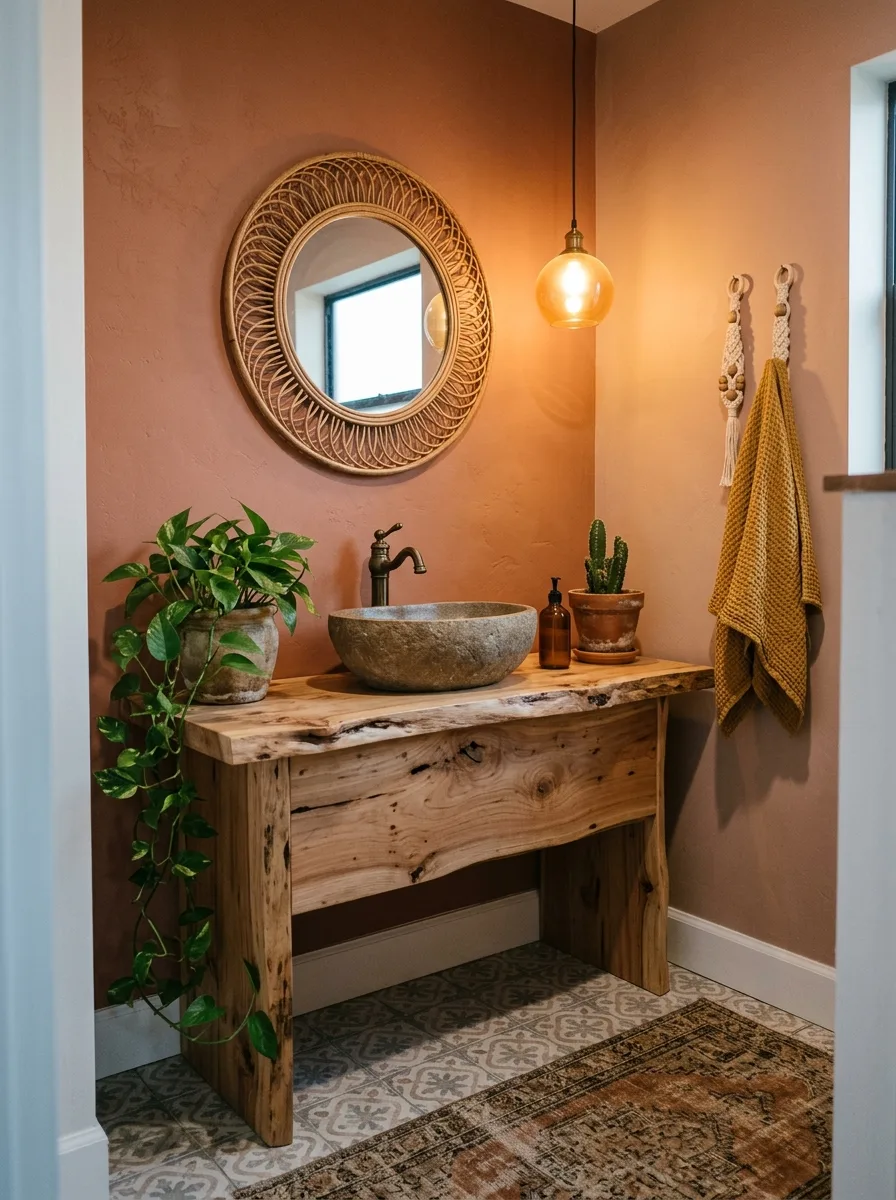
Budget-friendly boho bathroom upgrades, from textiles and plants to lighting and small storage swaps.
 Kitchen & Dining
Home Decor
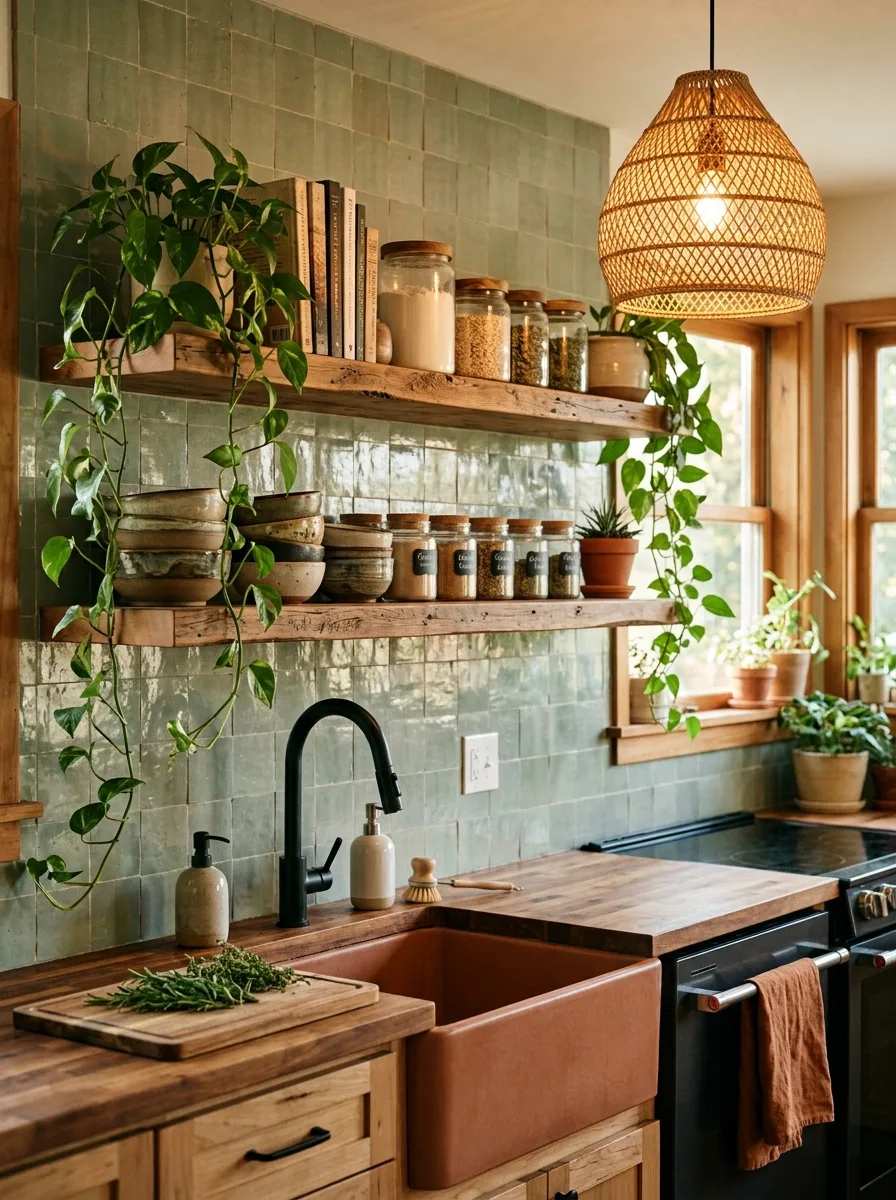
Simple, budget-friendly ways to bring bohemian warmth into your kitchen and dining space.
 Living Room
Home Decor
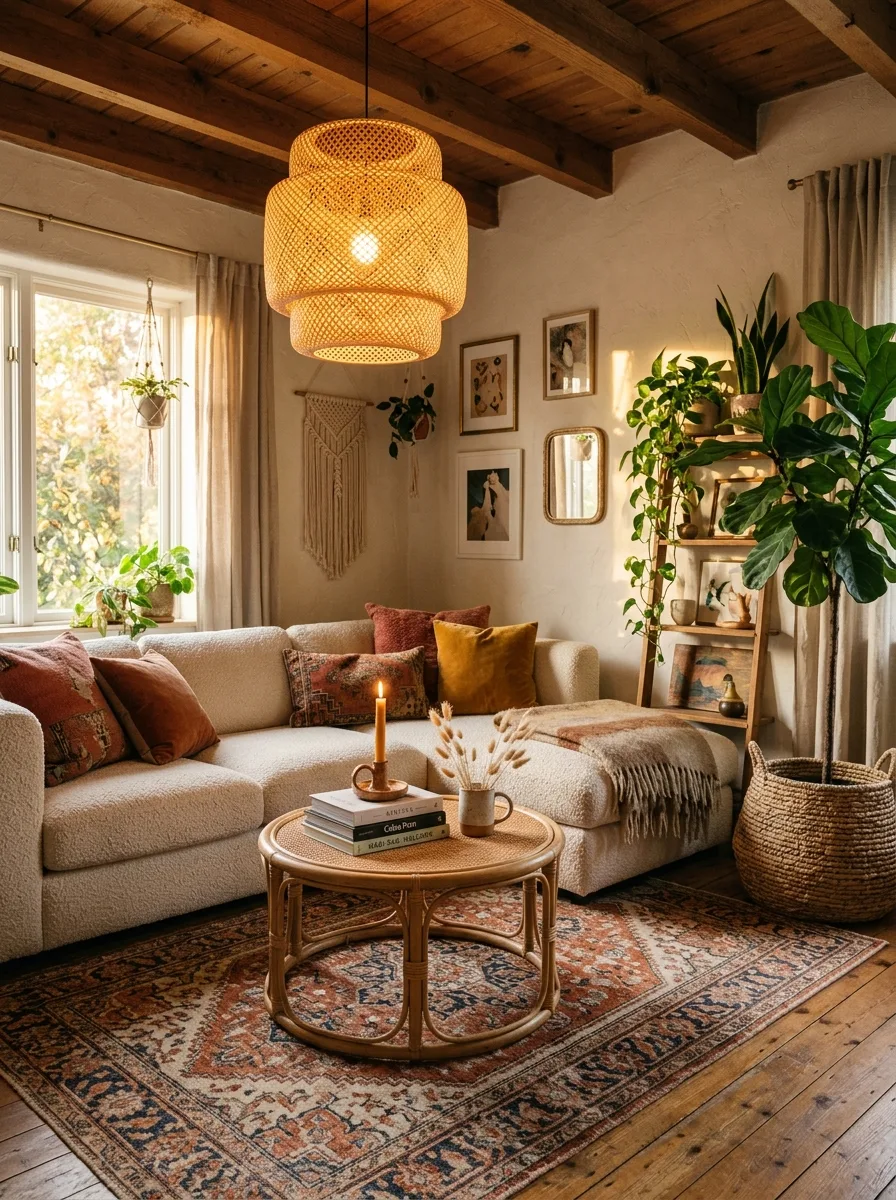
How to style a bohemian living room that feels curated, warm, and lived-in using texture, natural materials, and color.