Home Decor · Living Room
Boho Living Room Inspiration: Cozy, Earthy Ideas That Wow
How to style a bohemian living room that feels curated, warm, and lived-in using texture, natural materials, and color.
9 min read
Home Decor · Living Room
How to style a bohemian living room that feels curated, warm, and lived-in using texture, natural materials, and color.
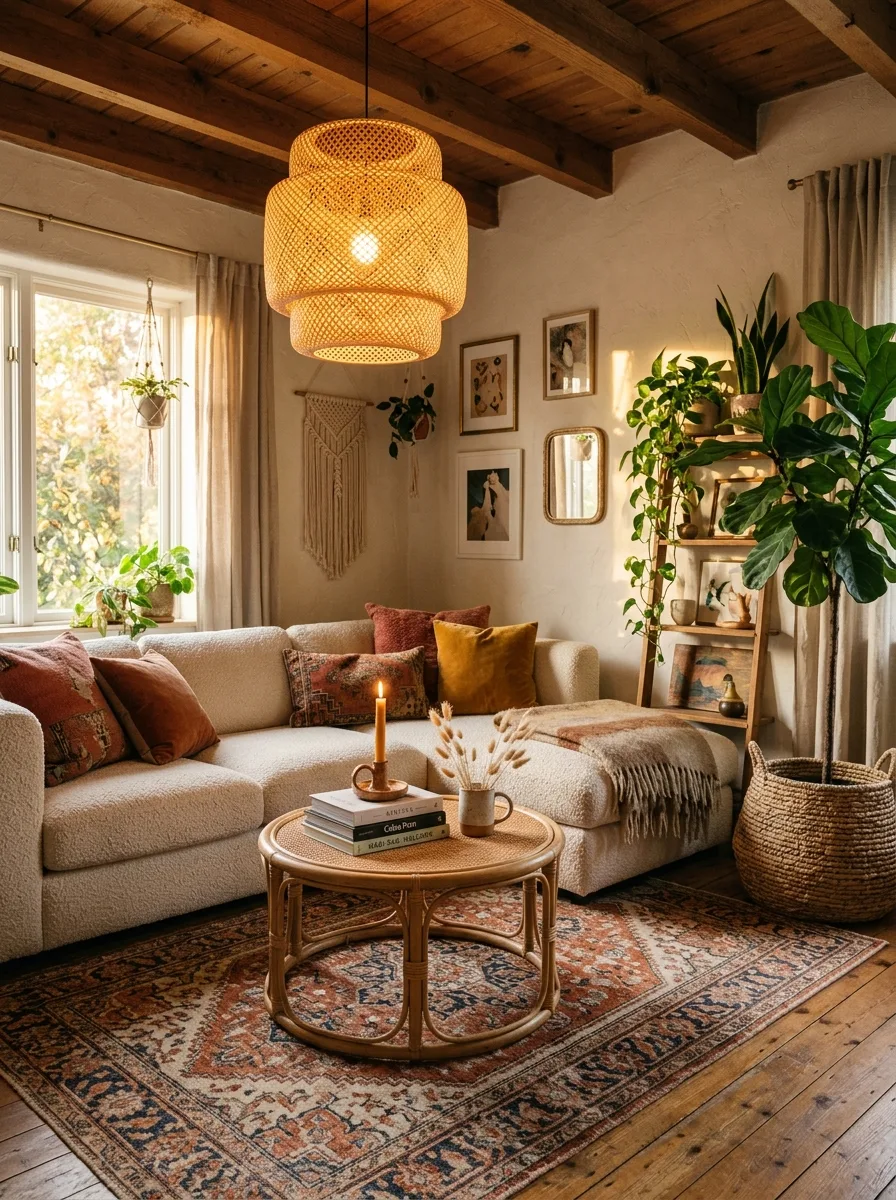
A good boho living room reads as gathered, not decorated — a room where the rug has a story, the coffee table has a few water rings you’ve stopped worrying about, and nothing in the seating area matches on purpose. That contrast is what makes it work: warm, earthy color underneath a lot of visual texture, held together by a handful of repeating materials so it doesn’t tip into clutter. This guide walks through the specific decisions — furniture, rugs, lighting, wall styling, plants — that make a living room feel cozy and curated at the same time, instead of just busy.
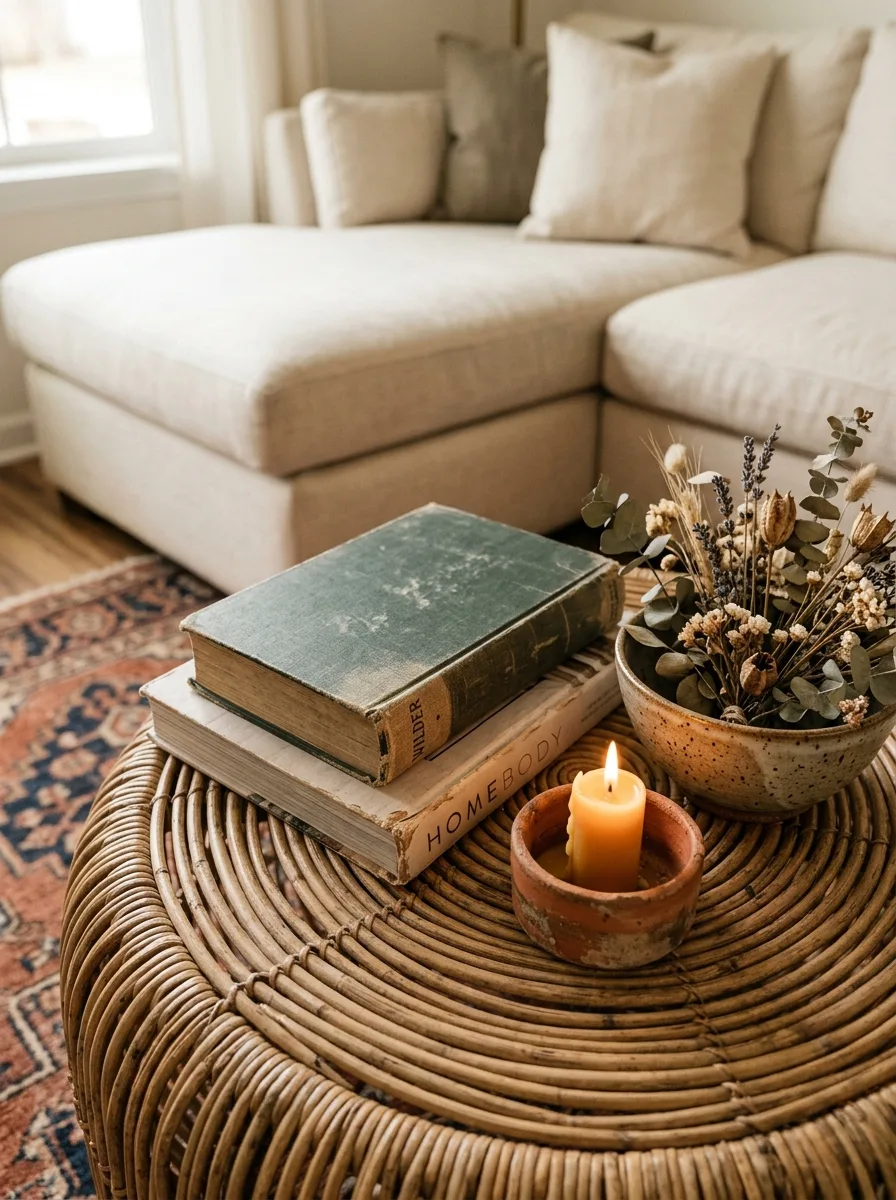
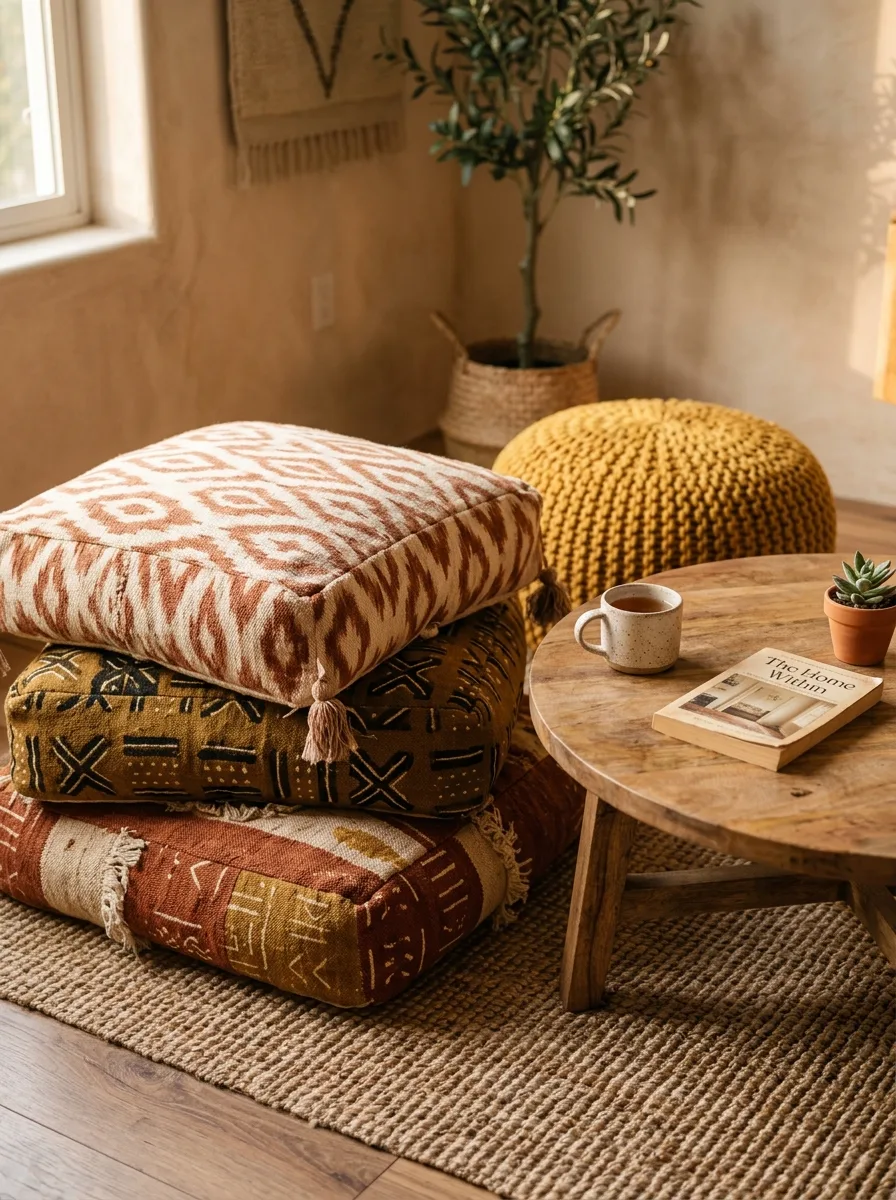
Height matters more than people expect in a boho living room. A low coffee table — 16 to 18 inches tall, in a warm wood tone or woven rattan — keeps sightlines open and gives the whole seating arrangement a relaxed, floor-level feel that a tall glass-and-chrome table works against. If you already own a taller, more modern table, you don’t need to replace it outright; swapping in a woven rattan tray on top, or setting a low wooden stool beside it for drinks, does a surprising amount to soften the silhouette.
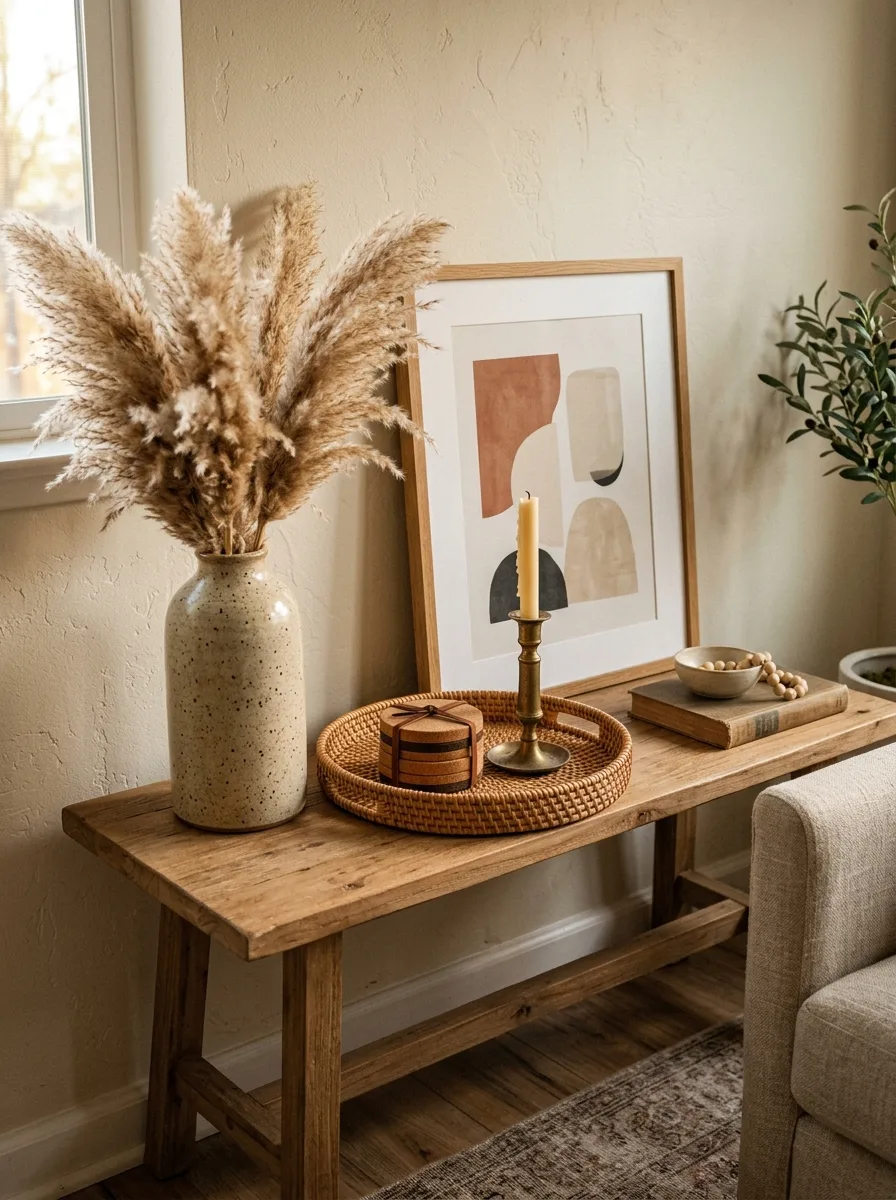
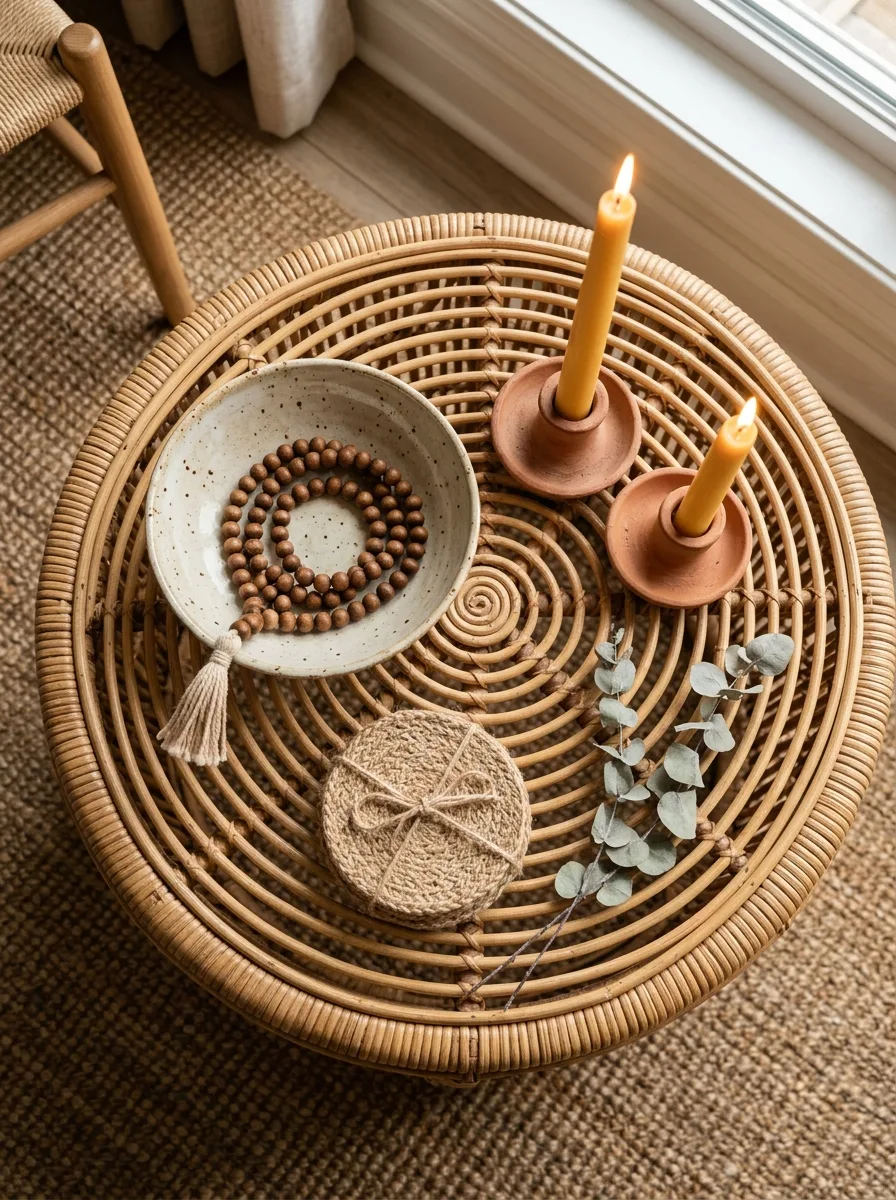
Style the surface with restraint: a stack of two or three well-worn books, a ceramic bowl for keys or dried florals, and one candle in a terracotta or stoneware holder is plenty. A coffee table with eight objects on it stops being usable and starts being a shelf.
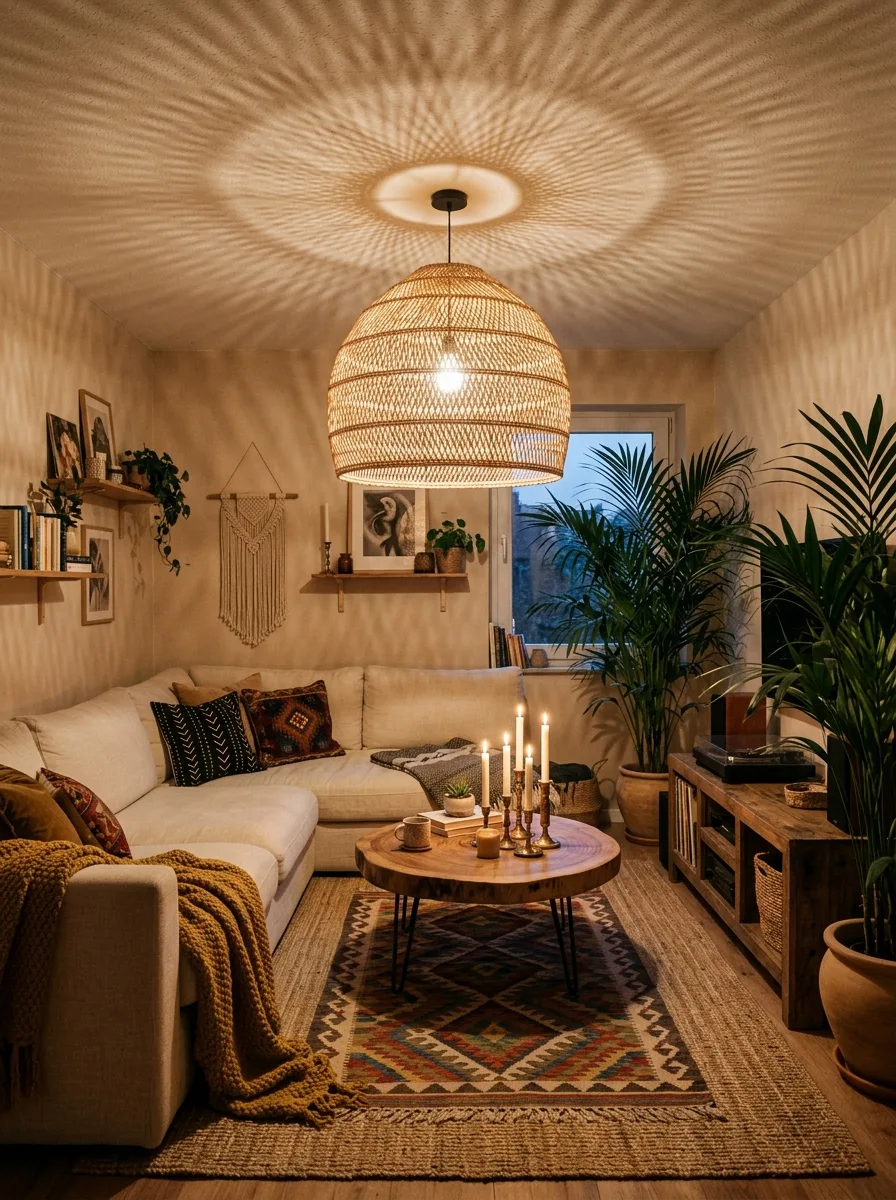
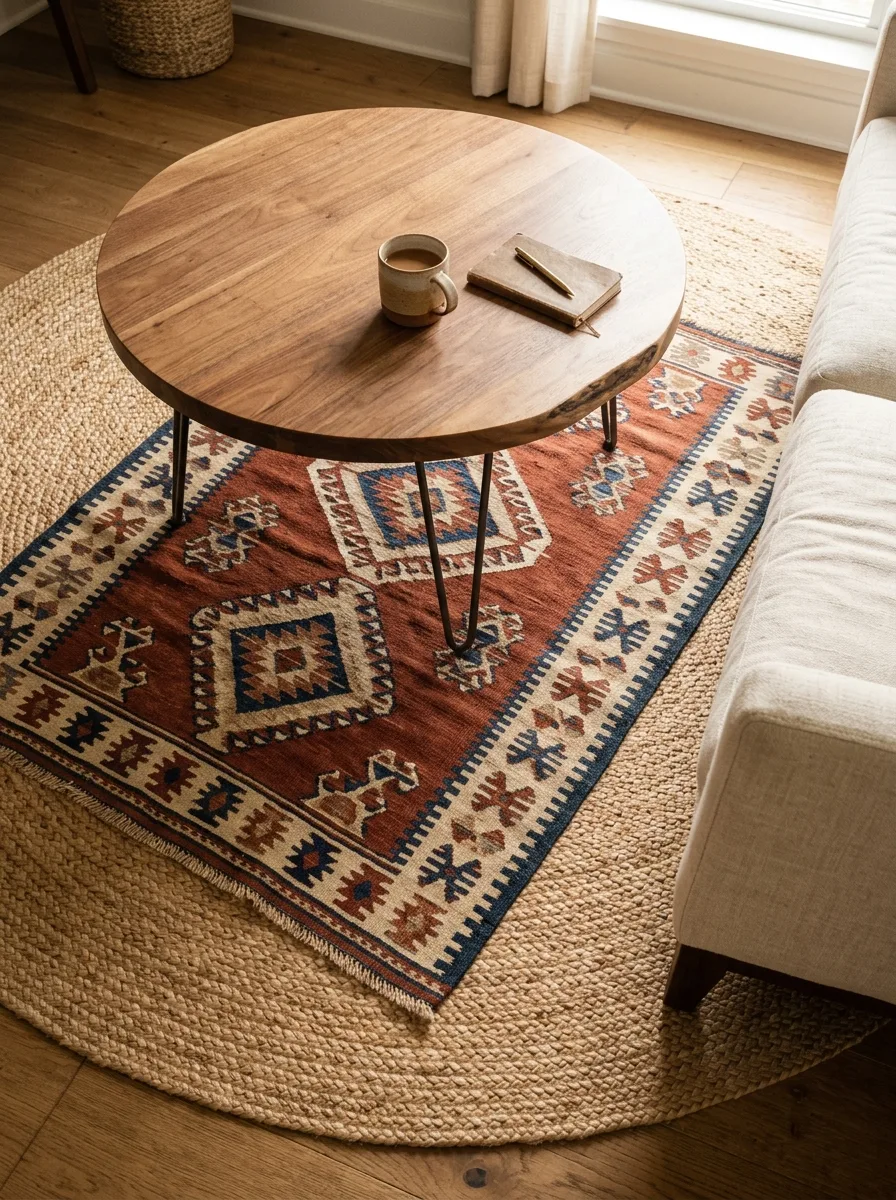
One rug rarely does enough work on its own. The standard boho move is a large jute or sisal rug as the base — sized so all four legs of the sofa sit on it, not just the front two — topped with a smaller flatwoven kilim or vintage-pattern rug set at a slight angle under the coffee table. The jute grounds the room in neutral texture; the kilim brings in the color and pattern without committing an entire floor to it. If your room runs small, skip the double layer and just make sure your single rug is big enough — a rug that only the coffee table sits on, with a moat of bare floor around the sofa, is the most common rug mistake in small living rooms.
A matching three-piece sofa-and-loveseat set is the fastest way to make a room feel like a showroom floor. Instead, pair a neutral linen or performance-fabric sofa (this is the one piece worth keeping simple, since it’s the largest surface in the room) with something that has more personality next to it — a rattan papasan or accent chair, a vintage cane-back chair reupholstered in a bold print, or a low pouf in leather or woven wool. Floor cushions in earthy tones stacked near the coffee table add extra seating for movie nights without needing another piece of furniture, and they fold away when you need the floor space back.
Throw pillows follow the same logic as a bedroom: vary the sizes and patterns rather than buying a matching set. Two or three per sofa cushion, mixing a solid linen, a mudcloth or ikat print, and one textured knit, reads intentional. Six identical pillows in a row reads like a furniture store display.
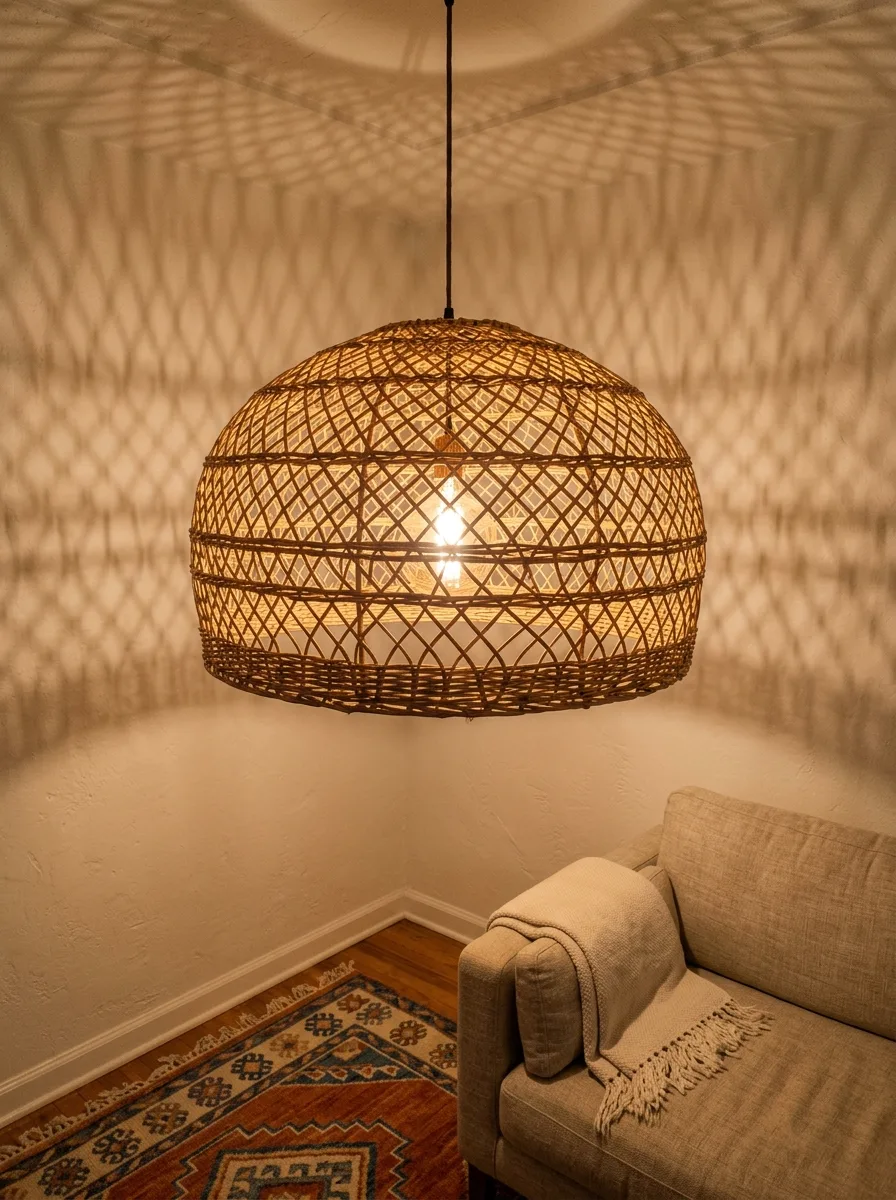
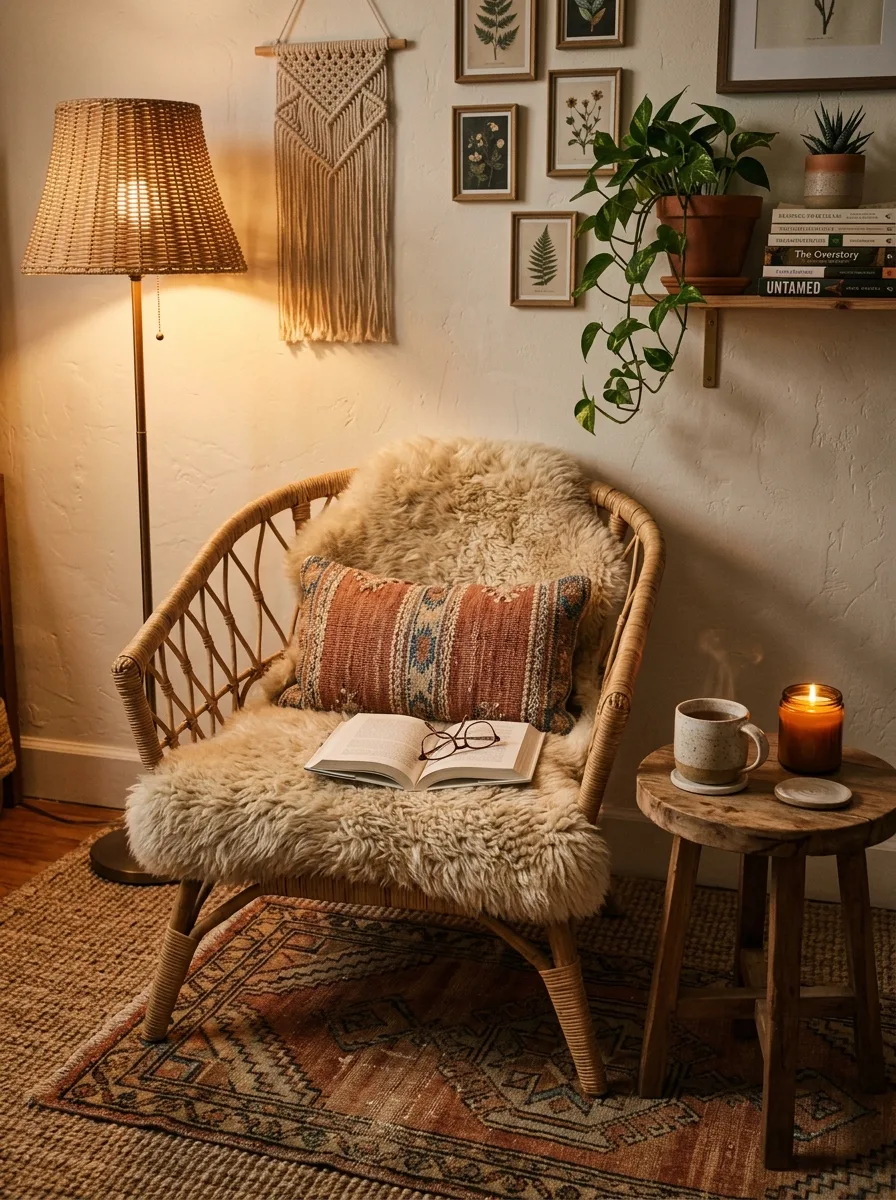
Overhead lighting is the enemy of a cozy boho living room. Lean on a mix of sources instead: a rattan or paper pendant over the coffee table area if your ceiling height allows it, a floor lamp with a linen or woven shade in the reading corner, and at least one table lamp on a console or side table. Warm 2700K bulbs across all of them matter more than the fixtures themselves — a beautiful rattan pendant with a cool white bulb in it will still look sterile. In the evening, a few candles in terracotta or stoneware holders on the coffee table finish the effect without adding another lamp to the circuit.
Hard window frames and bare blinds work against everything else you’re layering into a boho living room, so curtains are worth prioritizing even in a rental. Unlined linen curtain panels, hung from a simple wood or rattan-wrapped rod, let daylight filter through with a soft, slightly diffused glow rather than blocking it out — that filtered light is a big part of what makes boho living rooms photograph so well in the late afternoon. Mount the rod as close to the ceiling as your wall allows, well above the window frame itself, and let the panels run close to the floor; curtains hung tight to a small window frame make the whole wall look shorter and the room feel smaller than it is.
If you need actual light control for a TV or afternoon glare, layer a simple woven bamboo or rattan roller shade underneath the linen panels rather than switching to blackout curtains, which tend to read heavy and formal against everything else in the room. The shade handles function; the linen panels handle the softness. For renters who can’t install permanent curtain rods, tension rods inside the window frame hold lightweight linen panels just fine and come down cleanly at move-out.
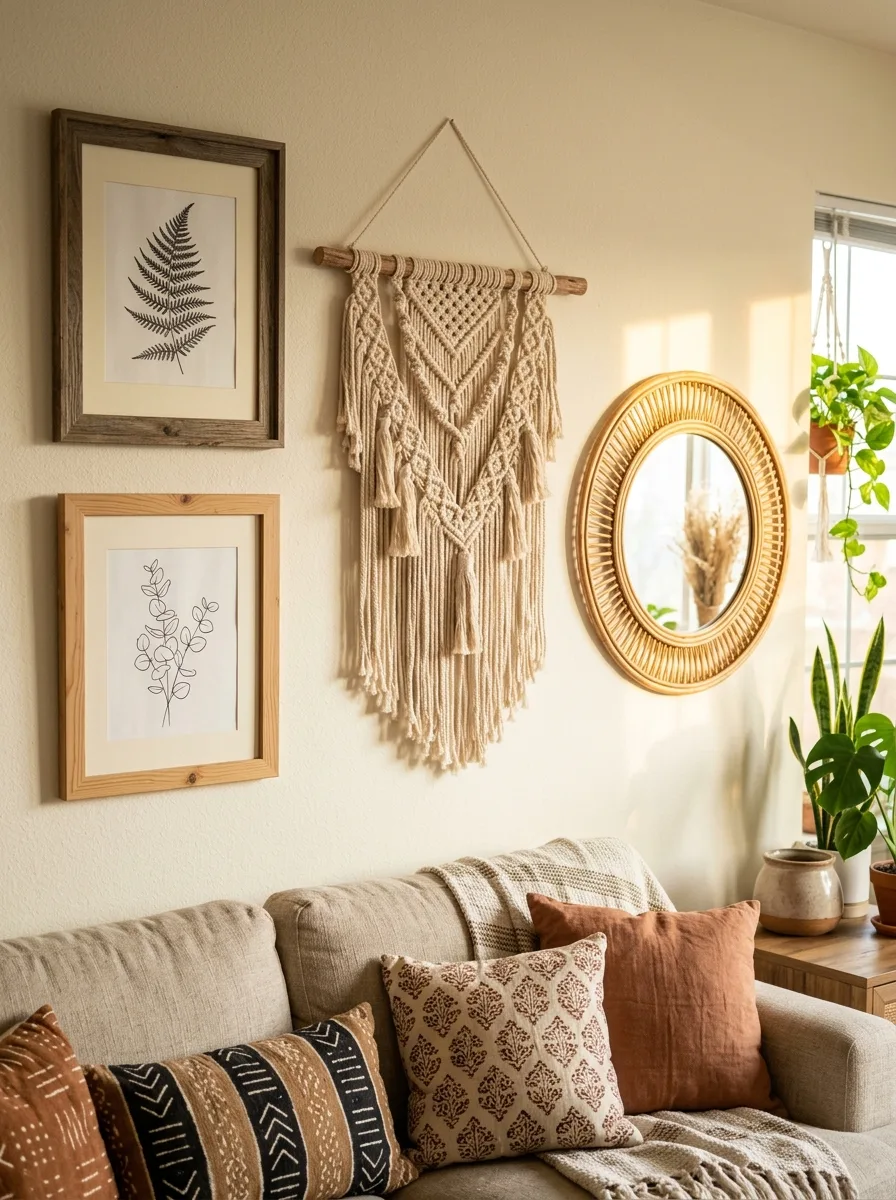
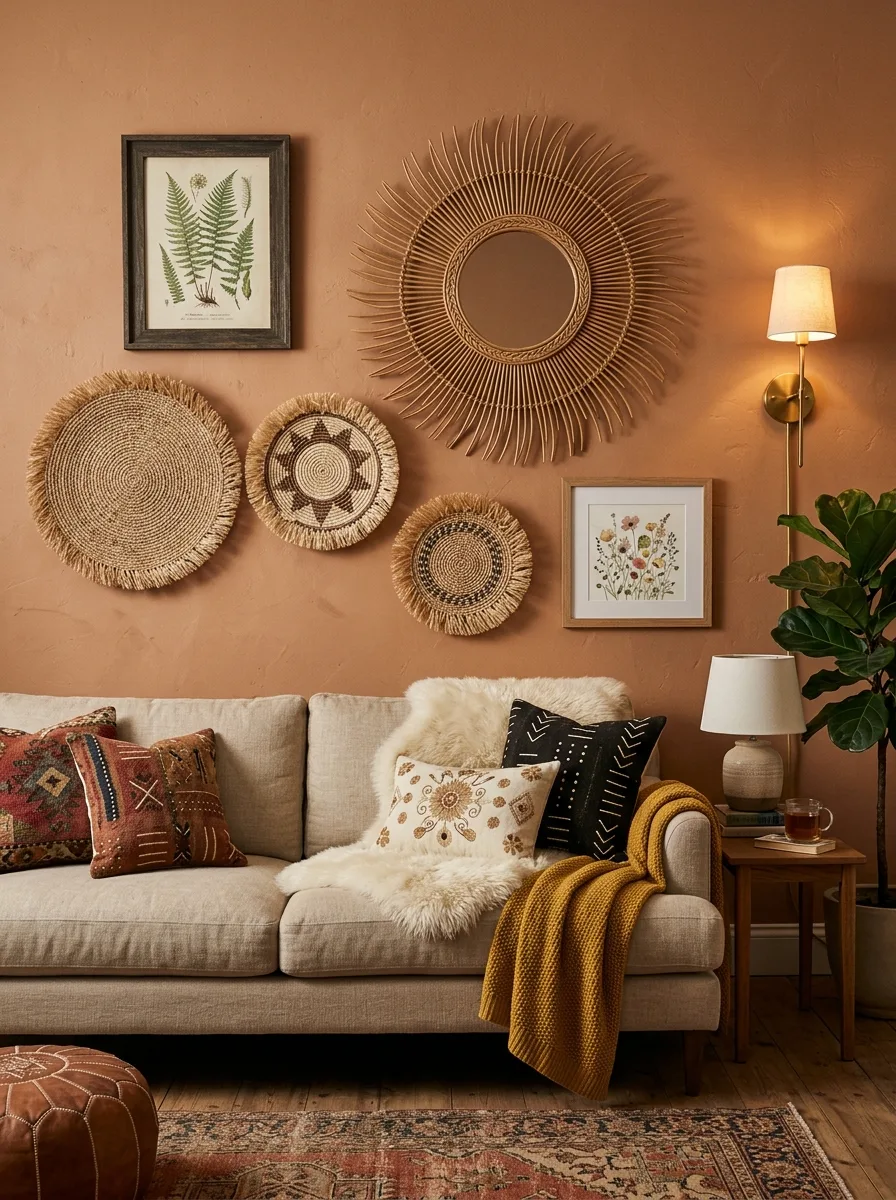
The wall behind or beside the sofa is prime real estate for a boho living room, and it’s usually more effective as a cluster than a single oversized piece. Mix a macrame wall hanging, a couple of framed botanical or line-art prints, and a round rattan mirror or woven disc, keeping the group roughly the width of the sofa below it so it reads as one composition rather than scattered pieces. For spacing guidelines, framing tips, and how to balance mirrors against flat art, our full guide to boho wall art and wallpaper ideas goes deeper into the layout.
In open-concept homes, the living room’s materials should hand off to the kitchen rather than stop at an invisible line. If your kitchen leans into the same warm, natural-material approach — open shelving, terracotta, woven pendant lighting — the whole floor reads as one considered space instead of two rooms competing for attention. Our guide to boho kitchen decor covers the specific swaps that keep that transition seamless.
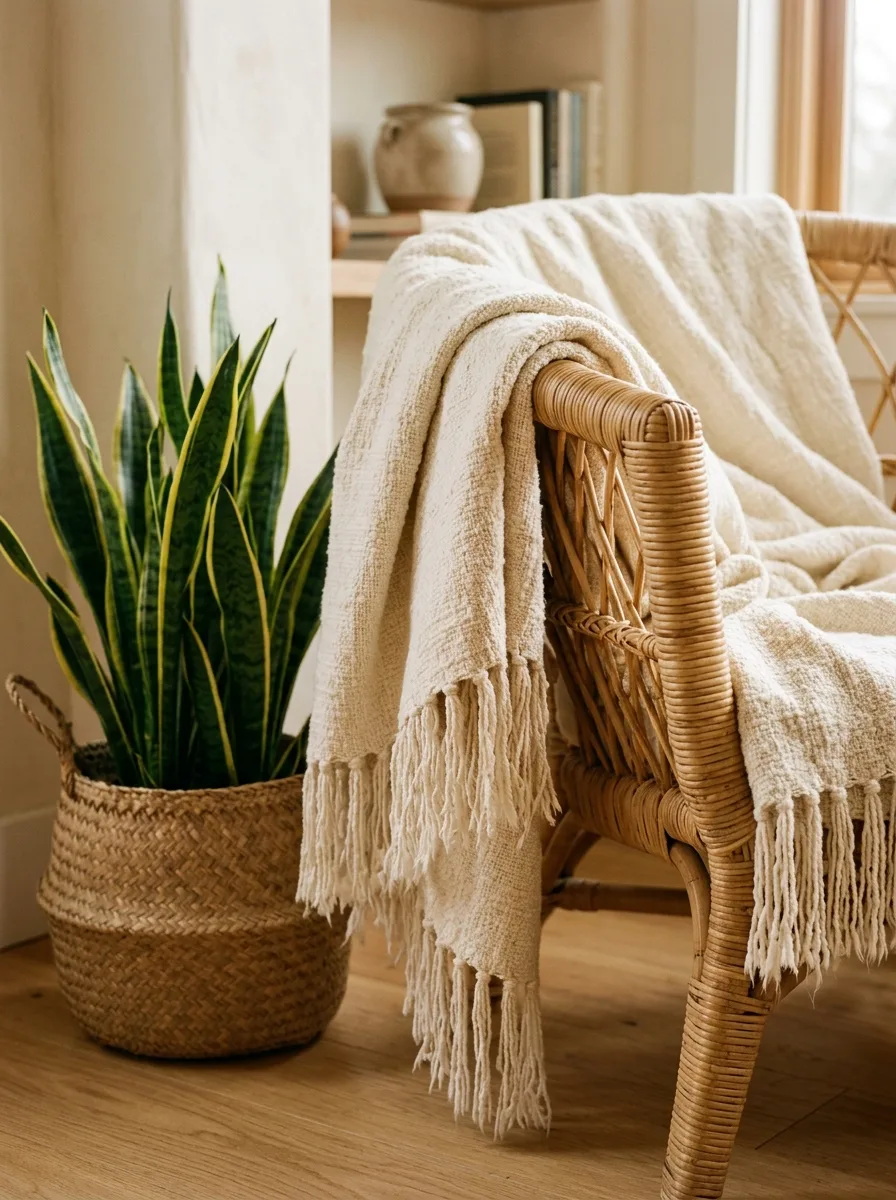
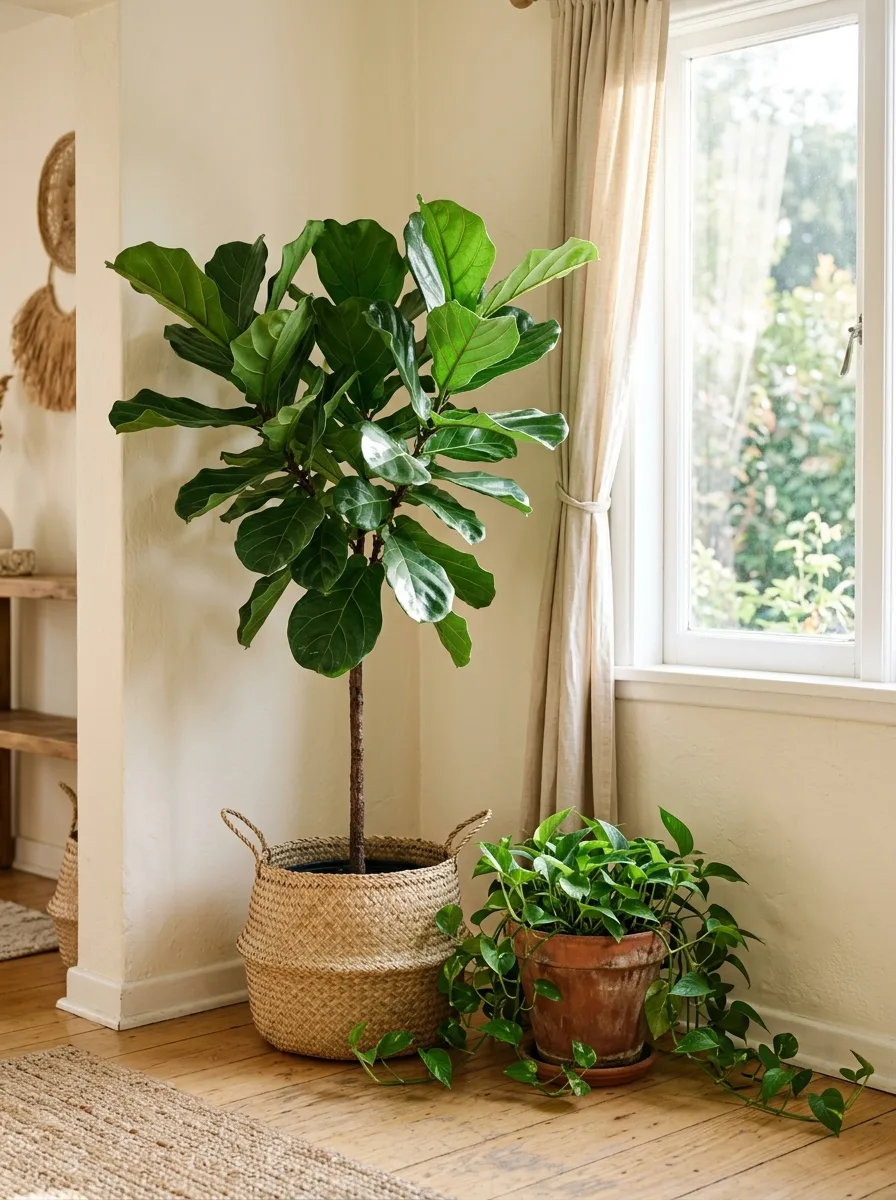
A boho living room usually needs more plant presence than a bedroom, simply because the room is bigger and the eye has more empty space to fill. Instead of scattering five small pots around, pick one or two larger anchor plants — a fiddle leaf fig or a floor-standing snake plant in a woven basket planter — placed in an empty corner where they can do real architectural work, then fill in with smaller terracotta pots of trailing pothos on shelves or the console table. A windowsill lined with a few terracotta pots catching afternoon light does more for warmth than the same number of pots scattered across every flat surface in the room.
If you’re not redoing the whole room at once, the highest-impact changes in order are: swap the lighting to warm bulbs and add one floor or table lamp, layer in a jute rug if you don’t already have one, add a stack of mixed floor cushions near the coffee table, and build a small gallery cluster on the main wall. Those four changes alone will make a living room feel considerably more boho without buying a single new piece of furniture.
Big enough that all four legs of your sofa sit on it — a rug that only reaches the coffee table, leaving a moat of bare floor around the sofa, is the most common living room rug mistake. For an average 7–8 foot sofa, that usually means at least an 8x10, sized up to 9x12 if you're layering a smaller kilim on top.
It has more texture than a plush wool rug, but it's not uncomfortable — jute softens noticeably after a few weeks of foot traffic, and most people layer a smaller, softer flatwoven kilim over the section right in front of the sofa anyway. If texture is a dealbreaker, sisal is the usual alternative, but it actually runs coarser than jute, not softer.
A worn leather sofa in tan, cognac, or faded brown works well — the patina reads as gathered-over-time the same way a linen sofa does. What fights the room is a stiff, glossy leather in black or cool gray, since it works against the warm, earthy palette everything else is built around.
It can, if you layer at full scale. In a small room, skip the double rug and size one rug correctly, pick one anchor plant instead of several, and cap the gallery wall at 4–5 pieces instead of 7. The same restraint principle that keeps a small boho bathroom from feeling busy applies here — fewer materials, repeated, rather than more materials crammed in.
Boho Bathroom Makeover Ideas on Any Budget →Repeat at least two or three materials across the sightline — if your living room has a jute rug and a rattan pendant, echo rattan or wood tones somewhere visible in the kitchen, like open shelving or a woven pendant over the island. Our kitchen guide covers the specific swaps that keep that transition seamless from the other side.
Boho Kitchen Decor Ideas for a Warm, Lived-In Feel →Mount the rod as close to the ceiling as your wall allows — ideally 4–6 inches below it — rather than just above the window frame, and let the panels graze or lightly puddle at the floor. That extra vertical run is what makes a standard 8-foot ceiling read taller and the window look bigger than it actually is.
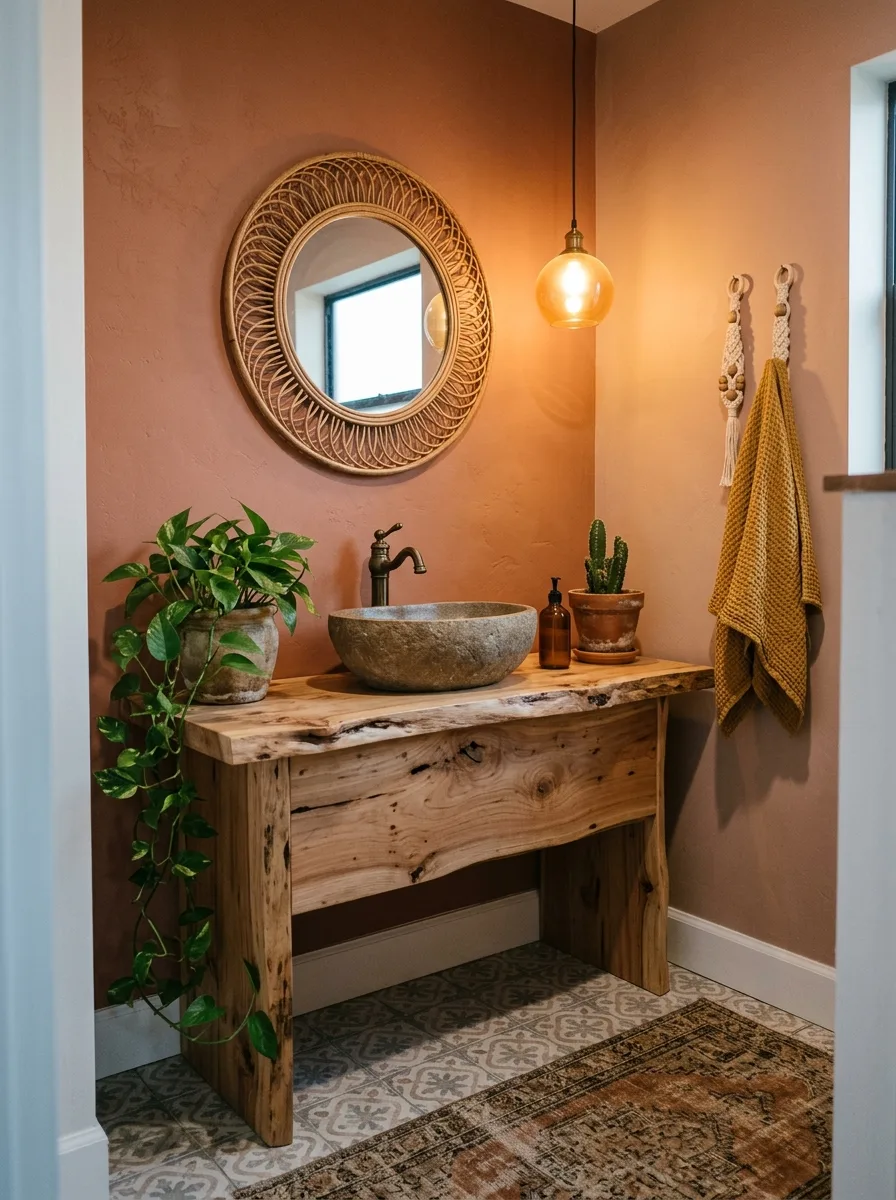 Bathroom
Home Decor
Budget-friendly boho bathroom upgrades, from textiles and plants to lighting and small storage swaps.
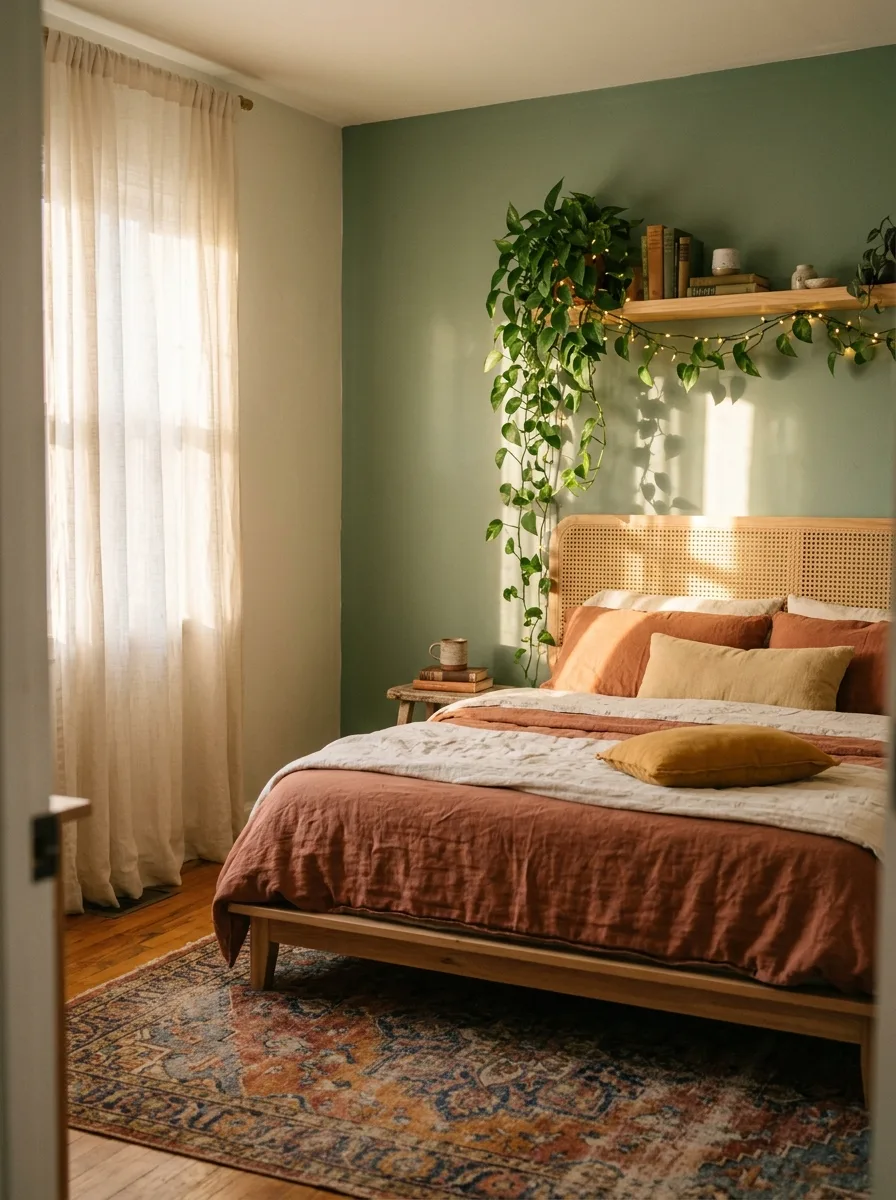 Bedroom
Home Decor
A complete guide to designing a warm, layered boho bedroom — from bedding and lighting to plants and wall decor.
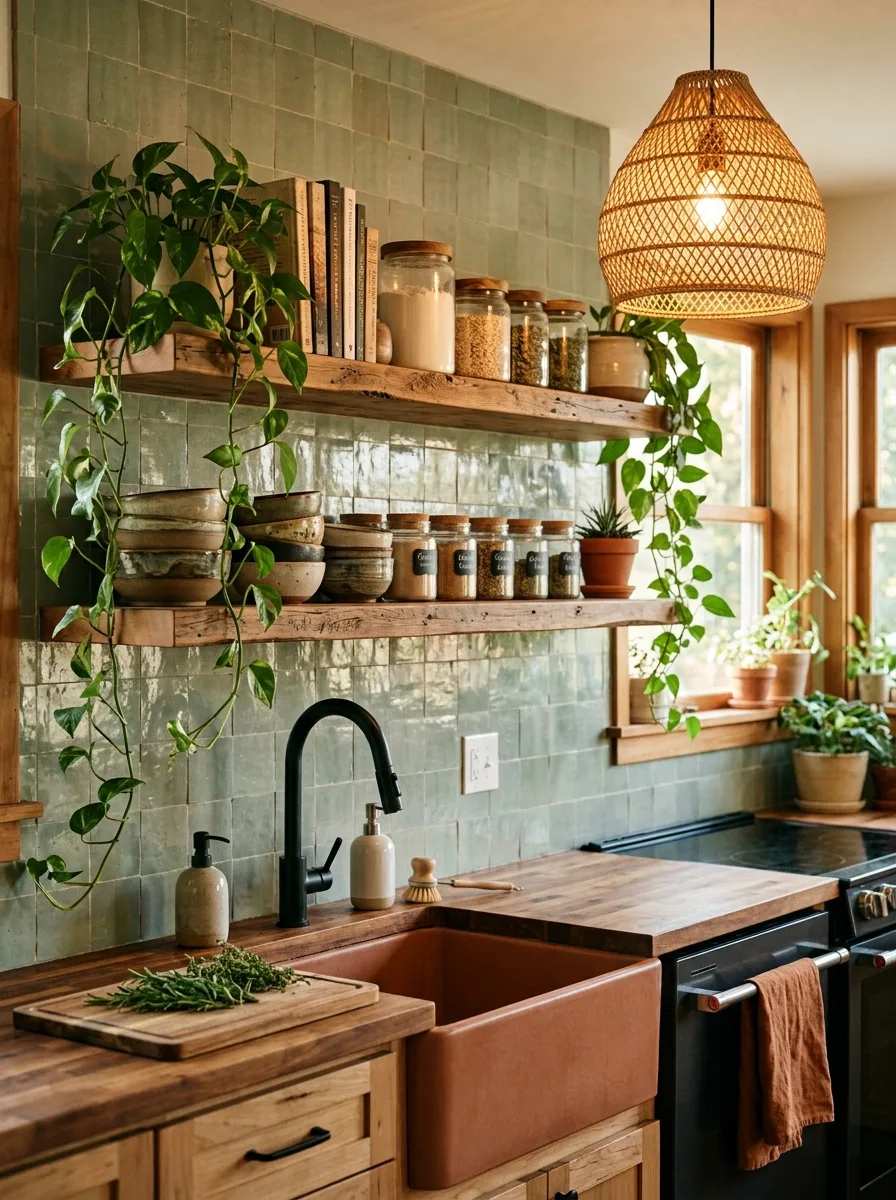 Kitchen & Dining
Home Decor
Simple, budget-friendly ways to bring bohemian warmth into your kitchen and dining space.