Home Decor · Wall Art & Decor
Boho Wall Art & Wallpaper Ideas to Instantly Upgrade Any Room
How to build a boho gallery wall and choose wallpaper that adds warmth and texture to any room.
9 min read
Home Decor · Wall Art & Decor
How to build a boho gallery wall and choose wallpaper that adds warmth and texture to any room.
Boho wall art earns its reputation as the fastest room upgrade in the whole style because it’s true — a well-planned wall can change a room’s entire feel in an afternoon, with no furniture rearranging and no paint required. The catch is that most people either hang one large print and stop, or pile on too many small pieces until the wall looks cluttered instead of curated. This guide covers how to build a gallery wall that actually holds together, how to choose and place a macrame hanging as an anchor piece, and when boho wallpaper is the better call instead of framed art.
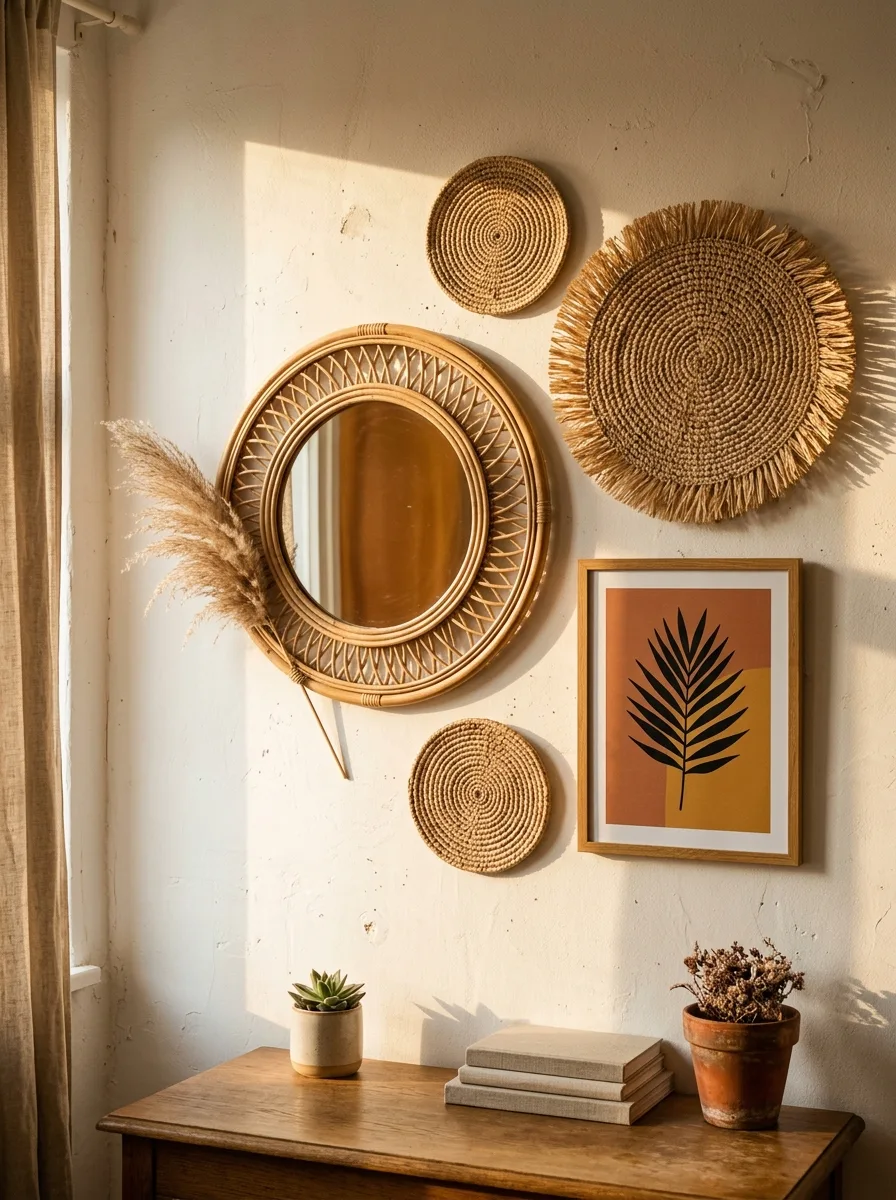
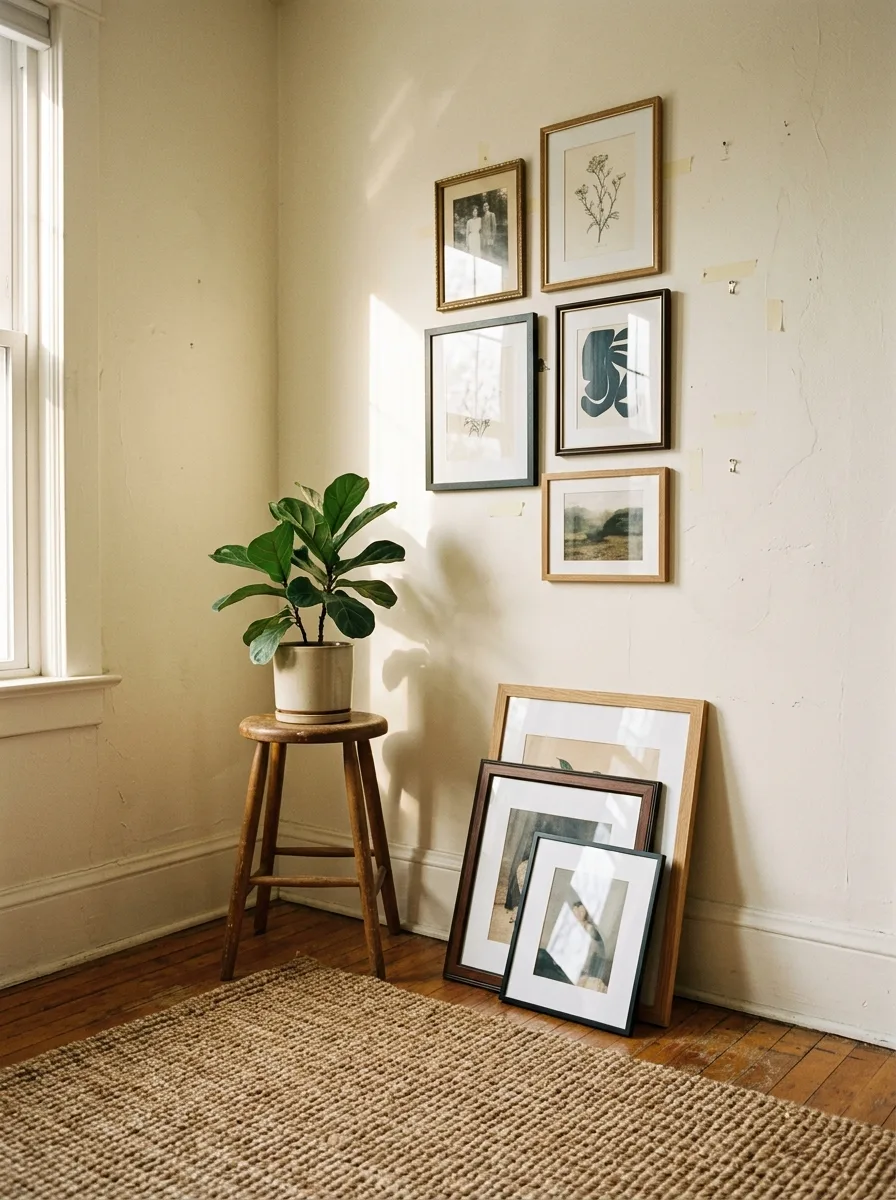
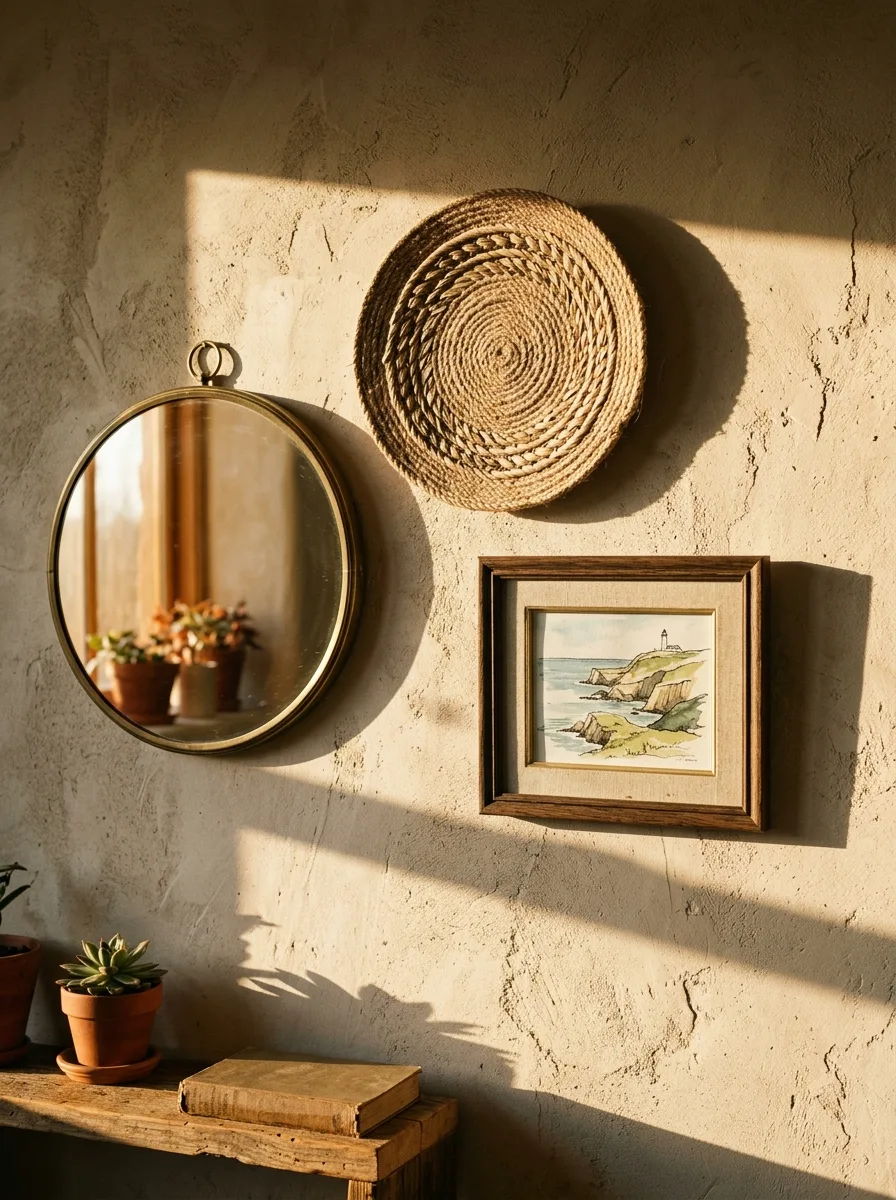
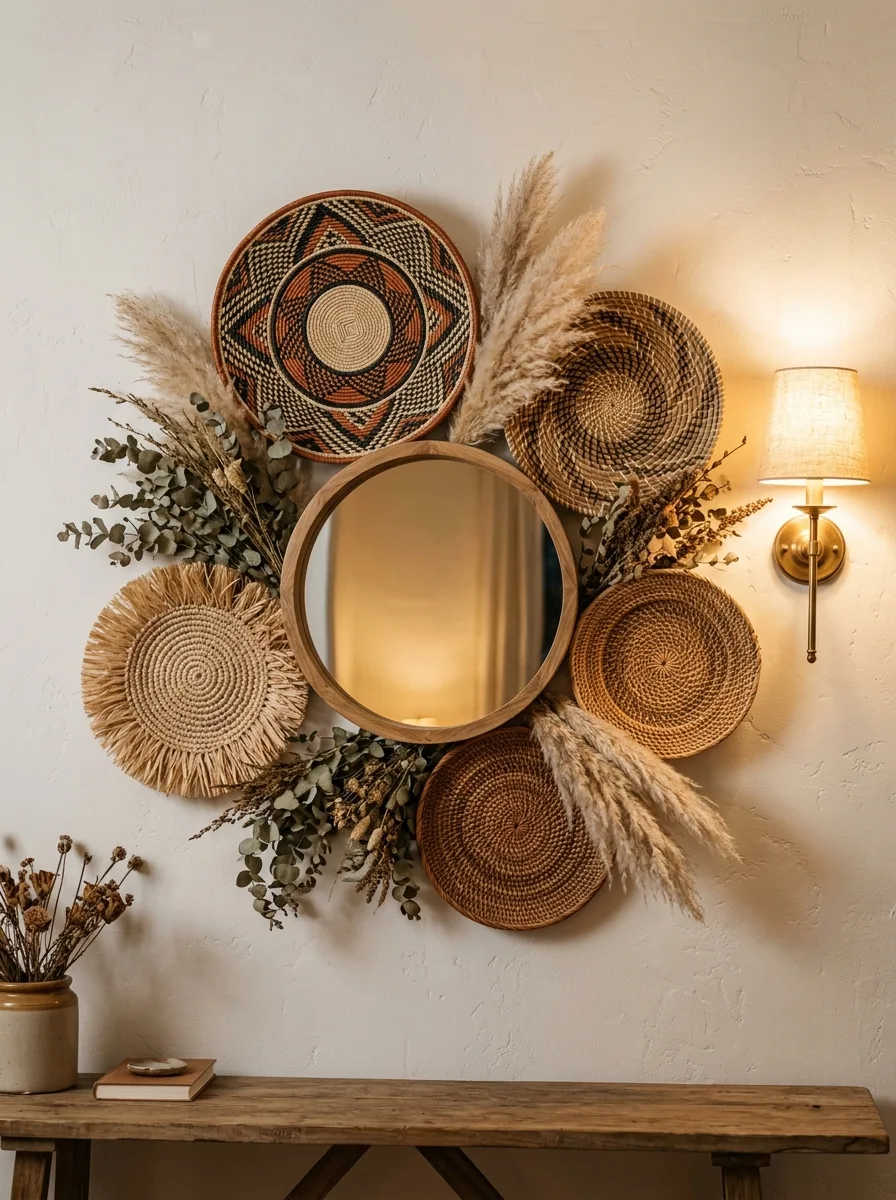
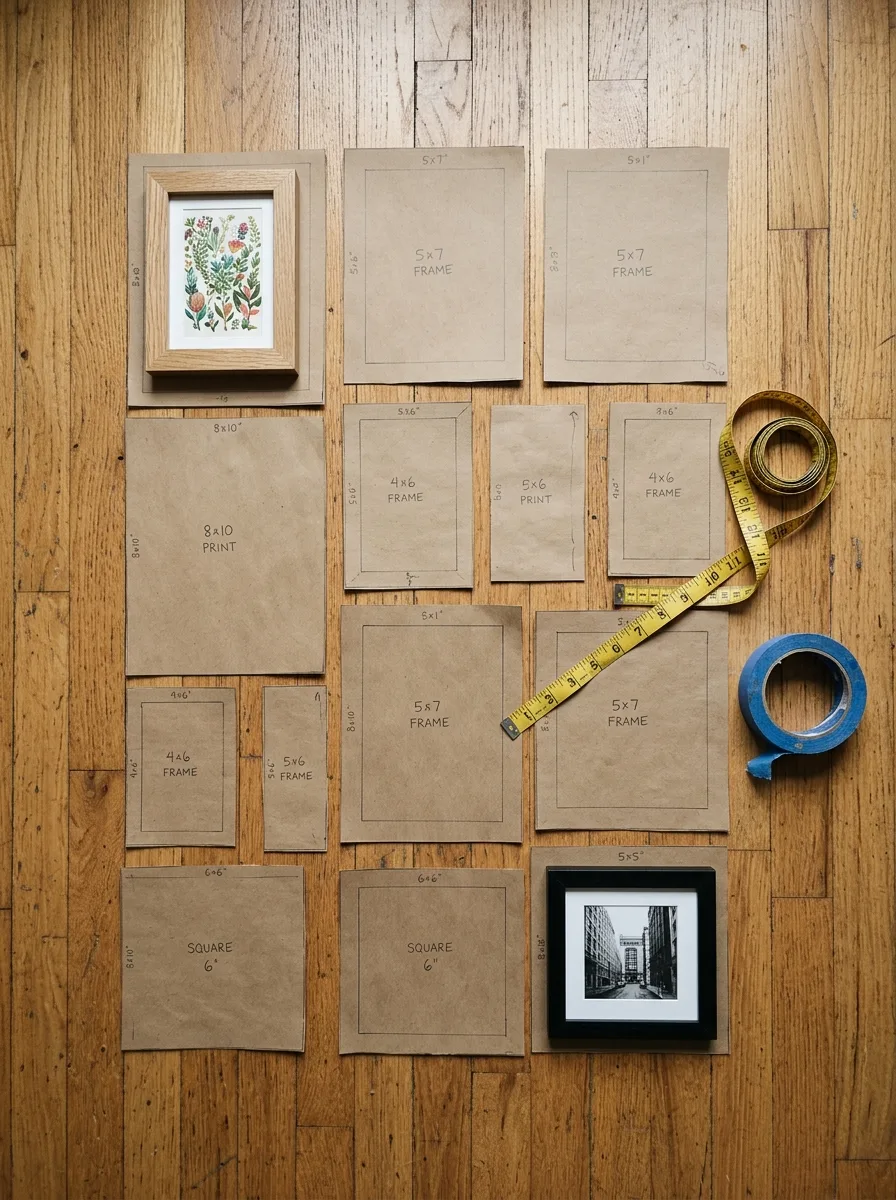
The single biggest mistake in a DIY gallery wall is starting with a bunch of same-size pieces and arranging them like a grid. Boho wall art works better built around one larger anchor — a macrame hanging, an oversized botanical print, or a large round mirror — with smaller pieces arranged around it at varying sizes. Start by laying the whole arrangement out on the floor first, not on the wall. Move pieces around until the visual weight feels balanced (heavier, darker pieces roughly opposite lighter ones), then trace the floor layout onto kraft paper or painter’s tape to transfer it to the wall without guessing.
Aim for 4 to 7 pieces total in a cluster — fewer looks sparse, more starts competing for attention. Keep 2–3 inches between pieces so the grouping reads as one composition rather than a scattered collection, and use that same spacing consistently across the whole wall so nothing looks like an afterthought squeezed in later.
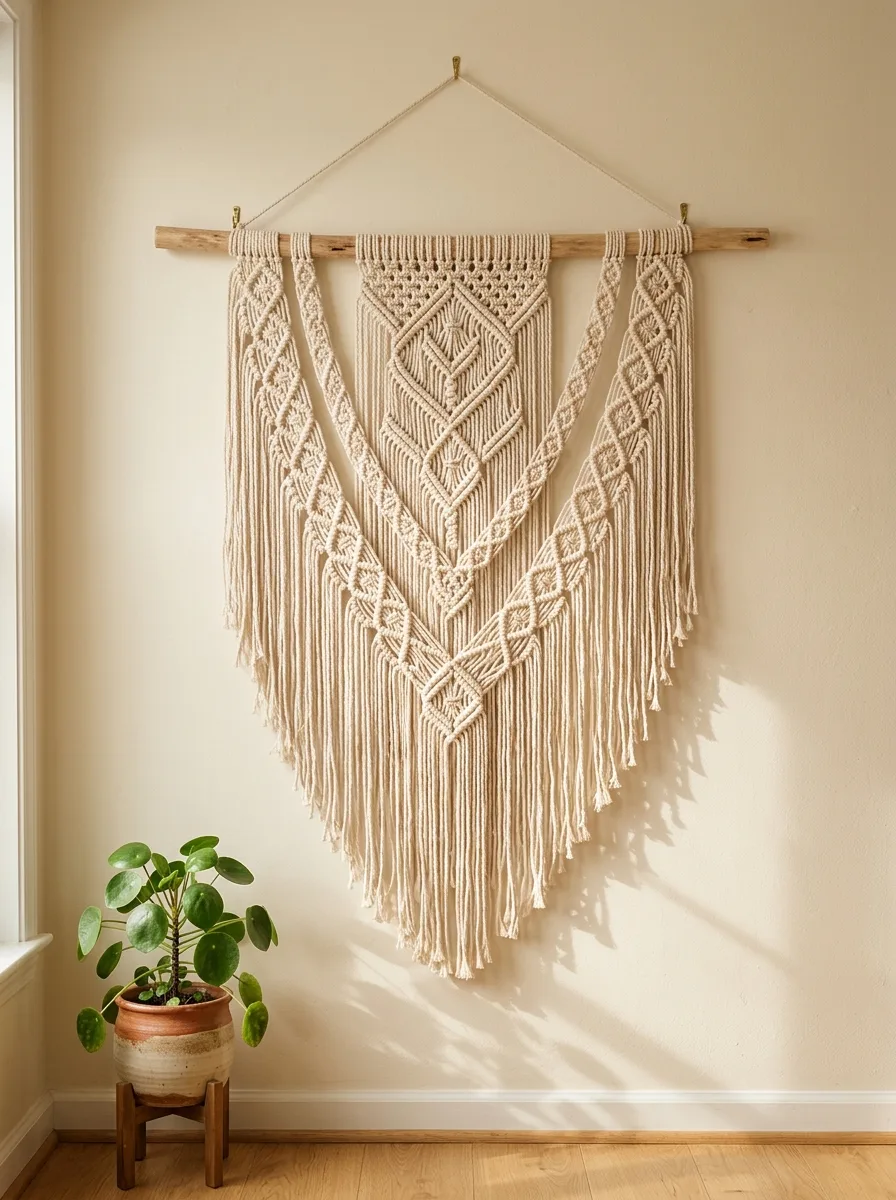
A macrame wall hanging is the closest thing this style has to a signature piece, and it works best as the visual anchor rather than one item among many. For a wall behind a sofa or bed, a hanging in the 24–36 inch width range gives it enough presence to hold its own; anything smaller tends to get lost once other pieces are added around it. Off-white or natural undyed cotton is the most versatile choice and pairs with almost any wall color, while a hanging that incorporates wood beads or a dip-dyed ombré in rust or sage works well as a genuine statement piece on an otherwise plain wall with nothing else on it.
Hang it so the bottom fringe sits 6–8 inches above whatever furniture is below it — a headboard, a sofa back, a console table — so there’s clear breathing room and the piece doesn’t look like it’s resting on the furniture. If you’re hanging it on open wall with nothing below, center it at roughly 57–60 inches from the floor to the middle of the piece, which is the standard eye-level hanging height for art in general and keeps a lone hanging from drifting too high or too low.
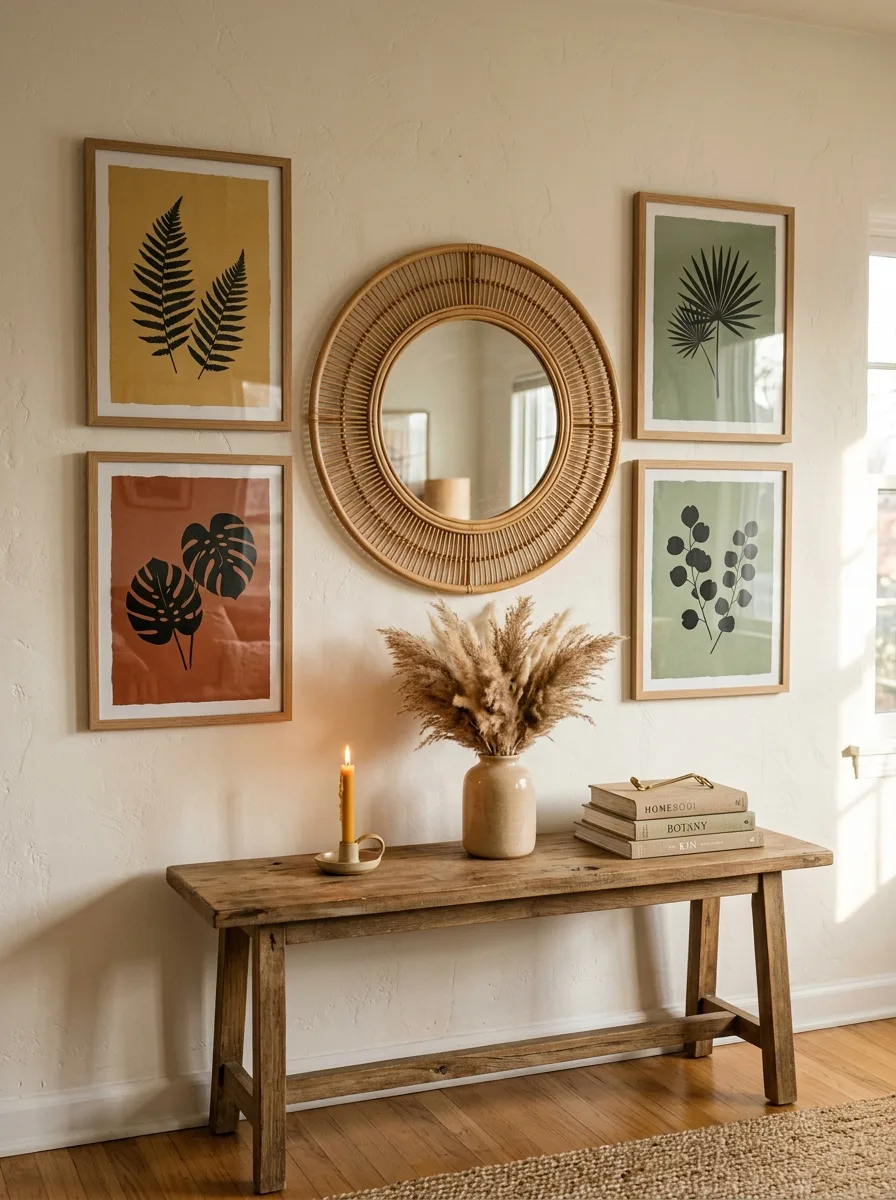
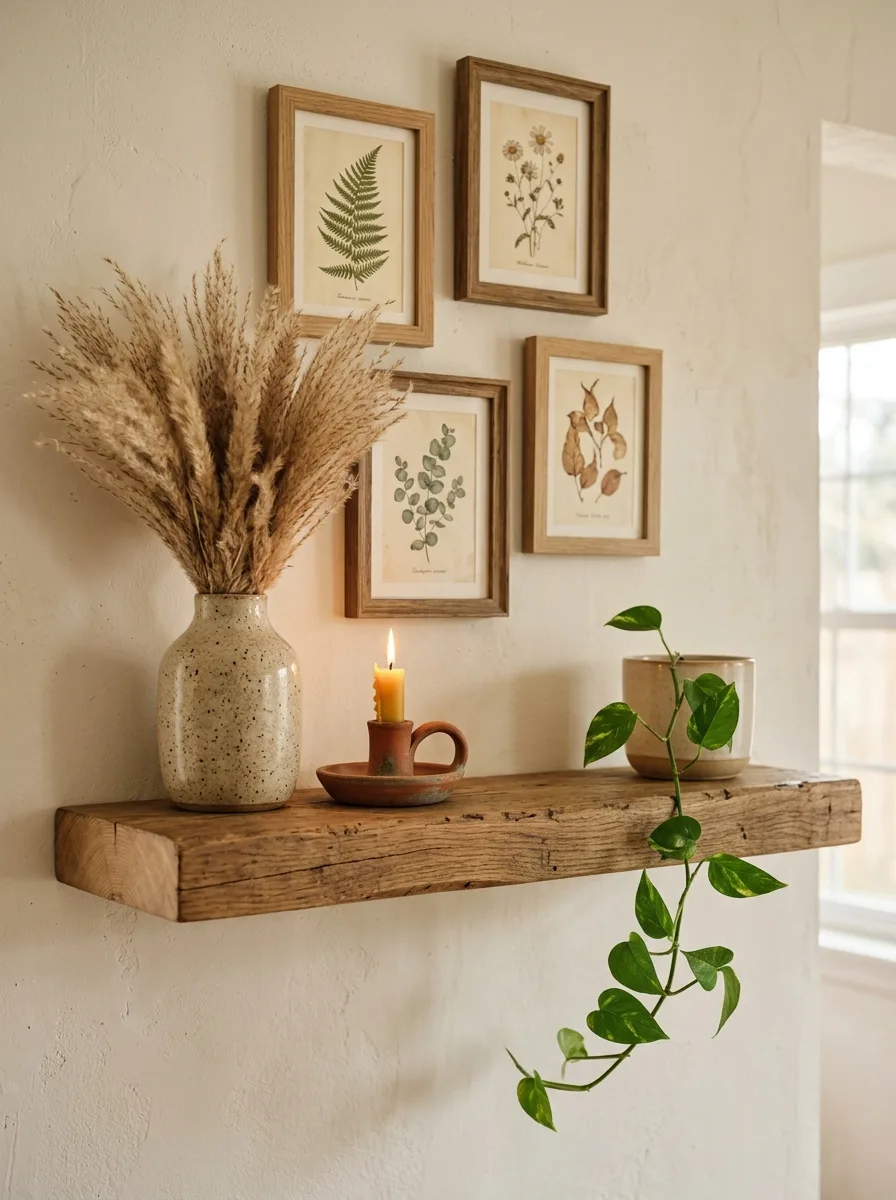
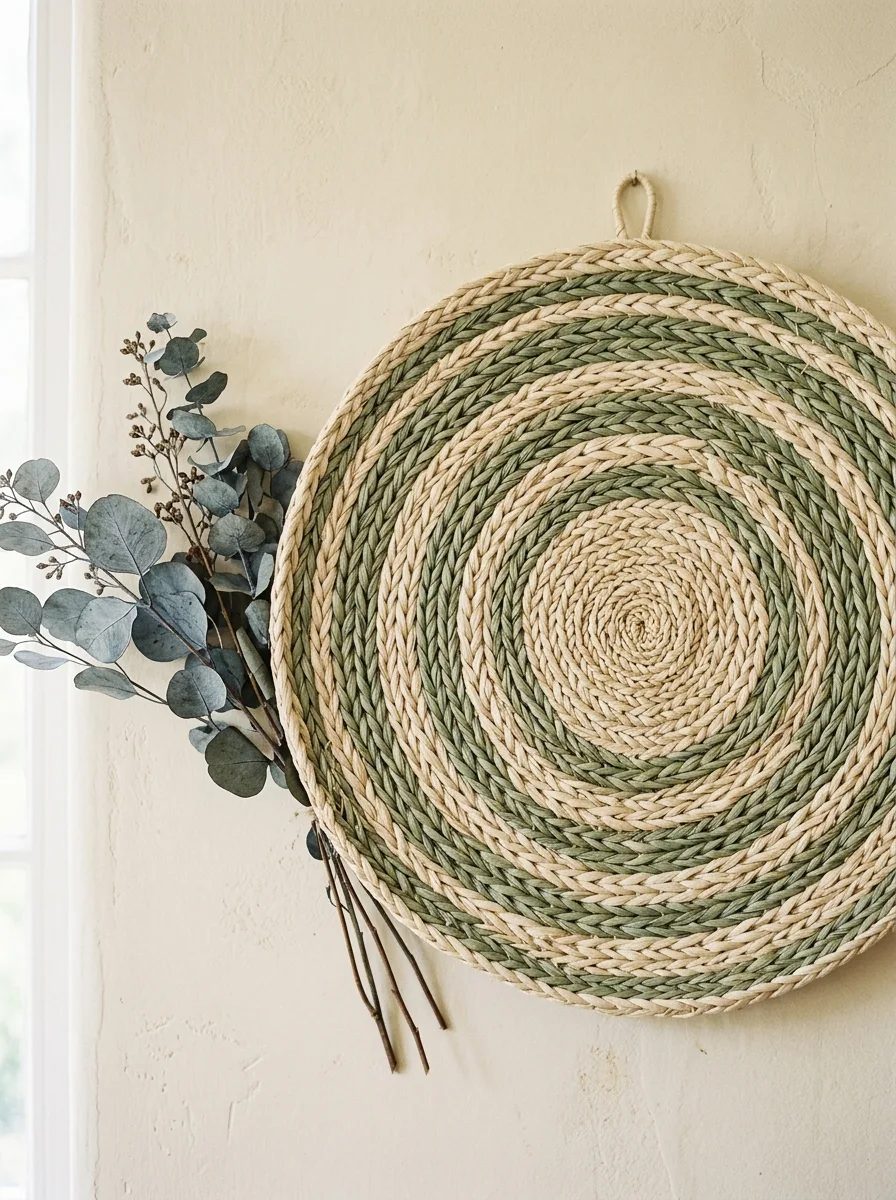
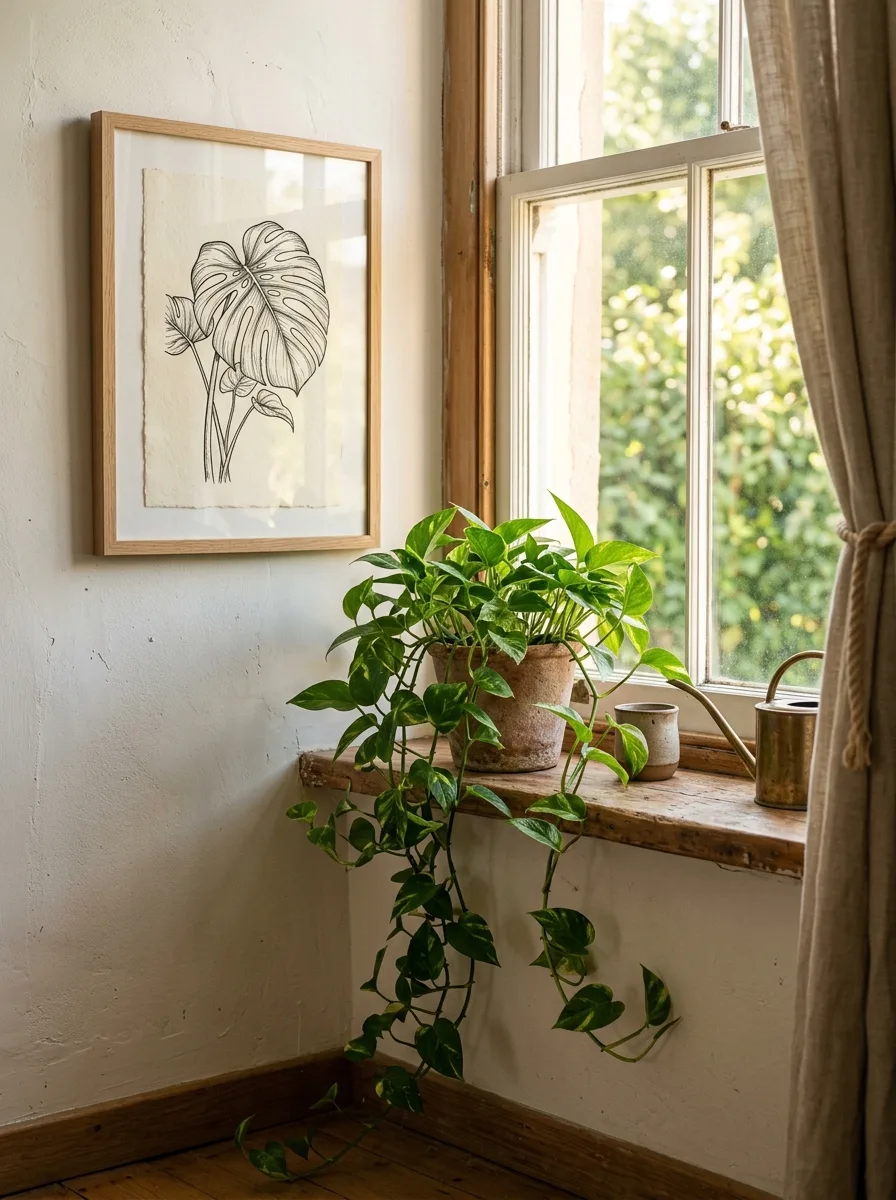
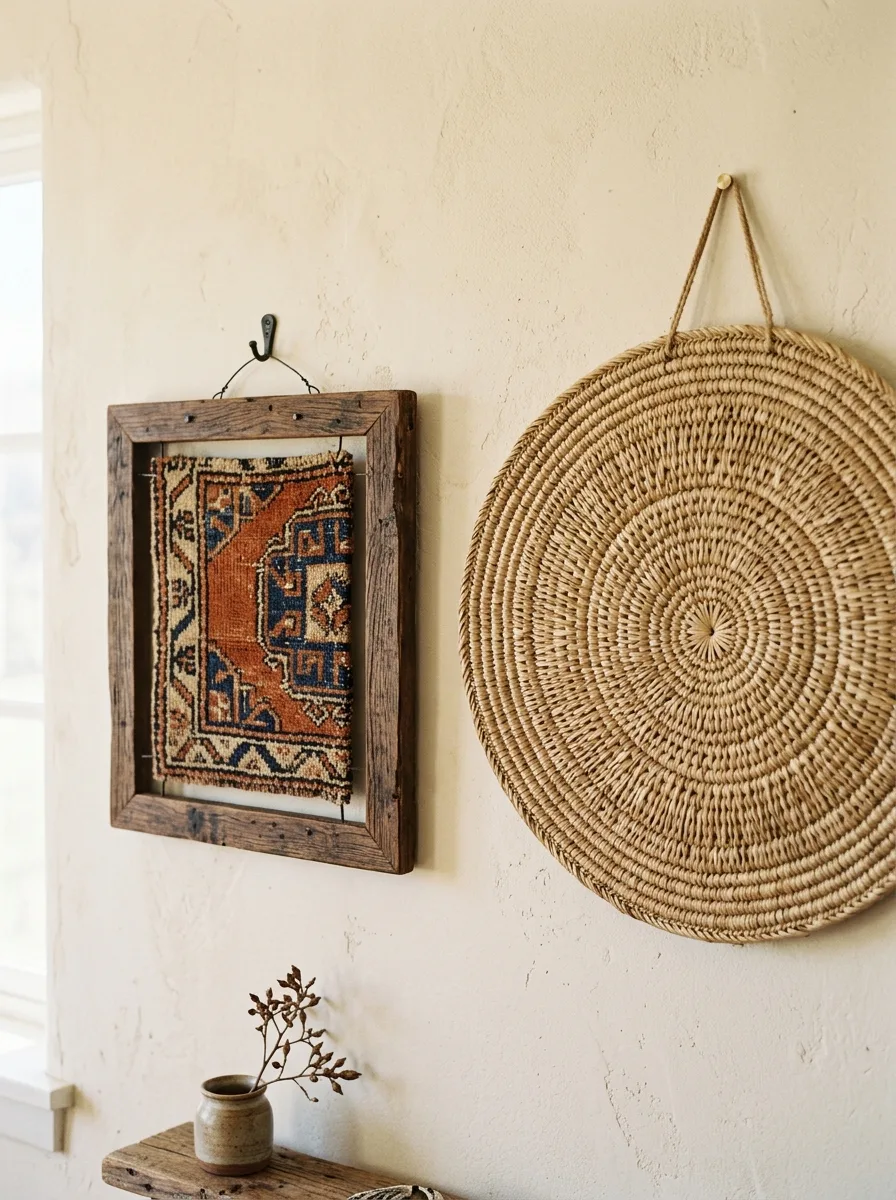
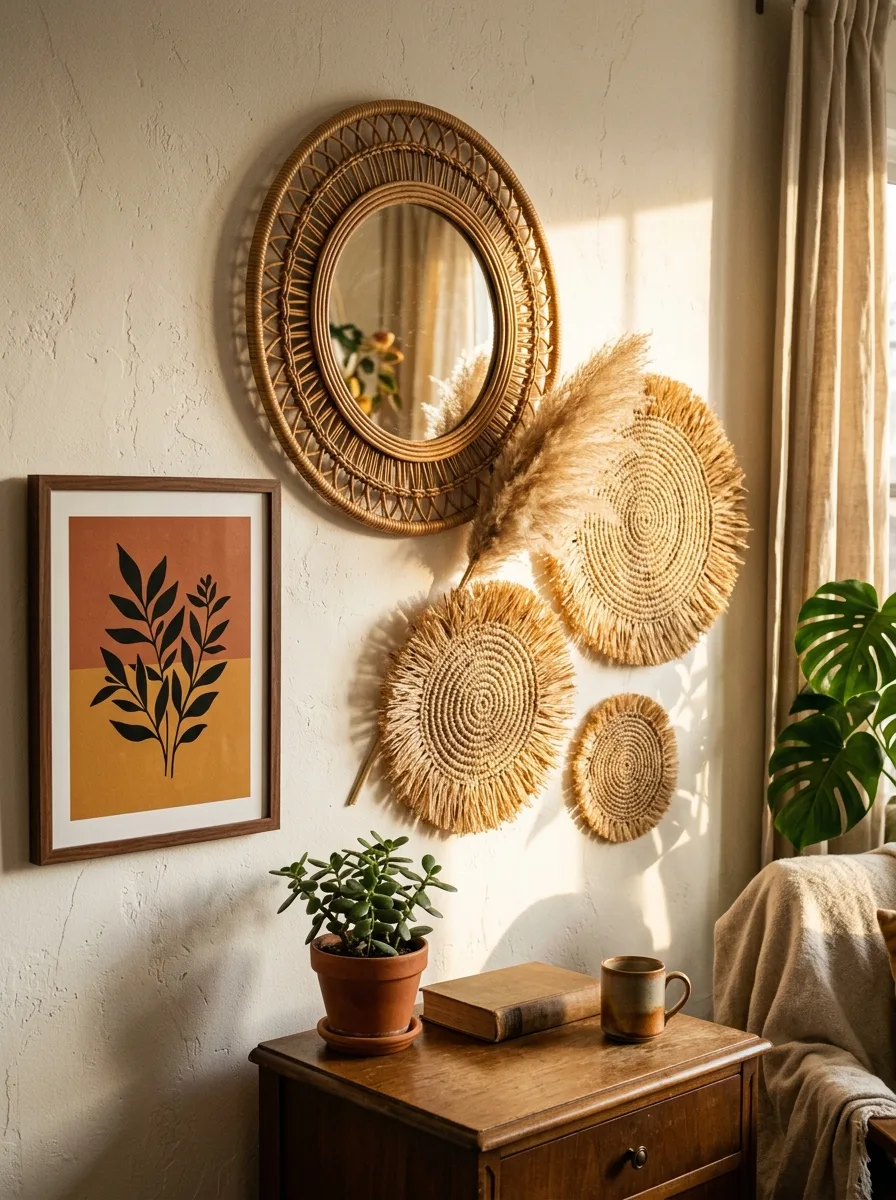
The pieces that make a gallery wall read as boho rather than generic are the ones with texture: a round or arched rattan mirror, a woven raffia disc or fan, a small textile scrap framed like art. Mix these with two or three flat framed pieces — botanical line art, a vintage-style map, a simple abstract print in warm terracotta or ochre tones — so the wall isn’t entirely dimensional pieces competing for the same visual space. A rough ratio that works well: one anchor piece, two to three flat framed prints, and one or two textured/dimensional pieces like a mirror or woven disc.
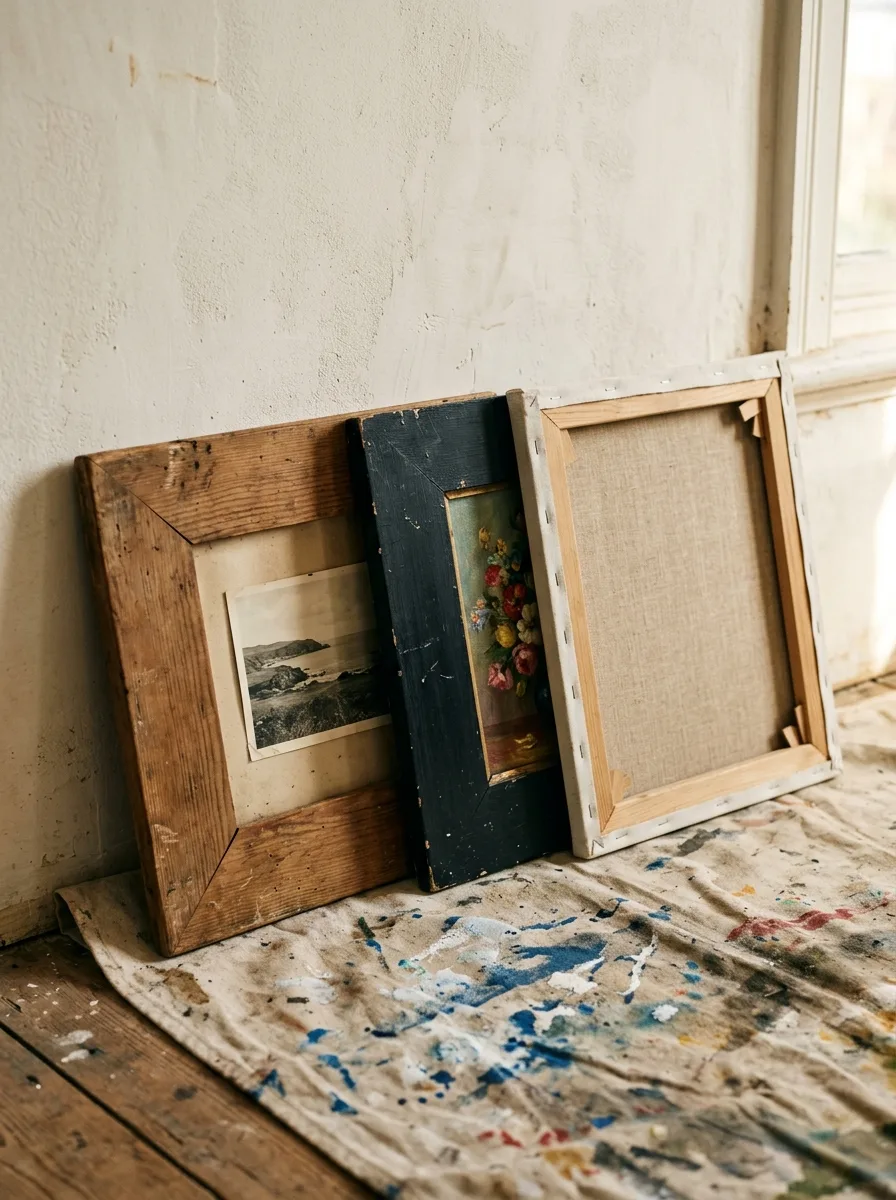
Frame choices matter more than people expect. Mismatched frame finishes (a few in natural wood, one in black, maybe one bare canvas with no frame at all) look more collected than a matching frame set, which tends to read as store-bought no matter what’s inside them. Thrifted frames are genuinely useful here — a $4 frame from a secondhand shop, given a coat of the same wood stain or left as-is, blends into a mixed-frame wall just as well as something bought new.
Boho wallpaper is best used as an accent, not a full-room treatment, in most homes — one wall, a stairwell, the back of open shelving, or inside a cabinet with glass doors. Full-room wallpaper in a bold botanical or block-print pattern can work in a powder room or a small reading nook where you want real drama, but in a bedroom or living room it usually overwhelms the layered-texture approach that makes the rest of the style work; the wall competes with the rug, the pillows, and the wall art instead of sitting behind them.
Peel-and-stick options have gotten good enough that they’re worth defaulting to unless you’re certain you’re staying put for years — they go up in an afternoon with a squeegee and level, and they come down clean enough for a rental’s move-out inspection. Look for patterns in muted, earthy colorways (terracotta, sage, warm ochre) rather than high-contrast prints, since the muted versions blend with the rest of a boho room’s palette instead of becoming the loudest thing in it.
A single accent wall behind a headboard, inside a nook, or on the wall a hallway opens into tends to outperform a full room every time — it gets seen, it doesn’t overwhelm, and it’s cheap enough to change again in a year or two if your taste shifts.
A few rules of thumb make most wall-art placement mistakes disappear. Center a single piece or a gallery cluster at eye level — about 57 inches from the floor to the vertical center — unless it’s hanging above furniture, in which case hang it 6–8 inches above that furniture instead and let the height fall wherever that lands. For a gallery cluster, treat the whole group as one large rectangle and center that rectangle the same way you’d center a single piece. And leave real wall margin around any cluster: a gallery wall crammed corner-to-corner reads as trying too hard, while one with visible breathing room on all sides reads as deliberate.
If you’re applying these same layout rules to a specific room, our guides to a boho bedroom and a boho living room both cover how the gallery-wall and lighting choices come together in those spaces specifically.
A full gallery wall doesn’t need to be expensive. Botanical prints can be free — download high-resolution public-domain botanical illustrations and print them at a local shop for a few dollars each, then frame them in thrifted frames. A macrame hanging can be DIY’d from cotton cording for under $15 if you’re willing to follow a tutorial, or bought new starting around $20–30 for a simple design. Mirrors are usually the priciest single piece in a cluster; a rattan-framed round mirror typically runs $40–80 depending on size, which is worth budgeting for since it does double duty as both art and functional light-bouncing.
Don’t try to redo every wall in the house at once. Pick the wall that gets looked at most — behind the sofa, behind the bed, or the one a hallway opens directly into — and build the full cluster there first. Once you see how the anchor-plus-supporting-pieces approach looks in real light at different times of day, the next wall goes much faster because you’ll already know which pieces you reach for.
Aim for 4 to 7 pieces total, built around one larger anchor piece rather than a grid of same-size prints. Fewer than 4 tends to look sparse and unfinished; past 7, the grouping starts competing for attention instead of reading as one composition.
Look for one in the 24–36 inch width range — anything smaller gets visually lost once you add supporting pieces around it. Hang the bottom fringe 6–8 inches above the furniture below it so there's clear breathing room and it doesn't look like it's resting on the headboard or sofa back. Our bedroom guide shows this exact spacing applied above a real headboard if you want to see the math in context.
50+ Dreamy Boho Bedroom Ideas to Transform Your Space →Only for a piece or cluster on open wall with nothing below it — that's the standard eye-level height for art in general. Above furniture, ignore the 57-inch rule and hang 6–8 inches above whatever's underneath instead, so the piece relates to the furniture rather than floating at a fixed height that might land awkwardly over a low platform bed or sofa.
Usually, for similar visual impact — a roll of peel-and-stick wallpaper for one accent wall runs $30–60, while a full 5–7 piece gallery wall with a macrame anchor and a rattan mirror typically lands closer to $100–200 once you include the mirror. Wallpaper is faster too: an afternoon with a squeegee versus laying out and hanging a whole cluster.
Generally, pick one per wall — a patterned wallpaper wall already carries enough visual weight on its own, and stacking a full gallery cluster on top usually competes rather than layers well. If you love both, put the gallery wall on an adjacent plain wall and let the wallpaper wall stand alone, the same way a kitchen might wallpaper the inside of open shelving while keeping the shelf styling itself simple.
Boho Kitchen Decor Ideas for a Warm, Lived-In Feel →Thrifted frames are the move — a $4–8 frame from a secondhand shop works fine as-is, or with a quick coat of the same wood stain to tie it to your other pieces. Mismatched finishes (a couple in natural wood, one in black, one bare canvas with no frame) actually look more collected than a matching frame set, which tends to read as store-bought no matter what's inside it.
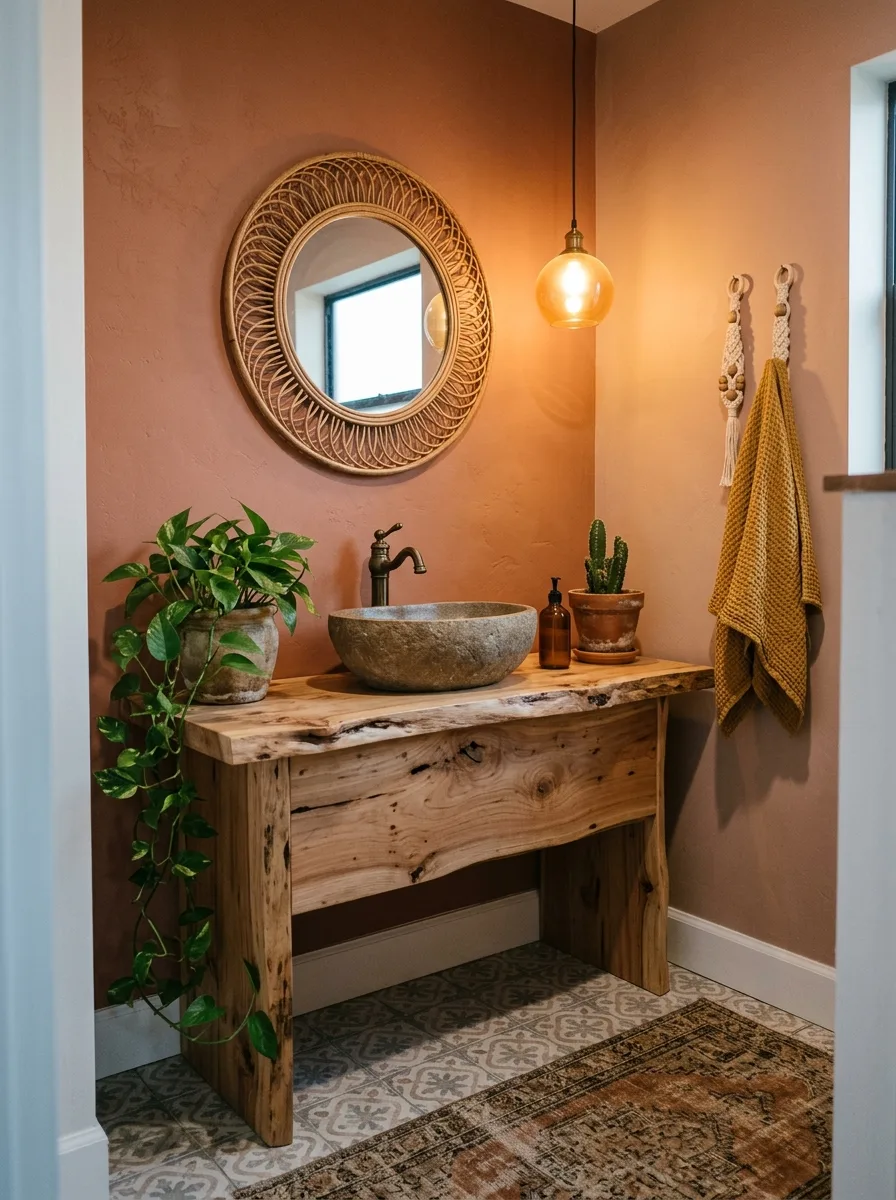 Bathroom
Home Decor
Budget-friendly boho bathroom upgrades, from textiles and plants to lighting and small storage swaps.
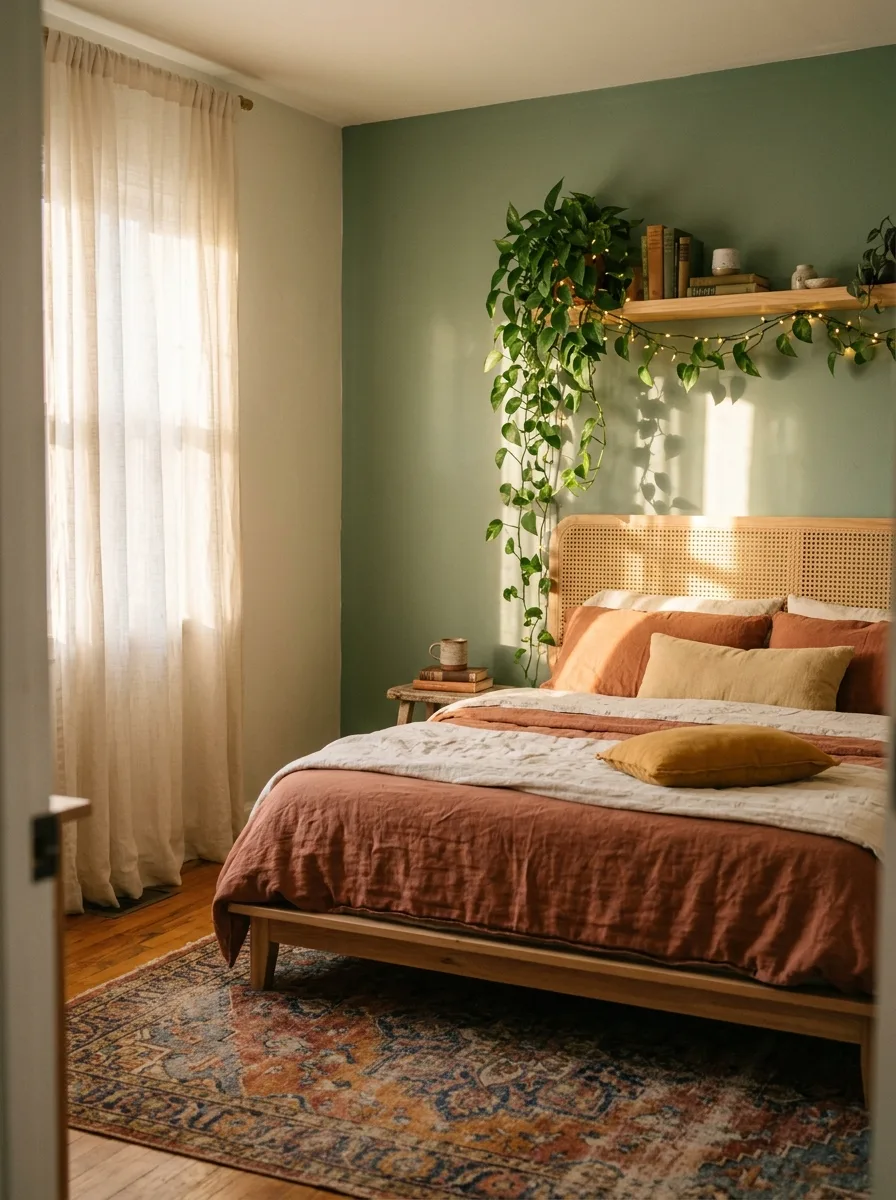 Bedroom
Home Decor
A complete guide to designing a warm, layered boho bedroom — from bedding and lighting to plants and wall decor.
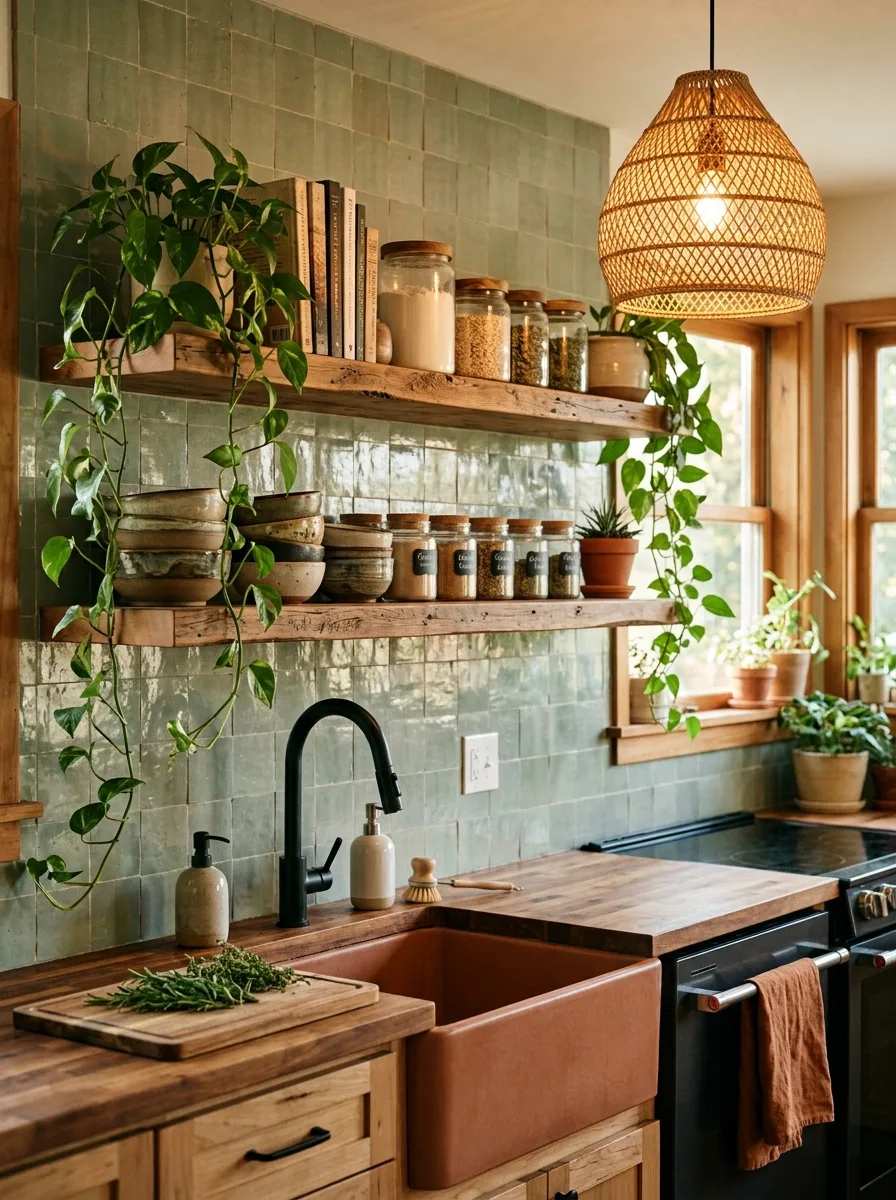 Kitchen & Dining
Home Decor
Simple, budget-friendly ways to bring bohemian warmth into your kitchen and dining space.